

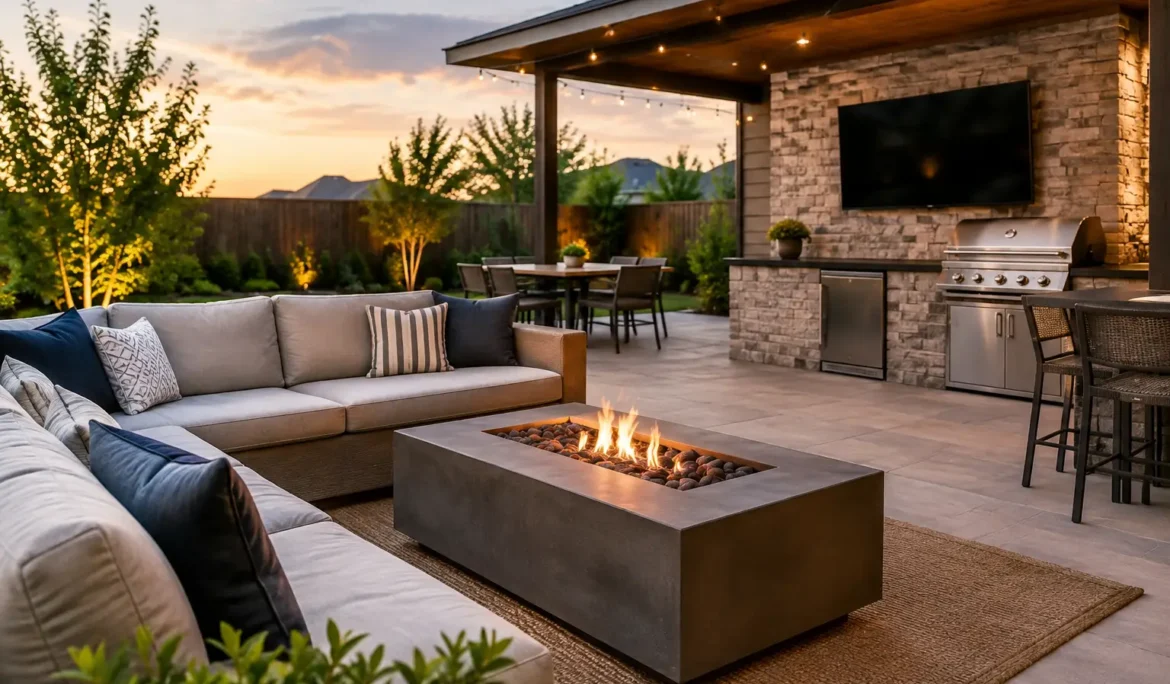
A great backyard should not require a pile of remotes, a portable speaker that disappears under conversation, or an extension cord crossing the patio. Learning how to build a backyard entertainment zone starts with a better question: how do you want people to feel when they step outside? Whether you picture quiet family dinners, Sunday football, poolside playlists, or a full evening of movies under the stars, the technology should make the space more inviting, not more complicated.
The most successful outdoor entertainment areas are planned as a complete experience. Audio, video, lighting, Wi-Fi, shade, and controls need to work together while standing up to heat, rain, changing seasons, and regular use. With the right design, your backyard becomes a dependable extension of your home.
Start With How You Will Use the Space
Before choosing an outdoor TV or speaker, map out the way your household entertains. A pool area has different needs than a covered porch. A family that hosts large gatherings needs broader, even audio coverage, while a smaller patio may benefit most from an outdoor television, comfortable lighting, and a simple way to play music.
Think in zones rather than treating the entire yard as one open area. Your dining space may need background music and warm lighting. The lounge area may be where guests watch the game. Around a fire feature or pool, you may want music that feels present without being loud enough to disturb conversation or neighbors.
This planning step also protects the visual character of the yard. Technology should support your architecture, landscaping, and furniture layout. Speakers can be placed to blend into planting beds or hardscape areas, while televisions can be installed in a protected location that preserves sightlines and avoids becoming the only focal point.
Build the Infrastructure Before the Finishes
The best time to plan an outdoor entertainment system is before a patio is poured, a deck is finished, or landscaping is complete. Running the proper wiring early allows equipment to be placed where it performs best, rather than where it happens to fit later.
Plan for Power, Wiring, and Equipment Locations
Outdoor systems need more than an available outlet. Professional planning accounts for protected power, weather-rated wiring, secure equipment locations, and cable paths that do not interfere with walkways or planting areas. It also considers where the main electronics will live. In many homes, source equipment and control hardware can stay indoors or in a protected cabinet while the outdoor zone remains easy to operate.
Hardwired connections are especially valuable for televisions and access points because they support more consistent performance than relying only on a wireless signal. Wireless technology still plays an important role, but it should be part of a deliberate network design rather than a last-minute workaround.
Treat Wi-Fi as Part of the Entertainment System
Poor Wi-Fi can undermine an otherwise beautiful outdoor setup. Streaming video buffers, music drops out, and smart controls become frustrating when the patio sits at the edge of your home network’s reach.
A properly designed Wi-Fi network extends reliable coverage to the areas where people actually gather. That may mean adding purpose-built outdoor access points and positioning them around the home’s construction, yard layout, and expected device use. This matters even more when family members stream content, guests connect their phones, and outdoor cameras or smart devices are active at the same time.
Choose Outdoor Audio for Coverage, Not Volume
Many homeowners begin with one or two speakers near the house, then find that music sounds loud on the patio but weak near the pool or seating area. The answer is rarely turning up the volume. Better outdoor audio comes from using multiple speakers positioned throughout the listening area at lower, more comfortable levels.
Landscape speakers and discreet subwoofers can create balanced sound across a larger yard while minimizing visual impact. For smaller areas, weather-rated speakers mounted under a covered structure may be the right fit. The ideal approach depends on the size of the space, surrounding surfaces, nearby homes, and how much of the yard you want to cover.
Speaker placement deserves careful attention. Sound reflects differently from stone, siding, fencing, water, and open lawn. A thoughtful design directs sound toward your guests instead of broadcasting it toward the property line. That creates a more enjoyable experience for everyone and helps keep the system neighborhood-friendly.
Select an Outdoor TV That Belongs Outside
A standard indoor television may work temporarily in a covered area, but it is not designed for moisture, heat, insects, or changing temperatures. Outdoor-rated displays are built for those conditions and typically provide brighter images that remain visible in daylight.
Where the television is installed matters as much as the model. A fully shaded covered porch offers more flexibility than an open patio exposed to direct afternoon sun. Sun exposure, viewing angle, wind, and the distance from seating all affect the final result. A screen that looks impressive from across a showroom can feel too large, too dim, or poorly positioned once it is mounted outdoors.
For movie nights, consider how the display works after dark as well as during the day. For sports viewing, prioritize brightness and a seating layout that lets guests see the screen without crowding around it. A professional installation can also conceal cabling, protect connections, and integrate audio so the picture and sound feel like one system.
Use Lighting and Shade to Set the Scene
Outdoor entertainment is about atmosphere, not just equipment. Layered lighting helps people move safely through the yard, highlights landscaping, and creates a more relaxed setting after sunset. Path lighting and step lighting handle safety, while accent fixtures, deck lighting, and carefully placed landscape lights add depth and visual warmth.
Avoid the common mistake of flooding the yard with one bright fixture. Lighting should be adjustable and grouped by purpose. You may want brighter illumination for cooking and cleanup, then a softer scene for dinner or a movie. Smart lighting control makes that transition simple.
Shade also changes how usable a backyard feels. Motorized shades on a covered patio or outdoor structure can reduce glare on a TV, provide privacy, and make midday gatherings more comfortable. Depending on the location, the right shade solution can extend the hours when an outdoor space is enjoyable.
Make Control Simple Enough for Every Guest
The technology behind a backyard zone can be sophisticated. The daily experience should not be. A homeowner should be able to select music, turn on the television, adjust lighting, and choose an outdoor scene without opening several apps or explaining the system to every guest.
A unified control platform can bring outdoor audio, video, lighting, shades, and other connected features into one intuitive interface. This can be a wall-mounted keypad, handheld remote, touch panel, or a familiar mobile device. The right choice depends on how your household prefers to interact with technology.
Simple scenes are particularly useful. A “Dinner” setting might bring up low background music, turn on pathway lighting, and lower shades. A “Game Day” setting could power the TV, select the right source, activate patio audio, and set brighter lighting around seating. The point is not automation for its own sake. It is removing the small tasks that interrupt time with family and friends.
Design for New Jersey Weather and Long-Term Reliability
Outdoor technology in New Jersey and New York has to contend with humid summers, driving rain, freezing temperatures, and seasonal debris. Weather-rated products matter, but so do installation details: sealed connections, appropriate mounting, protected equipment, thoughtful drainage, and equipment locations that allow for service when needed.
There are trade-offs. A fully exposed area may call for more specialized equipment and more careful placement than a covered porch. A larger yard may need several audio zones rather than one system. An advanced control system can add convenience, but it should be programmed around routines your family will actually use.
That is why a consultative design process is valuable. Cine Acoustic helps homeowners align technology with the property, the architecture, and the way they entertain, then delivers a system designed to remain dependable long after the first backyard gathering.
Your backyard does not need to become a complicated outdoor theater to feel exceptional. Start with the moments you want to create, build the infrastructure to support them, and choose technology that disappears into the experience. When the music fills the space evenly, the screen is easy to see, and the lighting changes with a single command, it becomes much easier to stay outside a little longer.