

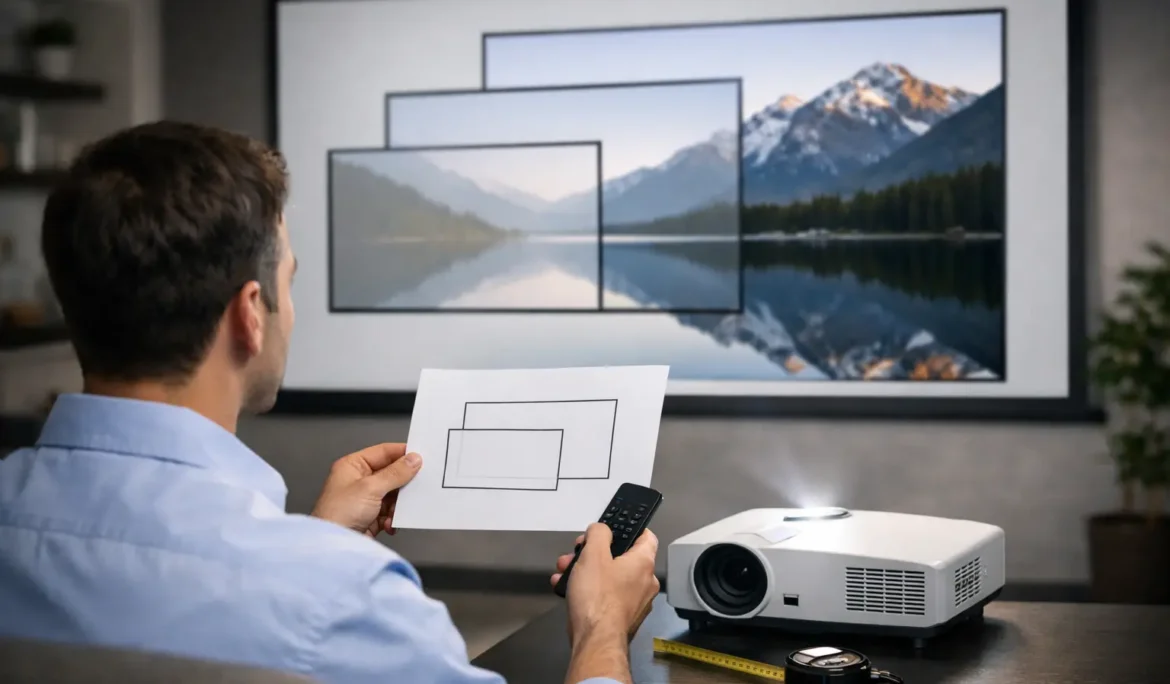
A projector can look spectacular in the right room – or oddly disappointing when the screen is too big, too small, or simply out of proportion to the space. If you are wondering how to choose projector screen size, the answer is less about picking the biggest screen that fits on the wall and more about balancing viewing comfort, image quality, room layout, and the way you actually use the space.
That balance matters because a screen is not just a display surface. It sets the scale of the room, affects eye comfort during long movies, and determines whether your projector performs at its best. In a dedicated theater, the right size creates immersion. In a family room or multipurpose media space, it also has to live well with furniture, windows, speakers, and architectural details.
How to choose projector screen size starts with seating
The most reliable place to begin is the main viewing distance. People often start with wall size, but seating tells you far more about what will feel comfortable. A screen that dominates the wall can still feel too aggressive if the front row is too close. On the other hand, a modest-looking screen can feel underwhelming when the seating is too far back.
For most home theater environments, a comfortable screen width is often around one-third to one-half of the viewing distance. That is not a rigid rule, but it is a useful range. If the primary seats are 12 feet from the screen, a screen width somewhere around 4 to 6 feet may feel conservative, while many homeowners prefer pushing higher for a more cinematic experience. The right choice depends on whether you want relaxed everyday viewing or a theater-style presentation.
This is where expectations matter. Someone who mostly watches sports, streaming shows, and casual TV may prefer a slightly smaller screen that feels easy on the eyes. A homeowner building a dedicated movie room may want a larger image that fills more of their field of view. Neither is wrong. The screen should match the experience you want, not just a formula.
Screen size is about width, not just diagonal
Most people shop by diagonal measurement because that is how TVs and projector screens are commonly marketed. It is useful, but diagonal alone can be misleading. A 120-inch screen in widescreen format does not have the same height and visual impact as a screen with a different aspect ratio.
That is why width and height both matter. In most modern home theaters, the common format is 16:9, which fits TV, streaming content, sports, and many gaming setups well. If your projector screen is 120 inches diagonal in 16:9 format, the image will be roughly 105 inches wide and 59 inches tall. That proportion works beautifully in many rooms, but only if the wall and seating support it.
The room itself may put limits on height before it limits width. Ceiling height, soffits, cabinetry, center-channel speaker placement, and the desired clearance above the floor all influence how tall the screen can be. In many homes, the screen that looks ideal on paper ends up too low, too high, or too close to architectural features once installation details come into play.
The room should guide the decision
A screen should feel integrated into the room, not forced into it. In a dedicated theater, you have more freedom to size for performance. In a living room or media room, the screen often has to coexist with windows, millwork, and daily life.
Wall width is only one factor. You also need to think about where speakers will go, whether there is space for acoustic treatments, how much clearance is needed for a recessed screen housing if the screen is motorized, and how ambient light affects viewing. A larger screen in a bright room can sometimes look less impressive than a slightly smaller one paired with a projector and screen material that better suits the environment.
It also helps to think about traffic flow and sightlines. If someone has to crane their neck from a sectional or if the bottom of the image is blocked by furniture, the screen may be technically large enough but still wrong for the space. Good design makes the screen feel effortless from every seat.
Projector performance can limit screen size
One of the most common mistakes is choosing a screen based on room size alone and forgetting that the projector has to fill it with enough brightness and detail. Bigger is not always better if image quality starts to suffer.
As screen size increases, brightness per square foot drops. In a dark dedicated theater, that may be perfectly acceptable. In a room with more ambient light, a very large screen can begin to look washed out unless the projector and screen material are carefully matched. Resolution also matters. A high-quality 4K projector can look stunning on a large screen, but the seating distance still affects how much of that sharpness you perceive.
Throw distance matters too. Your projector must be able to create the image size you want from the location where it will actually be installed. Every projector has a throw ratio range, which determines how large the image can be from a given distance. Sometimes a homeowner settles on a dream screen size only to find that the projector placement, ceiling design, or room depth makes it impractical.
This is one reason a professionally designed system tends to feel more cohesive. The projector, screen, room dimensions, lighting conditions, and seating plan all need to work together.
How to choose projector screen size for different spaces
A dedicated home theater usually supports a larger, more immersive image because lighting and seating are controlled. In this setting, many homeowners prefer sizing that leans cinematic, especially if the room is built around movie watching.
A family room is different. The screen may still be large, but comfort and flexibility carry more weight. People may be watching with lights on, walking through the room, or using the space for more than one activity. Here, a slightly more restrained screen often creates a better long-term experience.
A multipurpose bonus room, basement lounge, or game room often lands somewhere in between. The ideal screen size may be based on the best compromise between movie nights, sports gatherings, gaming, and the practical realities of furniture placement. This is where one-size-fits-all advice starts to break down.
Don’t forget aspect ratio and content habits
If you primarily watch streaming services, sports, broadcast TV, and gaming, a 16:9 screen is usually the most practical choice. It is the familiar format for most day-to-day content and keeps things simple.
If you are building a serious movie room and care deeply about widescreen film presentation, you may want to consider how cinematic content will appear. Many films are wider than 16:9, which means black bars appear at the top and bottom on a standard screen. Some homeowners are happy with that. Others want a setup designed around widescreen movie formats.
This is not just a technical decision. It reflects how you use the room. A screen should support your habits instead of asking you to adapt to it.
A quick way to pressure-test your choice
Before committing to a specific size, it helps to simulate it in the room. Painter’s tape on the wall can be surprisingly effective. Mark the proposed width and height, then sit in the primary seats and look at it from different angles and heights.
This simple step often reveals issues that measurements alone miss. The screen may feel taller than expected, too close to the ceiling, or too dominant for the room. Or it may confirm that going slightly larger is exactly the right move.
It is also smart to think beyond the image itself. Ask whether the screen leaves room for speakers, whether it aligns well with the architecture, and whether it still feels right when you imagine using the room on an ordinary weeknight, not just during a movie premiere.
The best screen size feels intentional
There is no universal best answer to how to choose projector screen size because the right fit depends on your room, seating, projector, lighting, and expectations. What works beautifully in one home can feel completely off in another.
The goal is not to maximize inches. The goal is to create a viewing experience that feels immersive, comfortable, and natural every time you use it. That usually comes from thoughtful planning rather than guesswork. For homeowners who want a system that looks refined and performs the way it should, that planning makes all the difference.
The right screen size should disappear once the movie starts – not because it is small, but because everything about the room finally feels in proportion.