

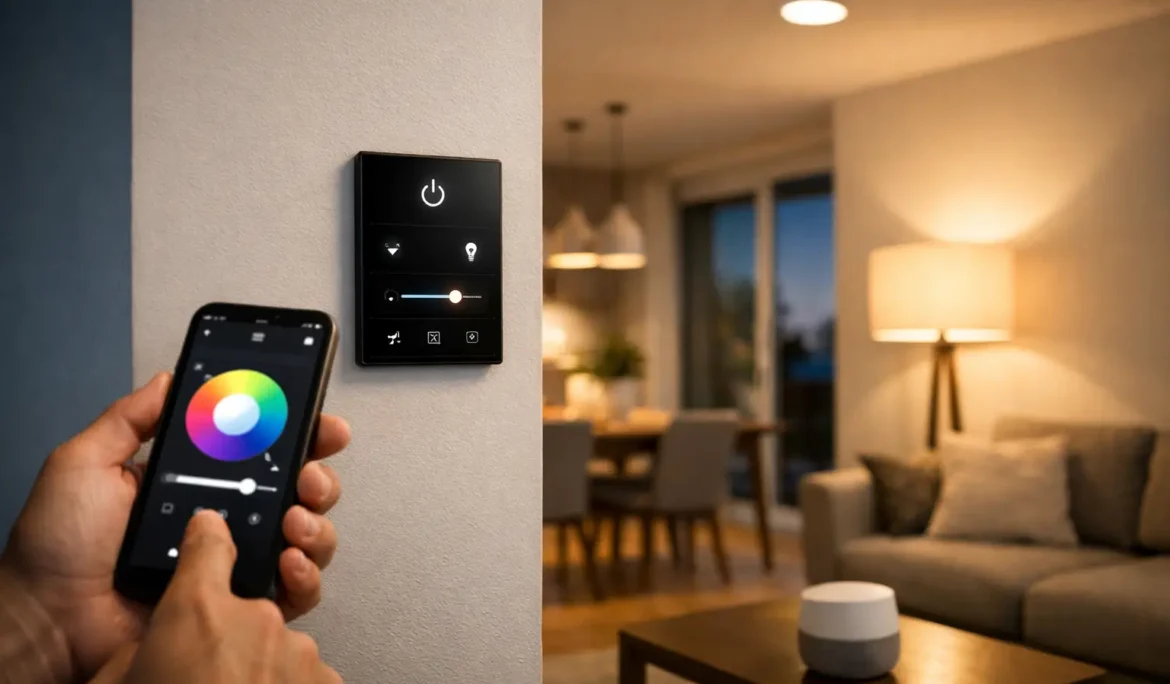
A beautiful room can feel flat when every light comes on at the same brightness with the same switch. The right lighting brings depth to artwork, makes a kitchen easier to use, gives a home theater the right sense of anticipation, and helps a busy household move through the day more comfortably. Knowing how to integrate smart lighting controls starts with treating light as part of the home’s overall experience, not as a collection of individual bulbs and switches.
For homeowners planning a renovation, building a new home, or improving an existing space, smart lighting can provide meaningful convenience without making daily life more complicated. The key is choosing a system and control strategy that fits how your household actually lives.
Start With the Way You Use Each Room
The best lighting plans begin with questions, not products. Consider what happens in a room from morning through evening. A kitchen may need bright, even task lighting for meal preparation, softer island pendants for casual gatherings, and low pathway lighting for late-night trips. A family room may need different settings for reading, entertaining, watching television, and relaxing.
Instead of thinking in terms of one switch per fixture, think in layers. Ambient lighting provides overall illumination. Task lighting supports focused activities. Accent lighting adds visual interest by highlighting architectural details, art, cabinetry, or landscaping. Smart controls allow these layers to work together in purposeful scenes.
A well-designed scene eliminates the need to adjust several dimmers one by one. A “Good Morning” scene might raise kitchen and hallway lights gradually while leaving bedrooms calm. A “Movie” scene can dim the main lights, illuminate pathways, lower motorized shades, and prepare the theater or television area with one command. The technology should reduce small daily decisions, not create more of them.
Choose a Control System Before Choosing Devices
One of the most common mistakes in smart lighting is buying individual smart bulbs, plug-in devices, and voice assistants without a broader plan. These products can be useful in a small space, but a pieced-together approach often produces multiple apps, inconsistent behavior, and controls that confuse family members and guests.
A dedicated lighting control system is designed to manage lights as a coordinated part of the home. Solutions from established platforms such as Lutron can combine dimmers, keypads, sensors, shades, and mobile control in a consistent interface. When integrated with a home automation platform such as Control4, Savant, or URC, lighting can also coordinate with entertainment, climate, security, and other connected systems.
The right choice depends on the home and the scope of the project. A single-room refresh may call for a focused lighting solution. A larger renovation or whole-home project benefits from a platform that can scale without requiring a complete redesign later. This is where professional system design matters: it accounts for electrical infrastructure, wireless coverage, fixture compatibility, wall-box capacity, and the homeowner’s future plans.
Smart Bulbs Versus Smart Dimmers
Smart bulbs and smart dimmers do different jobs. Smart bulbs can change color and are useful for specialty lamps, decorative fixtures, or occasional accent effects. They are not always the best choice for primary room lighting, especially when a wall switch can accidentally cut power to the bulb and remove its smart functionality.
Smart dimmers or switches are often the better foundation for recessed lights, chandeliers, pendants, and other hardwired fixtures. They preserve familiar wall controls while adding dimming, scheduled operation, scenes, and app access. In many homes, a combination works best: dimmers for dependable everyday lighting and smart bulbs where adjustable color or specialty effects genuinely add value.
Plan the Lighting Scenes That Matter Most
Smart lighting works best when scenes are specific enough to be useful but simple enough to remember. Most households do not need dozens of named settings. A short group of well-considered scenes will deliver more value than an overloaded keypad.
For example, an entryway may benefit from Welcome, Evening, and Away settings. A primary suite may use Wake, Relax, and Night. Outdoor lighting can follow an astronomical schedule that adjusts automatically as sunset changes throughout the year. In a home theater, the lights can respond to Play, Pause, and Intermission commands, preserving comfort without distracting from the screen.
Occupancy and vacancy sensors are another practical layer. In closets, laundry rooms, pantries, garages, and bathrooms, they can prevent lights from being left on unnecessarily. In formal living areas or bedrooms, automated occupancy behavior may feel intrusive. The right approach is not to automate every possible action. It is to automate the actions that make life easier while keeping manual control readily available.
Use Keypads to Reduce Wall Clutter
A wall with several switches and dimmers can quickly become difficult to use, particularly in rooms with layered lighting. Smart keypads replace visual clutter with a small number of clearly labeled buttons. One button can activate a scene that controls several lighting loads at once.
This also improves the appearance of a finished space. Rather than placing a separate dimmer for recessed lights, pendants, sconces, art lights, and shades, a professionally designed keypad can organize those functions in a clean, intentional layout. Engraved labels help guests and family members understand the controls immediately.
Keypads should be located where decisions naturally happen: at the main entry to a room, beside the bed, near a patio door, or at the entrance to a theater. A “House Off” or “Goodnight” button near the primary bedroom can turn off selected lights throughout the home while maintaining the exterior and security lighting needed overnight.
Make Sure the Electrical and Network Foundation Is Ready
Reliable smart lighting is not just about the control devices. It depends on the infrastructure behind them. Some dimmers require a neutral wire, and older homes may not have one in every switch box. Certain LED fixtures can flicker, buzz, or dim poorly when paired with an incompatible control. Low-voltage drivers, decorative fixtures, and specialty bulbs deserve attention before installation, not after the walls are finished.
Wireless lighting systems are often highly reliable, but their performance still depends on thoughtful placement and a properly designed network where applicable. Large homes, dense building materials, metal structures, and outdoor zones can affect signal performance. A professional integrator evaluates these variables and selects the appropriate system architecture, including wired, wireless, or hybrid controls.
If you are renovating, plan for lighting controls early. Electrical rough-in is the ideal time to identify lighting zones, keypad locations, shade wiring, equipment locations, and future expansion needs. Waiting until the end of construction can limit options and lead to compromises that affect both usability and aesthetics.
Integrate Lighting With Shades, Entertainment, and Security
Lighting is more effective when it responds to the rest of the home. Motorized shades can protect furnishings from direct sunlight while reducing glare on television screens. When shades lower in the evening, interior lighting can rise gradually to maintain a comfortable atmosphere. In spaces with large windows, this coordination creates a more polished experience than managing lights and shades separately.
Entertainment spaces are another strong fit. A theater should not require a row of switches, multiple remotes, and a phone app before a movie starts. A single command can prepare the lights, shades, audio, and video for the activity ahead. When the content pauses, pathway lighting can brighten just enough to make the room safe without breaking the mood.
Security-related lighting should be designed with care as well. Exterior lights can respond to schedules, occupancy, or events while avoiding unnecessary glare into bedrooms or neighboring properties. The goal is confidence and visibility, not a home that feels harshly illuminated all night.
Keep Manual Control Simple
Automation should never leave you hunting for a phone to turn on a light. Physical controls remain essential, particularly for guests, children, and anyone arriving home with full hands. The best smart lighting systems give you several easy ways to interact: elegant keypads, familiar dimmers, scheduled scenes, mobile access, and voice control when it is convenient.
Voice commands are helpful for occasional hands-free moments, but they should not be the only plan. Likewise, mobile apps are valuable when away from home, yet they are rarely the most practical way to control the kitchen lights while standing in the kitchen. A successful system makes the preferred option obvious in each situation.
Work With a Designer Who Sees the Whole Home
Smart lighting affects the electrical plan, interior design, window treatments, networking, entertainment spaces, and everyday routines. That is why a consultative approach is so valuable. A knowledgeable integration team can translate lifestyle goals into a lighting plan that feels intuitive from the first day and remains dependable over time.
For New Jersey and New York homeowners, Cine Acoustic approaches lighting control as part of a complete home technology experience. The focus is not on adding gadgets. It is on creating a system that looks refined, works consistently, and is simple for every member of the household to enjoy.
The most satisfying lighting systems are often the ones you stop thinking about. They quietly make mornings gentler, evenings more inviting, and every room easier to use – exactly as a well-designed home should.