

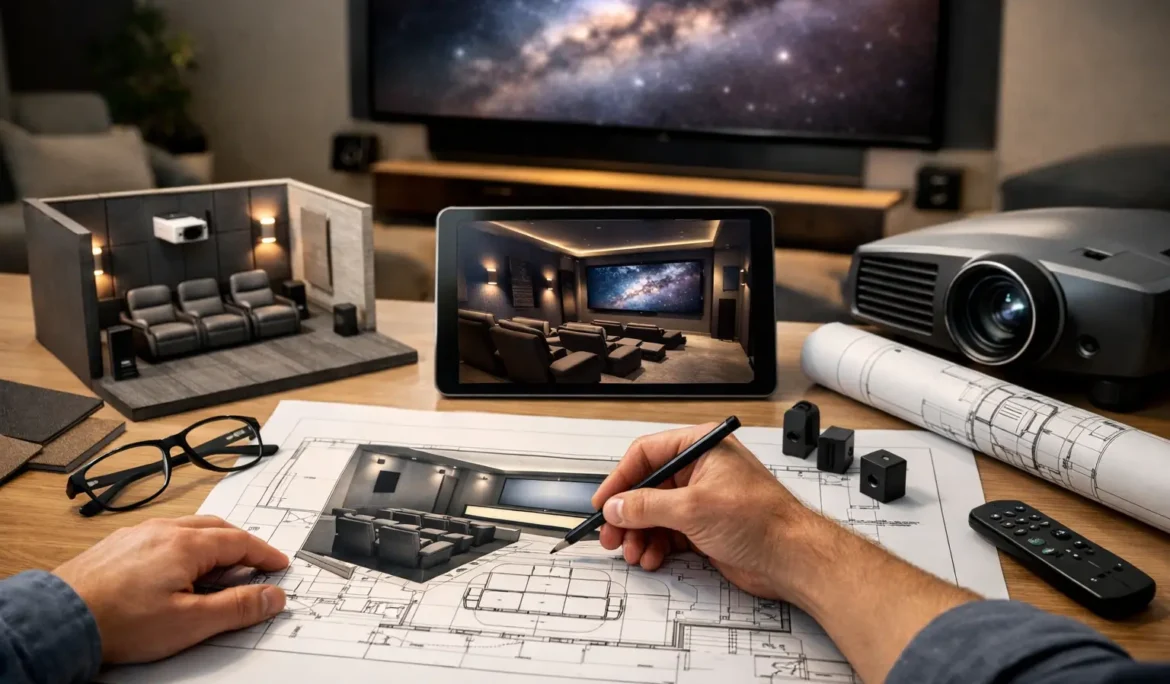
A great theater room is usually won or lost before the first speaker is mounted. The real difference comes from innovative home theater design planning and installation that considers how the room will sound, look, and function for the people who live there. When those decisions are made early, the result feels effortless. When they are not, even expensive equipment can leave a room that is frustrating to use and underwhelming to experience.
For most homeowners, the goal is not to build a technical showpiece. It is to create a space where movies feel cinematic, sports feel immersive, and family nights start with one button instead of five remotes. That is why the design phase matters as much as the gear itself.
What innovative home theater design planning and installation really means
Innovation in a home theater is not about adding more devices for the sake of it. It is about making smart decisions that improve performance and simplify everyday use. A well-designed system should disappear into the background until you press play.
That often starts with room-first thinking. The size and shape of the space, ceiling height, window placement, lighting conditions, and seating layout all influence what the system should be. A dedicated theater can support a different approach than a media room that also needs to feel comfortable for casual TV, gaming, or entertaining.
Planning also means understanding how all the parts work together. Display technology, surround sound, acoustic treatments, lighting control, shading, networking, and control systems should support one another. If they are selected in isolation, the room can become a collection of parts rather than a complete experience.
Start with the room, not the product list
One of the most common mistakes in theater projects is choosing equipment before the room has been properly evaluated. A large display may look appealing on paper, but if the seating distance is wrong, the experience can feel strained. Powerful speakers may impress in a showroom, but in the wrong room they can sound uneven or overpowering.
A better approach is to begin with how the room will be used. Some homeowners want a true cinematic environment with tiered seating, a projector, and carefully controlled lighting. Others want a refined media room that blends into the home while still delivering strong performance. Neither goal is better. It depends on the space, the architecture, and the lifestyle of the household.
This is where professional planning brings real value. A thoughtful design team can identify sightline issues, locate ideal speaker positions, account for wiring paths, and coordinate with builders or designers before walls are closed. That reduces compromises later and protects the finished look of the room.
Sound quality depends on more than speakers
Homeowners often focus on speaker brands and channel counts, but room acoustics have just as much impact on what you hear. Hard surfaces can cause reflections that muddy dialogue. Large open layouts can weaken bass response. Unbalanced speaker placement can make surround effects feel disconnected.
Innovative home theater design planning and installation addresses those conditions from the beginning. Sometimes that means integrating acoustic treatments that complement the room rather than calling attention to themselves. In other cases, it means adjusting speaker locations, seating positions, or subwoofer placement to achieve a more balanced result.
Dialogue clarity is a good example of why this matters. If voices are hard to understand, people turn up the volume, which often makes everything else too loud. A properly designed system creates clarity without forcing constant adjustments. That is a better experience for movies, streaming series, concerts, and everyday TV.
Video performance should fit the space
There is no single right answer when choosing between a large flat-panel display and a projection system. Each has strengths, and the best choice depends on the room.
A bright multipurpose room may benefit from a premium television that performs well with ambient light. A dedicated theater with controlled lighting may be ideal for projection and a larger image that feels closer to a commercial cinema. Screen size should also relate to seating distance and room dimensions. Bigger is not always better if it overwhelms the viewer or dominates the design of the room.
The visual side of the theater also extends beyond the screen itself. Lighting control and motorized shades can dramatically improve contrast and comfort. If sunlight washes out the image during the day or decorative lighting creates glare at night, even a strong display will not look its best. Smart control makes these adjustments simple, which is especially valuable in rooms used by the whole family.
Ease of use is part of the design
A theater that sounds amazing but confuses everyone in the house is not well designed. Simplicity should be built into the system from the start.
This is where integrated control becomes essential. Instead of juggling separate apps and remotes for audio, video, lights, and shades, the room should respond in a clear and predictable way. Press movie night, and the screen turns on, the source starts, lights dim, and shades lower. Press all off, and the room resets without guesswork.
That level of convenience is not just a luxury. It is what makes the system enjoyable over time. Families use spaces more often when the technology feels approachable. Guests feel comfortable. Children and grandparents are less likely to call for help. Good design removes friction.
A clean finish requires early coordination
Some of the best theater features are the ones you barely notice. Hidden wiring, properly placed in-wall or in-ceiling speakers, well-ventilated equipment locations, and carefully integrated controls all contribute to a polished result.
These details are easier to achieve when planning happens early, especially during new construction or renovation. Coordinating with architects, interior designers, and contractors allows the technology to support the design vision instead of interrupting it. It also helps avoid visible retrofit solutions that can distract from an otherwise beautiful room.
That does not mean every theater must be built from scratch. Existing spaces can often be transformed very successfully. It simply means the strategy may differ. In a finished room, the design team may prioritize minimally invasive upgrades and creative placement solutions. The key is tailoring the installation to the space rather than forcing a standard package into it.
Networking and source reliability matter more than people expect
When homeowners think about theater performance, they usually picture speakers and screens. Behind the scenes, reliable networking and source integration are just as important.
Streaming platforms, media servers, control systems, and smart devices all depend on a strong foundation. If the network is inconsistent, the theater experience suffers through buffering, lag, failed commands, or unreliable device communication. That is why professional system planning treats connectivity as core infrastructure, not an afterthought.
Source selection matters too. Some households want the convenience of popular streaming services. Others want a more curated cinema experience with higher-quality playback and organized access to favorite titles. The right setup depends on viewing habits, performance expectations, and how the room fits into the broader home technology ecosystem.
Why custom planning outperforms one-size-fits-all solutions
Many theater systems are sold as if every room and every homeowner wants the same thing. That approach is convenient for the seller, but it rarely delivers the best outcome for the client.
A custom plan accounts for trade-offs. If the room has architectural limitations, the system may need a more discreet speaker strategy. If aesthetics are the top priority, equipment choices may shift to preserve the design of the space. If the room serves multiple functions, flexibility becomes just as important as cinematic impact.
This is where a consultative process makes a real difference. Instead of pushing products, an experienced team evaluates goals, room conditions, usage patterns, and long-term expectations. The result is a theater that feels considered, not assembled.
For homeowners in New Jersey and New York who want premium entertainment without unnecessary complexity, working with a full-service partner such as Cine Acoustic can simplify the process significantly. Design, installation, system integration, and ongoing support all stay aligned around one objective: a high-performance room that is easy to enjoy.
The best theater rooms feel effortless
The most successful home theaters do not ask you to think about cable paths, calibration, or which input to choose. They simply perform. The picture looks right in the room, the sound draws you in, and the controls feel intuitive from day one.
That kind of result rarely happens by accident. It comes from thoughtful planning, precise installation, and a clear understanding of how technology should serve the home. If you are considering a theater project, the smartest first step is not shopping for components. It is defining the experience you want and building the room around it.