

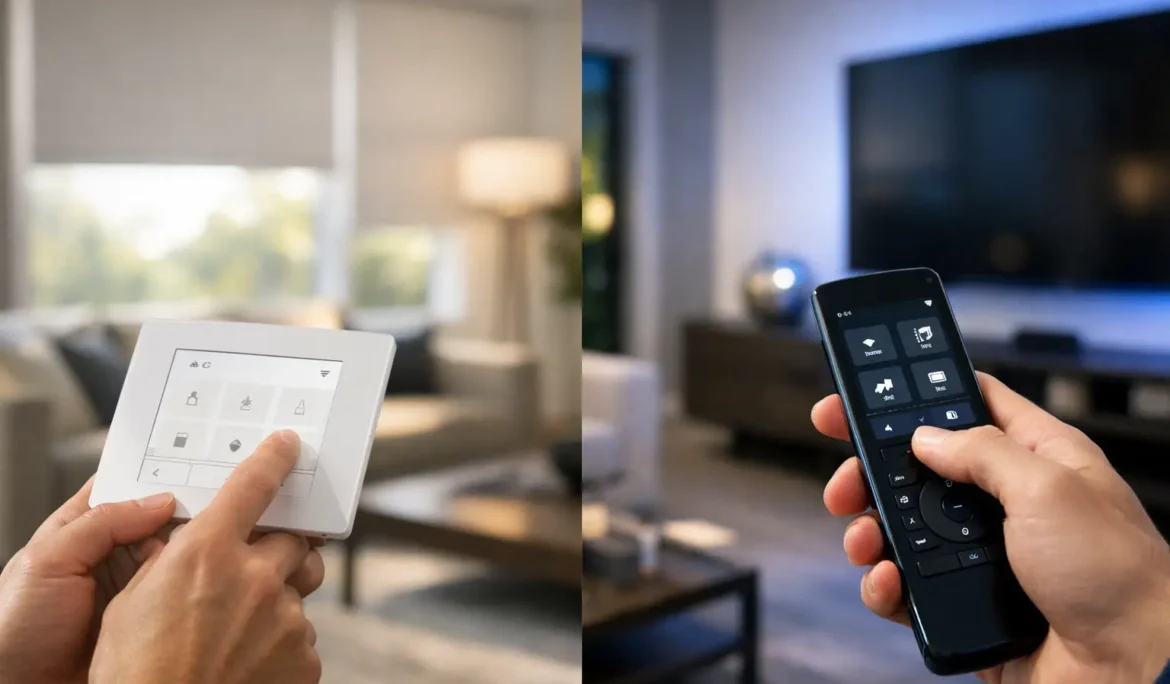
A beautiful media room can lose its impact when the lights are too bright, shades create glare on the screen, and several remotes are needed to get everything started. The Lutron vs Crestron decision often begins with that frustration, but the right answer depends on what you want your home technology to do every day.
Both brands are respected names in luxury residences. Both can make a home more comfortable, more intuitive, and better suited to entertaining. Their strengths are different, however. Lutron is the specialist in lighting and shading control, while Crestron is built for deeply customized control of multiple technology systems, especially sophisticated audio and video environments.
Lutron vs Crestron: The Fundamental Difference
Lutron starts with the elements that shape how a room feels: light, daylight, and privacy. Its lighting control and motorized shade systems let homeowners set the right atmosphere with a button press, keypad, app, or programmed schedule. A single scene can lower shades, warm the lights for dinner, or dim the room for movie night without walking from switch to switch.
Crestron starts with the broader experience of controlling technology throughout the home. A Crestron interface can bring together entertainment, lighting, shades, and other selected systems into a tailored control experience. It is especially compelling where a home includes a dedicated theater, distributed audio and video, multiple displays, or rooms with different technology needs.
That distinction matters because a smart home should not be selected by brand recognition alone. A lighting-forward renovation may benefit most from a Lutron-centered design. A large custom residence with extensive entertainment and automation requirements may call for Crestron as the primary control layer. In many projects, the strongest result is not an either-or decision at all.
Where Lutron Delivers Its Best Value
Lutron has earned its reputation by making sophisticated lighting and shade control feel dependable and natural. Rather than filling walls with individual dimmers and switches, a properly designed system replaces clutter with elegant keypads that can control a room or an entire area of the home.
For homeowners, the benefit is not simply being able to use an app. It is consistency. The family room looks right for a Saturday afternoon, a dinner party, or a late-night movie because those settings have been intentionally designed in advance. Motorized shades can preserve views when open, reduce screen glare when needed, and support privacy in the evening.
Lutron’s HomeWorks platform is often chosen for larger, design-conscious residences where coordinated lighting, keypads, and shades are central to the project. RA3 can be a strong fit for certain existing-home upgrades where an extensive wired infrastructure is not practical. The best choice depends on the home’s construction, room count, control expectations, and long-term plans.
Lutron is also an excellent choice when reliability and aesthetics are the priorities. Keypads are available in finishes and styles that complement the interior rather than competing with it. The system continues to be useful even when nobody reaches for a phone, which is exactly how home control should work.
Where Crestron Stands Apart
Crestron is designed for homeowners who want a single, carefully tailored way to operate a more comprehensive collection of technology. In a theater, that can mean starting a movie and having the projector, surround sound, screen, lighting, and shades respond in the correct order. In a living space, it can mean selecting a favorite source and sending it to the right display and speakers without sorting through a cabinet full of remotes.
The advantage is customization. Crestron control interfaces can be configured around how the household actually uses the home. A homeowner who hosts game-day gatherings may want a different experience from someone who prioritizes a dedicated cinema, whole-house music, or a video wall for entertaining. Crestron can accommodate complex workflows without forcing every room to behave the same way.
That flexibility also means the system benefits from thoughtful design, programming, documentation, and continued professional support. A highly customized home should never feel confusing simply because it has more capability. The goal is to present only the controls that matter in each room, then make the less common functions available without cluttering the experience.
Comparing Daily Use, Not Just Features
When comparing Lutron vs Crestron, consider the first five minutes you spend at home in the evening. Do you mainly want lights and shades to respond predictably with minimal effort? Are you building a theater or entertainment system where several components must work together? Will family members, guests, or household staff need to use the system with confidence?
Lutron tends to be more focused and immediate for lighting and shading. Physical keypads provide a familiar, dependable experience, and the best scenes become part of the household routine. Crestron can also control lighting and shades, but its defining strength is using those elements as part of a larger, personalized technology experience.
Crestron is generally the better fit when the control challenge extends beyond one category. For example, a home with distributed video, premium surround sound, outdoor entertainment areas, and several shared spaces benefits from a central interface designed around those experiences. Lutron is often the better fit when the main objective is exceptional light and shade control across the property with clean, straightforward operation.
Neither platform should be judged by an app screen alone. The quality of the design behind it matters more: where keypads are placed, which scenes are useful, how the network supports connected devices, and whether the controls work naturally when someone walks into the room.
Can Lutron and Crestron Work Together?
Yes. In many high-performance homes, Lutron handles lighting and motorized shades while Crestron serves as an additional control interface for entertainment and selected automation functions. This approach lets each platform do what it does best.
A theater is a practical example. Lutron can provide refined lighting scenes and shade control, while Crestron can coordinate the theater equipment and present a simple movie-watching experience from a touch panel or remote. The homeowner gets a cohesive result without asking one platform to compromise on its core strengths.
Integration should be planned early, particularly during new construction or a major renovation. Wiring pathways, equipment locations, keypad placement, shade pockets, Wi-Fi coverage, and the relationship between rooms all influence the finished experience. Early planning also protects the design intent of the home, so technology supports the architecture instead of becoming an afterthought.
How to Choose the Right Platform for Your Home
Start with the rooms that matter most. If your priorities are beautiful lighting, glare control, privacy, and easy daily routines, Lutron deserves serious consideration as the foundation. If your vision centers on a custom theater, whole-home entertainment, and personalized control across many systems, Crestron may be the better primary platform.
It also helps to think beyond move-in day. A home may begin with a theater and a few entertainment areas, then add outdoor displays, additional audio zones, or expanded lighting control later. Choosing an architecture that can support your likely next step is wiser than selecting technology only for the immediate project.
Most homeowners do not need to become experts in protocols, processors, or programming to make a good decision. They need a clear conversation about their lifestyle, the spaces they use, and the level of simplicity they expect. That is where an experienced integration partner can turn a collection of premium components into a system that feels intentional.
For New Jersey and New York homeowners planning a refined entertainment or automation project, Cine Acoustic can help evaluate Lutron, Crestron, and the right combination of technologies for the home. The best system is the one that disappears into your routine, leaving you free to enjoy the room, the people in it, and the experience you built it for.