

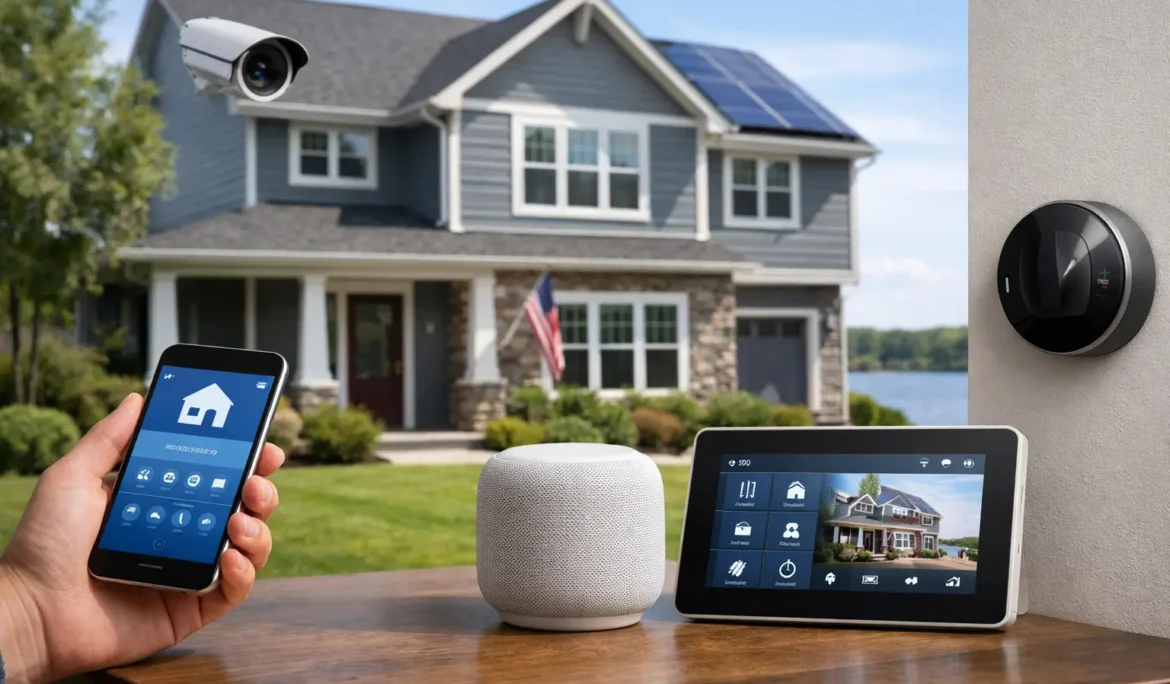
A smart home should not feel like a part-time job. If you have ever stood in a family room juggling five apps just to dim the lights, lower the shades, start music, and switch on the TV, you already know why a thoughtful new jersey smart home guide matters.
For most homeowners, the goal is not more technology. It is a better living experience. You want your home to respond the way you live, whether that means movie night starting with one button press, lighting that changes with the time of day, or Wi-Fi that stays strong from the basement theater to the backyard patio. The difference between a smart home that feels effortless and one that feels frustrating usually comes down to planning, system design, and how well everything works together.
What a New Jersey smart home guide should help you decide
A good smart home plan starts with priorities, not products. Some homeowners care most about entertainment. Others want comfort, convenience, and a cleaner look with fewer remotes, fewer wall switches, and less visible equipment. In many homes, the best answer is a mix of all three.
That is why the first decision is not which brand to buy. It is how you want the home to behave. Do you want whole-house music that follows your day from kitchen to patio? A dedicated theater with Dolby Atmos performance? Lighting scenes that make a great room feel warm in the evening and bright in the morning? Motorized shades that protect interiors and reduce glare without constant adjustment? Each of those goals shapes the right system.
The home itself matters too. A newly built property gives more freedom for wiring, hidden speakers, and centralized equipment. A renovation often creates ideal opportunities to add control, networking, and architectural lighting. An existing finished home can still become highly capable, but the design has to account for what can be added cleanly and what should remain simple.
Start with the foundation: networking and control
The most impressive smart home features rely on something less glamorous – a solid network. Weak Wi-Fi creates a chain reaction of problems. Streaming becomes unreliable, control screens lag, audio zones drop, and connected devices behave unpredictably. Homeowners often blame the device they see, when the real issue is the network they do not.
That is why professional design usually starts with coverage, capacity, and consistency. A larger home, a home with thick construction materials, or a property with outdoor entertainment areas needs more than a basic off-the-shelf router. Access points should be placed intentionally, and the network should be built for the way the family actually uses it, with streaming, gaming, work-from-home traffic, mobile devices, and automation all sharing the same environment.
Control is the next layer. The best platforms bring lighting, entertainment, shades, climate, and other connected functions into one intuitive experience. That does not mean every home needs the same control system. It means the platform should fit the household. Some families want elegant touch panels and full-room scenes. Others mainly want a simple remote, an app that makes sense, and dependable performance every day.
Entertainment is often the heart of the home
For many homeowners, smart home technology becomes most meaningful when it improves entertainment. A media room, home theater, or distributed audio system changes how the home feels on ordinary days, not just special occasions.
Whole-house audio is one of the most practical upgrades because it blends into daily life. Music in the kitchen while making dinner, a podcast in the home office, and a playlist outside when friends come over all feel natural when the system is easy to use. The key is zoning and control. You want the flexibility to play different content in different spaces or sync everything together when the occasion calls for it.
Home theater requires a different kind of planning. Screen size, speaker placement, room acoustics, seating layout, lighting control, and equipment storage all affect the result. Bigger is not always better if the room proportions are wrong or if light control is poor. The strongest theater experiences come from balanced design, where image, sound, room treatment, and usability support each other.
There is also a middle ground that many families prefer: a living room or great room designed for high performance without looking like a dedicated theater. Cleanly integrated displays, hidden speakers, simplified control, and thoughtful lighting can create a space that works just as well for everyday viewing as it does for a big game or family movie night.
Lighting and shades do more than add convenience
Lighting control is one of the most underestimated parts of a smart home. Homeowners tend to think of it as a luxury until they experience how much it changes the rhythm of the house. The right lighting scenes can make a kitchen brighter for early mornings, soften a dining space for evening meals, and create the right ambiance in a media room without touching multiple switches.
Motorized shades add another layer of comfort and visual polish. They help manage glare, improve privacy, and protect furnishings from harsh sun exposure. In rooms with large windows, they also support better TV viewing and more consistent natural light. When shades and lighting are coordinated, the home feels more intentional and more relaxing.
This is also where aesthetics matter. Design-conscious homeowners and their architects or interior designers usually want technology that supports the look of the home instead of competing with it. Clean keypads, hidden equipment, and systems that reduce wall clutter can make a major difference.
The best smart homes are customized, not overloaded
One of the biggest mistakes in residential technology is adding features simply because they are available. More devices do not automatically create a better home. In fact, unnecessary layers can make everyday use harder.
A practical new jersey smart home guide should make room for trade-offs. A family with young children may value reliable common-area audio, simple lighting scenes, and strong Wi-Fi over a highly customized theater. A homeowner building a forever home may prioritize whole-home control, automated shades, and a dedicated entertainment space from the beginning. Someone renovating one floor may want a phased plan that integrates cleanly now and leaves room to expand later.
It depends on how you live, how often you entertain, which spaces matter most, and how much simplicity you want at the user level. The smartest choice is usually the one that removes friction from daily life, not the one with the longest feature list.
Working with one expert team changes the outcome
Smart home projects often become frustrating when responsibilities are split between too many vendors. One company handles networking, another installs TVs, someone else adds shades, and no one fully owns the user experience. That is when compatibility issues, inconsistent programming, and service gaps start showing up.
A full-service integration approach solves that problem at the design stage. When one team plans the system, selects components that belong together, manages installation, and supports the finished result, the homeowner gets a more cohesive experience. That matters even more in larger homes and renovation projects where technology touches multiple rooms and trades.
For homeowners who want premium performance without technical guesswork, that consultative process is often the real value. The right partner does not push equipment for its own sake. They help you decide what belongs in the home, what should stay simple, and how to make the entire system feel easy from day one.
How to use this New Jersey smart home guide during planning
If you are early in the process, start by walking through your routines. Think about the spaces you use most and the moments that currently feel inconvenient. Maybe the Wi-Fi fails in the rooms where your family actually spends time. Maybe the living room looks great but the TV experience is underwhelming. Maybe the lighting works functionally but never feels quite right.
Then think in scenes instead of devices. Morning, dinner, entertaining, movie night, bedtime, and away-from-home routines reveal much more than a shopping list ever will. They help define the systems that deserve attention and the ones that can wait.
It also helps to involve technology planning earlier than most people expect. During new construction or renovation, early coordination allows for better wiring paths, cleaner equipment placement, stronger speaker layouts, and more refined keypad and shade integration. Waiting until the end limits options and usually leads to more visible compromises.
For homeowners in New Jersey who want a polished, dependable result, professional guidance can turn a broad idea into a system that actually fits the home. Cine Acoustic takes that service-led approach by designing around lifestyle, performance, and ease of use rather than leaving clients to sort through disconnected products on their own.
A well-designed smart home should feel less like technology and more like comfort, entertainment, and control showing up exactly when you need them.