

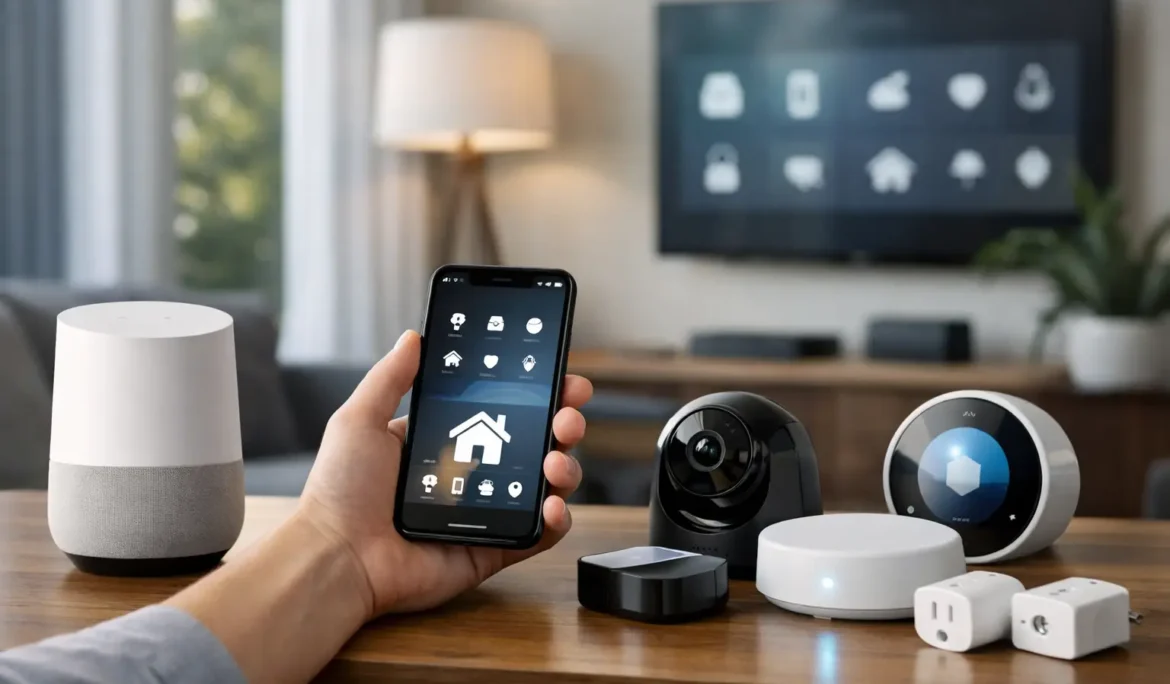
A smart home usually starts with one frustration. Maybe the lights never feel quite right at night, the shades are manual in a room full of windows, or the family room has great equipment but too many remotes. That is when homeowners begin looking at home automation system brands and realize they are not really shopping for gadgets. They are choosing how the house will feel, function, and respond every day.
That choice matters because not all platforms are built for the same kind of home or homeowner. Some are best for simple app-based control. Others are designed for fully integrated living, where lighting, music, climate, video, and shades work together through a single interface. The right answer depends on your goals, the size of the property, the design priorities of the space, and how much reliability you expect from the system.
How to compare home automation system brands
The first mistake many homeowners make is comparing brands as if they were interchangeable. They are not. One platform may be excellent for entertainment control but less flexible with lighting scenes. Another may shine in elegant keypad design and lighting performance but rely on a partner ecosystem for broader automation.
A better approach is to look at five practical areas: the user experience, device compatibility, system stability, design flexibility, and long-term support. If the app looks polished but the daily control feels awkward, that will show up quickly. If the system supports many devices on paper but requires compromises in real use, that matters more than the feature list. And if the technology is only as good as the initial install, with no attention to programming, networking, and future service, the homeowner ends up living with the limitations.
For most larger or more design-conscious homes, the best platform is rarely the one with the most consumer buzz. It is usually the one that can be tailored to the way the household actually lives.
Leading home automation system brands for custom homes
Control4
Control4 remains one of the most widely selected platforms for custom smart homes, and for good reason. It does a strong job bringing multiple systems into one experience. Homeowners can manage lighting, audio, video, climate, shades, door locks, cameras, and more from the same app, touchscreen, remote, or keypad.
Its biggest strength is balance. Control4 works well for clients who want broad integration without making the system feel complicated. It also fits a wide range of homes, from a media room upgrade to a whole-house solution. If your priority is one consistent interface across entertainment and automation, Control4 is often a very strong fit.
The trade-off is that its success depends heavily on good design and programming. A well-planned Control4 system feels simple and reliable. A poorly planned one can feel crowded with features the homeowner never asked for. That is why expert system design matters as much as the brand itself.
Savant
Savant is often chosen by homeowners who care deeply about interface design and a polished user experience. The app is refined, the control experience is intuitive, and the platform has long appealed to clients who want their technology to feel as carefully considered as the rest of the home.
It is especially attractive in high-end residences where aesthetics and simplicity matter. Savant can integrate entertainment, lighting, climate, shades, and energy monitoring into one platform that feels clean and modern.
Where Savant tends to make the most sense is in projects where the smart home is expected to complement a premium interior, not compete with it. That said, it is not a one-size-fits-all answer. The best result comes when the home’s priorities line up with Savant’s strengths in elegant control and curated integration.
URC
URC has a long history in home control and entertainment environments, and it continues to be a practical option in many residential projects. It is often appreciated for strong control capabilities, especially where AV performance is a major part of the system.
For homeowners focused on media spaces, distributed audio, and dependable control, URC can be a very sensible choice. It may not always have the same market perception as some other premium platforms, but that does not mean it should be overlooked. In the right environment, it can deliver a very user-friendly and capable experience.
As with any platform, the question is not whether it is good in general. The real question is whether it is the best fit for the mix of entertainment, control, and automation you want in your home.
Lutron
Lutron is a brand that deserves special attention because it is often the foundation of a well-performing smart home, even when another platform is handling overall control. Few companies have the same reputation for lighting control, dimming quality, keypad elegance, and shade integration.
If lighting is a priority, and it should be in most homes, Lutron is usually near the top of the conversation. Great lighting scenes change how a home feels in the morning, during dinner, for entertaining, and at the end of the night. Motorized shades add convenience, privacy, and better control of daylight. Lutron excels at both.
The important nuance is that Lutron is not always the whole-home automation answer by itself. In many projects, it works best as part of a larger ecosystem, paired with a control platform that brings together AV, climate, security-related devices, and additional automation logic. That is not a weakness. It is often the sign of a better-designed system.
What matters more than the logo on the box
When homeowners research home automation system brands, they naturally focus on names. Brand matters, but project design matters more. The most impressive platform can still disappoint if the Wi-Fi is inconsistent, the keypads are placed poorly, or the scenes do not match the household routine.
A smart home should feel natural. One button should be able to set the room for movie night. A bedtime routine should lower shades, dim lights, and power down shared spaces without making anyone think twice. Music should start where you want it, and stop where you do not. Those outcomes come from planning, not just products.
That is why professional integration is so valuable for larger homes and more ambitious projects. The goal is not simply to install devices. It is to build a system that works reliably in the background and stays easy to use for every member of the household.
Choosing the right brand for your lifestyle
A family that wants whole-home music, simple room-to-room control, and easy access for guests may lean toward one platform. A homeowner building a highly customized residence with design-driven interfaces may lean toward another. A project centered on lighting ambiance and motorized shades may place Lutron at the core. There is no universal winner because the best system is shaped by how you live.
It also depends on whether the project is new construction, a renovation, or an upgrade to an existing home. New builds allow for more planning behind the walls, cleaner keypad placement, and tighter coordination with lighting and interior design. Retrofits can still produce excellent results, but the brand and scope may need to be selected with more attention to the home’s existing infrastructure.
For homeowners in New Jersey and New York, this is one of the clearest reasons to work with a team that takes a consultative approach. The right recommendation should come from the property, the lifestyle, and the performance expectations, not from trying to force every home into the same package. That is how companies like Cine Acoustic approach system design – starting with the client experience and building from there.
A smart home should get simpler over time
The best automation platform is not the one with the longest feature sheet. It is the one your family actually enjoys using six months later. It should reduce friction, not add another layer of decision-making to your day.
That is why the conversation around brands should always come back to daily living. How do you want to enter the house at night? What should happen when guests arrive? How should the media room feel when the movie starts? What should the kitchen, patio, and primary suite do differently from one another?
Once those answers are clear, the right brand becomes easier to identify. And when the system is designed well, the technology fades into the background while the comfort, convenience, and performance become part of the home itself.
A smart home is at its best when you stop noticing the technology and start noticing how well the house responds to you.