

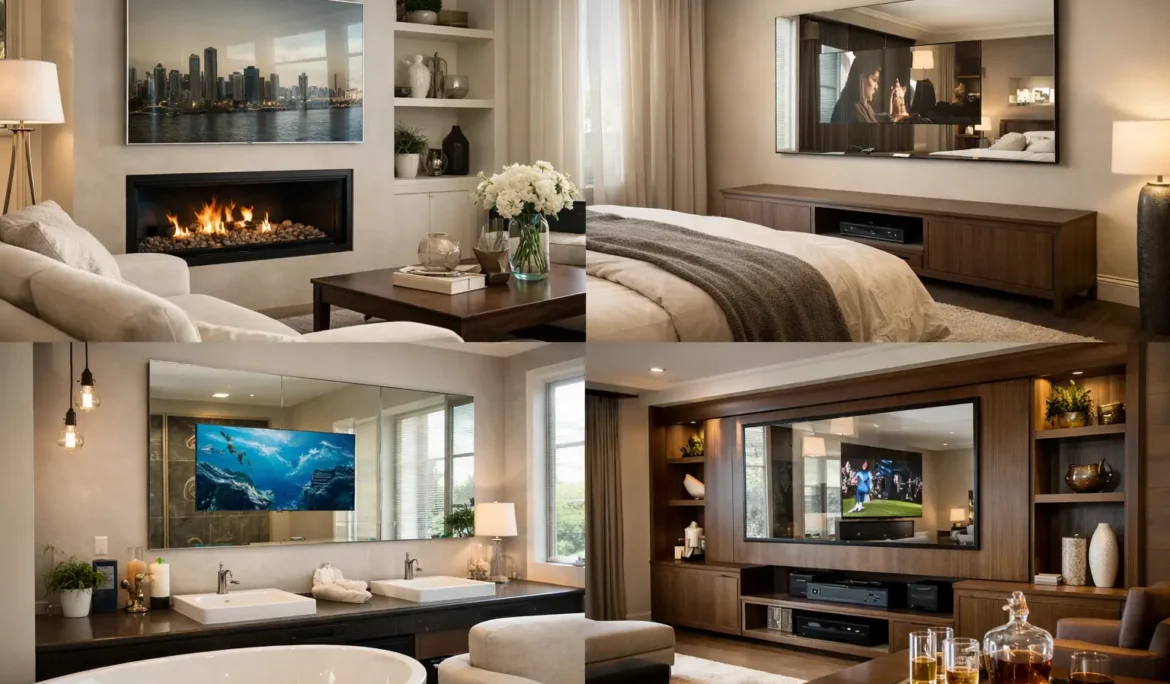
A mirror TV earns its place when it solves a design problem without creating a technology problem. The best mirror tv installation ideas do more than conceal a screen when it is off. They consider sightlines, lighting, heat, moisture, sound, wiring, and the simple question of how your household will use the room every day.
For homeowners who want refined spaces without sacrificing entertainment, a professionally planned mirror TV can make a bathroom, bedroom, living room, or covered outdoor area feel intentionally finished. The key is treating it as part of the room design from the start, not as a television added after the walls and furnishings are complete.
What Makes a Mirror TV Installation Work
A mirror TV uses specialized glass that functions as a reflective mirror until the display is turned on. When installed correctly, it can disappear into a vanity, wall panel, fireplace surround, or custom frame. When installed poorly, it can look like a dark rectangle, produce unwanted glare, or become difficult to service.
Placement matters as much as the display itself. A screen that looks elegant above a mantel may be uncomfortable to watch if it sits too high. A bathroom display needs an installation approach suited to humidity and the location of water sources. In a bright room, the mirror finish and available daylight must be considered together so images remain clear.
The strongest results come from a coordinated plan for the display, mounting method, power, source equipment, audio, lighting, and control. That planning protects the clean, uncluttered appearance that made a mirror TV appealing in the first place.
8 Best Mirror TV Installation Ideas
1. Build It Into a Primary Bathroom Vanity
A mirror TV integrated above a double vanity creates a polished morning routine space. It lets you check news, weather, music, or a favorite show while getting ready, then returns to a conventional mirror once switched off.
This application deserves careful technical planning. The screen should be positioned away from direct water exposure, with proper ventilation behind the assembly and a mounting approach that preserves access for future service. It is also worth planning lighting at the same time. Well-placed vanity lighting helps with grooming while limiting reflections that can interfere with TV viewing.
2. Use a Framed Mirror TV Above a Fireplace
For many living rooms, the fireplace is the natural visual anchor. A framed mirror TV above the mantel can preserve that focal point without leaving a large black screen visible all day. Choose a frame style that complements the mantel, stonework, millwork, or surrounding artwork so the installation feels architectural rather than electronic.
There is a trade-off: fireplace locations can place the screen higher than ideal viewing height. Before committing, evaluate seating distance and the height of the mantel. Heat management is equally important. The wall cavity, fireplace design, and temperature near the mounting location should all be assessed before installing sensitive electronics.
3. Make the Bedroom TV Disappear Into a Dressing Mirror
A bedroom is often where homeowners want entertainment but do not want the room to feel like a media room. A full-length or wide framed mirror TV near a dressing area gives the room a calmer look while still providing easy access to streaming, cable television, or whole-home video.
Consider the viewing angle from the bed before selecting the wall. A mirror directly opposite the bed is usually practical, but windows behind the bed or opposite the mirror can create glare during daytime viewing. Motorized shades and lighting control can make a noticeable difference here by giving the homeowner one-touch control of the room environment.
4. Add Entertainment to a Kitchen Feature Wall
A kitchen mirror TV works best when it is integrated into a feature wall, breakfast nook, or adjacent entertaining area rather than placed near heavy cooking zones. It can provide background music, sports coverage, recipes, or family programming while keeping the room visually clean when guests arrive.
Avoid placing the display where grease, heat, and steam will be constant concerns. Instead, choose a wall with a clear view from the island or table and coordinate the frame with cabinetry hardware, backsplash materials, or nearby decorative mirrors. A centralized control system keeps remotes off the counter and makes the experience far easier for the whole family.
5. Create a Gallery-Style Living Room Wall
A mirror TV can be one element of a carefully composed gallery wall, especially in formal living rooms where a conventional television would dominate the design. Combine the mirror TV with framed art, sconces, or symmetrical millwork to make the entire wall feel balanced whether the TV is on or off.
Scale is crucial. The mirror should be large enough to look intentional among surrounding pieces, but not so large that it overwhelms the wall when used as a reflective surface. This idea is especially effective when an interior designer and technology team coordinate frame dimensions, wire locations, and the placement of adjacent lighting before installation.
6. Integrate It Into Custom Millwork
Custom cabinetry offers one of the cleanest ways to install a mirror TV. It can sit within a recessed niche, align with cabinet doors, or become part of a bar, library, lounge, or media wall. The cabinetry gives the screen a deliberate home while concealing wiring and supporting speakers or other equipment nearby.
The millwork should allow air circulation and a practical access path behind or around the display. A beautiful installation should not require opening finished walls for a routine adjustment. Coordinate the cabinetmaker, electrician, and integration professional early so dimensions and backing are correct before the final finish work begins.
7. Place One in a Home Gym or Wellness Space
A mirror TV is a natural fit for a home gym, yoga room, or wellness area because the mirror already serves a practical purpose. When off, it supports workouts, stretching, and training form. When on, it can display instructor-led classes, music videos, sports, or entertainment without adding another screen to the room.
In these spaces, durability and visibility matter. Plan for bright lighting, reflections from windows, and the viewing height needed for standing users. Audio should also be considered. Built-in or discreetly placed speakers can provide clear sound without forcing the volume high enough to disturb other areas of the home.
8. Extend Entertainment to a Covered Outdoor Space
A mirror TV can add a refined touch to a covered patio, pool house, or enclosed porch, particularly where homeowners want a reflective surface rather than an exposed display. This application requires the most site-specific evaluation because outdoor-adjacent environments introduce temperature swings, humidity, dust, and changing light.
The display and enclosure must be appropriate for the conditions, and the wall location should remain protected from direct weather. Brightness is another deciding factor. A shaded porch may be suitable, while a wall facing afternoon sun may not deliver the viewing experience you expect. Here, the best idea is the one matched to the actual environment, not simply the one that photographs well.
Details That Keep the Installation Clean and Easy to Use
The visual success of a mirror TV depends on what is hidden behind it. Plan power and signal wiring before drywall is closed whenever possible. If source components, streaming devices, or video distribution equipment are located elsewhere, the mirror area stays uncluttered and there is less equipment competing for space behind the display.
Control should feel equally simple. A single remote, wall keypad, or smart home interface can turn on the TV, select a source, set the volume, and adjust lights or shades. For a bathroom or bedroom, that convenience matters. No one wants to search for multiple remotes while getting ready for work or settling in for the evening.
Audio deserves attention because the slim profile of a mirror TV may not deliver the full sound expected in a larger room. Depending on the space, discreet in-wall speakers, architectural speakers, or a soundbar designed into the millwork may be the better choice. The right solution depends on room size, furnishings, and how often the space will be used for serious viewing.
Start With the Room, Not the Screen
The most successful mirror TV installations begin with how you want the room to look and function when the TV is off. From there, the screen size, glass style, frame, mounting height, lighting, audio, and controls can be selected to support that vision.
For renovations and new construction in New Jersey or New York, early coordination prevents compromises after finishes are in place. Cine Acoustic helps homeowners bring those decisions together in one plan, so the result feels natural to live with from the first day. A mirror TV should not ask you to choose between a beautiful room and a useful one. It should give you both.