

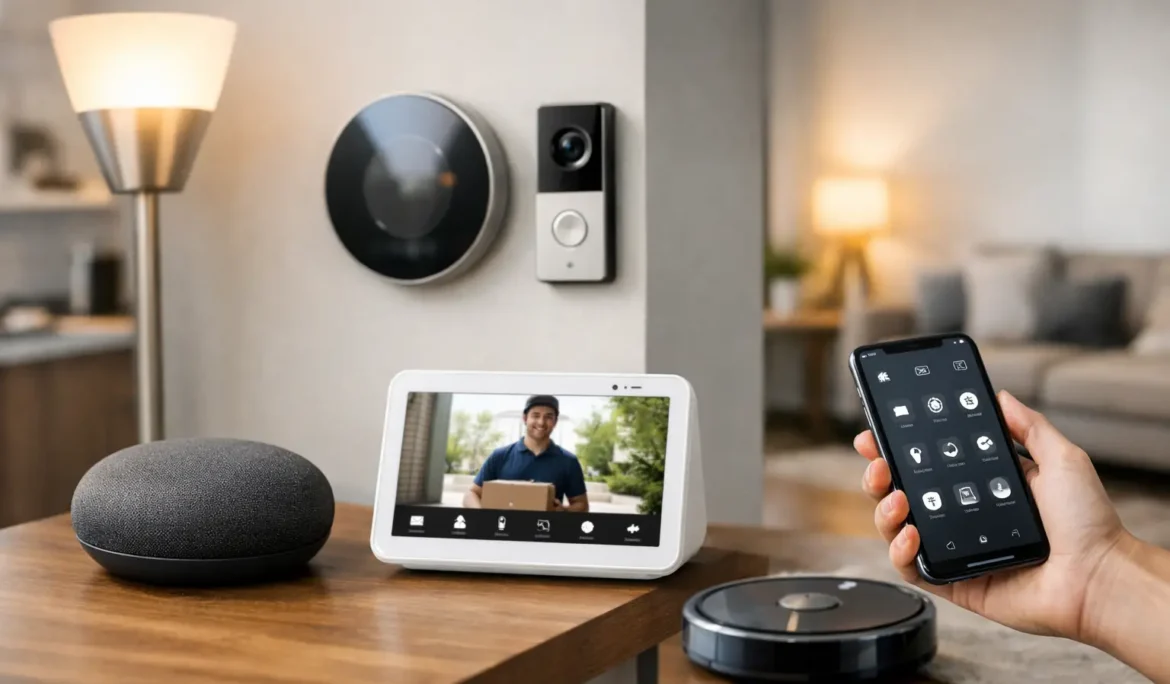
A smart home usually stops feeling smart the moment you need five apps, three remotes, and a family group chat just to turn on a movie. The best smart home upgrades do the opposite. They reduce friction, simplify routines, and make your home feel more comfortable, more responsive, and easier to enjoy every day.
That is the difference between adding gadgets and making meaningful upgrades. For most homeowners, the right investment is not the device with the longest feature list. It is the system that works reliably, fits the home’s design, and feels intuitive from the first day.
What makes the best smart home upgrades worth it?
The strongest upgrades solve a real problem. Maybe the Wi-Fi drops in key rooms. Maybe lighting is inconsistent and hard to manage. Maybe the family room has great equipment but still feels clunky to use. A worthwhile upgrade improves performance, reduces daily hassle, and works as part of a larger plan.
That larger plan matters more than many homeowners expect. Smart technology is at its best when entertainment, lighting, shading, control, and networking are designed to work together. If each piece is added in isolation, the home can quickly become fragmented. If the system is designed as one experience, it feels polished and dependable.
Best smart home upgrades that deliver the biggest impact
1. Whole-home control that simplifies everything
If there is one upgrade that changes how a home feels, it is unified control. Instead of jumping between apps for music, lights, shades, and media, a professional control platform brings the experience into one interface.
This is especially valuable in larger homes or renovated spaces where technology tends to accumulate over time. A single touchscreen, handheld remote, or mobile app can make it simple to start a movie night, lower the shades, dim the lights, and switch audio sources without confusion.
The key advantage is not novelty. It is usability. Homeowners who want technology without complexity usually benefit most from a control system that is tailored to how they actually live.
2. Lighting control that improves comfort and atmosphere
Lighting is one of the most overlooked smart upgrades because people often think of it as a convenience feature. In reality, it changes the mood, function, and feel of the entire home.
A well-designed lighting control system lets you set scenes for morning, entertaining, reading, dining, and evening wind-down. Instead of adjusting individual dimmers throughout the house, you can create the right environment with one touch.
It also helps with consistency. In open-concept homes, layered lighting can be difficult to manage manually. Smart control keeps the space balanced and intentional. For design-conscious homeowners, that matters as much as convenience.
3. Motorized shades that add privacy and polish
Motorized window shades are one of those upgrades that homeowners appreciate more after installation than they expected to. They improve privacy, manage daylight, reduce glare, and support a more refined look throughout the space.
They are especially useful in rooms with tall windows, hard-to-reach treatments, or strong afternoon sun. In media rooms and home theaters, shades can dramatically improve viewing conditions. In bedrooms and living areas, they support comfort without requiring constant adjustment.
The biggest benefit comes when shades are integrated with lighting and control. A room can respond as one environment instead of a collection of separate devices.
4. A stronger Wi-Fi and networking foundation
Many smart home frustrations are not caused by the smart devices themselves. They are caused by weak network design. If streaming buffers, video calls drop, or smart devices respond inconsistently, the network is often the issue.
A professionally designed Wi-Fi system gives the rest of the home a reliable foundation. That includes access points placed for proper coverage, network hardware sized for the property, and performance that supports entertainment, automation, and everyday connectivity.
This is one of the best smart home upgrades because it supports everything else. Without strong networking, even premium smart systems can feel unreliable. With it, the home performs the way it should.
Smart entertainment upgrades that elevate the home
5. Distributed audio for music in the right places
Whole-house audio remains one of the most satisfying upgrades because it blends into daily life so naturally. Music in the kitchen during breakfast, on the patio when guests are over, or in the primary bath at the end of the day adds value in a very immediate way.
The best systems are easy to control and thoughtfully zoned. Not every room needs speakers, and not every space should behave the same way. Good design matters here. You want coverage where it improves the experience, not audio for the sake of saying the house has audio.
For homeowners who entertain often, this upgrade has an outsized impact. It creates atmosphere without cluttering rooms with standalone speakers.
6. A better media room or home theater experience
A smart home is not only about utility. It should also be enjoyable. Upgrading a family room, media room, or dedicated theater with integrated control, high-performance audio, and a properly selected display or projection system can transform how the space is used.
This is where thoughtful design matters more than product hype. Room dimensions, speaker placement, acoustics, lighting, and control all affect the final result. A space with premium components can still disappoint if the experience is not cohesive.
For families, this often becomes one of the most-used rooms in the house. For design professionals and homeowners planning a renovation, it is also an area where technology should complement the architecture rather than compete with it.
7. Outdoor entertainment that extends the home
Outdoor living areas have become much more important to homeowners, and smart upgrades can make those spaces far more usable. Weather-ready audio, outdoor displays, and integrated control let the patio, pool area, or covered porch feel like a true extension of the home.
The trade-off is that outdoor systems require the right product selection and installation approach. Exposure, brightness, sound dispersion, and durability all matter. This is not an area where indoor products should be pushed beyond their intended use.
When done correctly, outdoor entertainment supports everything from quiet evenings to full-scale gatherings without creating a maintenance headache.
Security and convenience upgrades that earn their keep
8. Smart entry and access control
Front-door technology has improved significantly, but the best results come from treating access control as part of the home’s overall system. Video at the entry, notifications, and managed access can improve convenience while helping homeowners stay connected to what is happening around the property.
This is especially useful for busy households, second-home owners, or families managing deliveries and service appointments. The goal is not to create a complicated security routine. It is to make entry and awareness easier to manage.
Like other smart upgrades, this works best when it is intuitive. If a system feels like one more thing to troubleshoot, it will not be used consistently.
9. Scenes and automation that match real routines
Automation is where many homeowners either become enthusiastic about smart living or completely lose patience with it. The reason is simple. Good automation feels helpful. Bad automation feels intrusive.
The best smart home upgrades include scenes that reflect actual habits. A “Good Morning” scene might gently raise shades, bring lights up to a comfortable level, and turn on music in the kitchen. An “Away” scene might power down selected systems and adjust the home for the day. A “Movie Night” scene should work every time without a complicated setup process.
This is where professional planning makes a real difference. Automation should be customized, not generic. A family with young children, a couple who entertain often, and a homeowner focused on a dedicated theater space will not use the home the same way.
How to choose the right upgrades for your home
Not every home should start in the same place. For some, the best first step is improving the network because every connected device depends on it. For others, lighting and shading will create the most noticeable difference in daily comfort. If the pain point is entertainment, a better media experience or distributed audio may be the right priority.
The smartest approach is to think in terms of lifestyle and infrastructure together. Ask what feels inconvenient today, what spaces matter most, and whether each upgrade can grow as the home evolves. A system should support future integration, not create more silos.
That is why homeowners often benefit from working with a local expert team that can design around the property, the family’s routines, and the desired level of simplicity. At Cine Acoustic, that consultative approach helps clients avoid mismatched products and one-off decisions that do not age well.
A smart home should never feel like a part-time job. The right upgrades make the house calmer, more enjoyable, and easier to live in – which is exactly why the best systems are the ones you barely have to think about once they are in place.