

A beautiful display and premium speakers can still leave you with a disappointing room if the installation is treated like a simple equipment drop. That is why knowing how to choose a home theater installer matters so much. The right partner does more than mount a screen and connect a few wires – they help create a room that looks refined, sounds balanced, feels intuitive, and works reliably day after day.
For most homeowners, the real challenge is not finding someone who says they install home theaters. It is finding a professional who can translate your room, your lifestyle, and your expectations into a system that performs the way it should. A dedicated theater, a media room, or a multi-use family space all call for different decisions, and a good installer knows the difference.
How to choose a home theater installer without guesswork
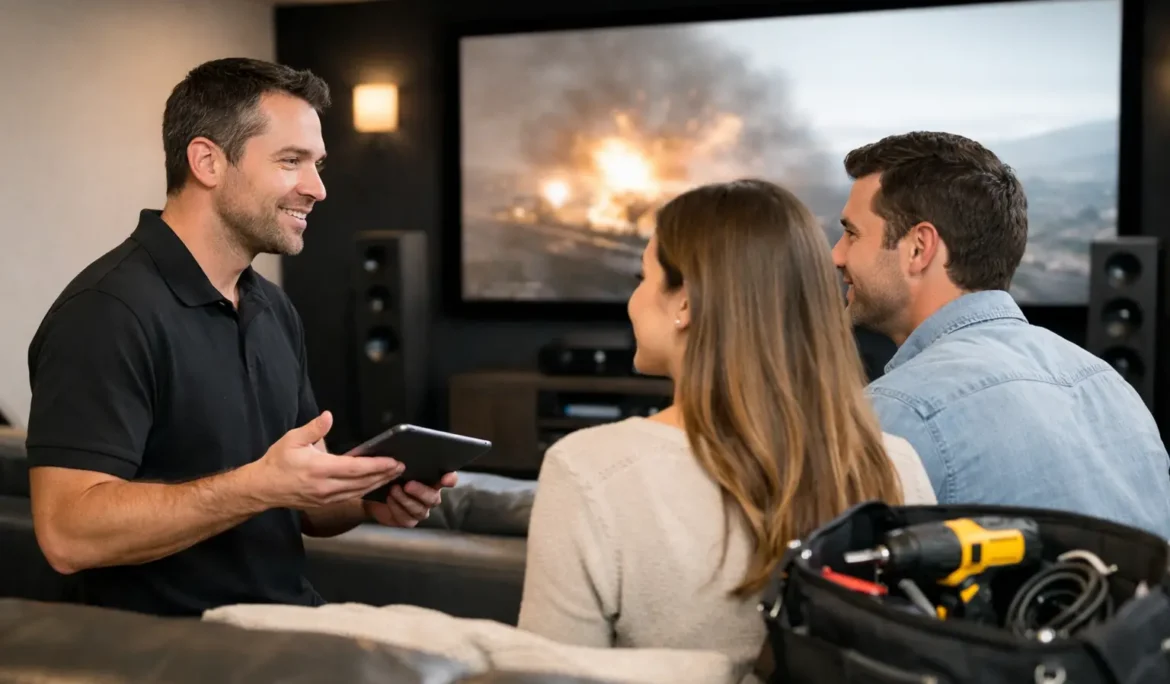
Start by looking at how the company approaches the project, not just the products they mention. A qualified installer should ask thoughtful questions about the room, seating, lighting, usage habits, design preferences, and control expectations. If the conversation begins and ends with screen size or speaker brand, that is usually a sign the process is too narrow.
A home theater is an integrated environment. Picture quality, sound performance, room acoustics, lighting, source components, control systems, and network stability all affect the final experience. The installer you choose should understand how those pieces interact. That does not mean they need to overwhelm you with technical language. It means they should be able to simplify the complexity and explain why certain decisions will improve daily use.
The strongest installers also design with the room in mind. Ceiling height, window placement, wall construction, seating distance, and ambient light all influence what will work best. An experienced professional will not force the same solution into every home. They will tailor the system so it fits both the architecture and the way your family actually watches movies, sports, and streaming content.
Look for a design-first process
The best home theater projects begin long before installation day. They start with consultation, discovery, and planning. This is especially important if you are building a new home, remodeling, or working with an interior designer or architect. Early planning allows the installer to coordinate speaker placement, wiring paths, equipment locations, lighting control, and finish details before walls are closed up.
If a company treats design as optional, the result can feel pieced together. You may end up with visible wiring, awkward speaker locations, equipment in the wrong place, or controls that are harder to use than they should be. A design-first process helps avoid those compromises.
This is also where aesthetics come into play. Many homeowners want high performance without turning the room into a visibly technical space. A skilled installer knows how to preserve the look of the room while still delivering strong audio and video results. That balance matters in media rooms and shared living spaces, where technology should complement the home rather than dominate it.
Ask how they handle integration
A true home theater installer should be able to explain how the theater will work with the rest of the home environment when needed. That may include lighting scenes, universal control, hidden equipment, networking, and simple day-to-day operation for every member of the household.
Ease of use is often the difference between a system that gets enjoyed regularly and one that becomes frustrating. Homeowners usually do not want five remotes, a stack of apps, and a confusing startup sequence. They want one touch to watch a movie, dim the lights, and start the right source. The installer should prioritize that experience from the beginning.
Experience matters, but relevant experience matters more
Not every AV contractor brings the same level of specialization. Some focus on basic TV mounting. Others are equipped to design and integrate high-performance spaces with surround sound, acoustic considerations, automation, and clean architectural detailing. When evaluating companies, look for experience that matches the level of project you want.
Ask about the kinds of rooms they typically build. A professional who regularly works on custom installations is more likely to anticipate challenges before they become problems. They should be comfortable discussing speaker placement, viewing angles, equipment ventilation, control options, and room-specific performance factors in plain language.
It also helps to ask how they manage unexpected conditions on site. Older homes, finished basements, open-concept layouts, and rooms with a lot of glass can all introduce limitations. A seasoned installer will not pretend every room is perfect. They will explain the trade-offs and show you how they would maximize performance within the space you have.
Pay attention to how they communicate
Communication tells you a great deal about how the project will go. Are they clear, organized, and responsive? Do they listen before recommending solutions? Do they explain choices in a way that makes sense without talking down to you?
A reliable installer should make the process feel manageable. You should come away from early conversations with more clarity, not more confusion. That is especially important for homeowners who want a premium result but do not want to become technical experts themselves.
Check whether they offer support after installation
One of the most overlooked parts of how to choose a home theater installer is what happens after the system is turned on for the first time. Even the best-designed systems benefit from support, adjustments, and occasional updates. Technology changes. Usage patterns change. Sometimes a control setting needs refinement after the family has lived with the system for a few weeks.
That is why ongoing service matters. A company that stands behind its work is far more valuable than one that disappears as soon as the installation is complete. Ask what post-installation support looks like. Will they help with fine-tuning? Can they troubleshoot issues if a source component stops communicating properly? Will they be available if you want to expand or update the room later?
For homeowners in New Jersey and New York, working with a local expert can make this part much easier. Responsive support is difficult to replace, especially when the system is central to how the household relaxes and entertains.
Review their recommendations, not just their credentials
Credentials and certifications have value, but they are only part of the picture. What really matters is whether the installer recommends solutions that fit your home and your goals. A good consultant does not push a one-size-fits-all setup. They guide you toward the right performance level, the right control experience, and the right layout for the room.
You can often tell within one conversation whether the installer is listening or simply selling. Thoughtful recommendations should reflect how you plan to use the space. A dedicated movie room for frequent evening viewing has different priorities than a bright family room used for sports, gaming, and everyday TV. The right installer will account for those differences.
This consultative approach is what separates a transaction from a long-term relationship. Companies like Cine Acoustic focus on making sophisticated systems feel approachable and dependable, which is exactly what most homeowners want. They are not looking for complexity. They are looking for confidence that everything will work together.
Signs you have found the right fit
By the time you narrow your options, the right installer should feel less like a vendor and more like a trusted advisor. They should understand the room, explain the trade-offs honestly, respect the design of your home, and prioritize usability alongside performance.
They should also show consistency. Good design thinking, clean execution, and dependable follow-through usually appear together. If a company is thorough in consultation, thoughtful in recommendations, and clear in communication, that is often a strong indicator of how they will handle the full project.
A home theater is not only about equipment. It is about experience – the lights dimming at the right moment, the sound feeling immersive without strain, the picture looking natural in the room, and the system responding simply every time you use it. Choosing the right installer is what turns that vision into something you can enjoy without second-guessing the technology.
The best choice is usually the professional who makes the process feel clear, customized, and dependable from the first conversation. When that happens, you are not just installing a theater. You are creating a room your family will keep coming back to.