

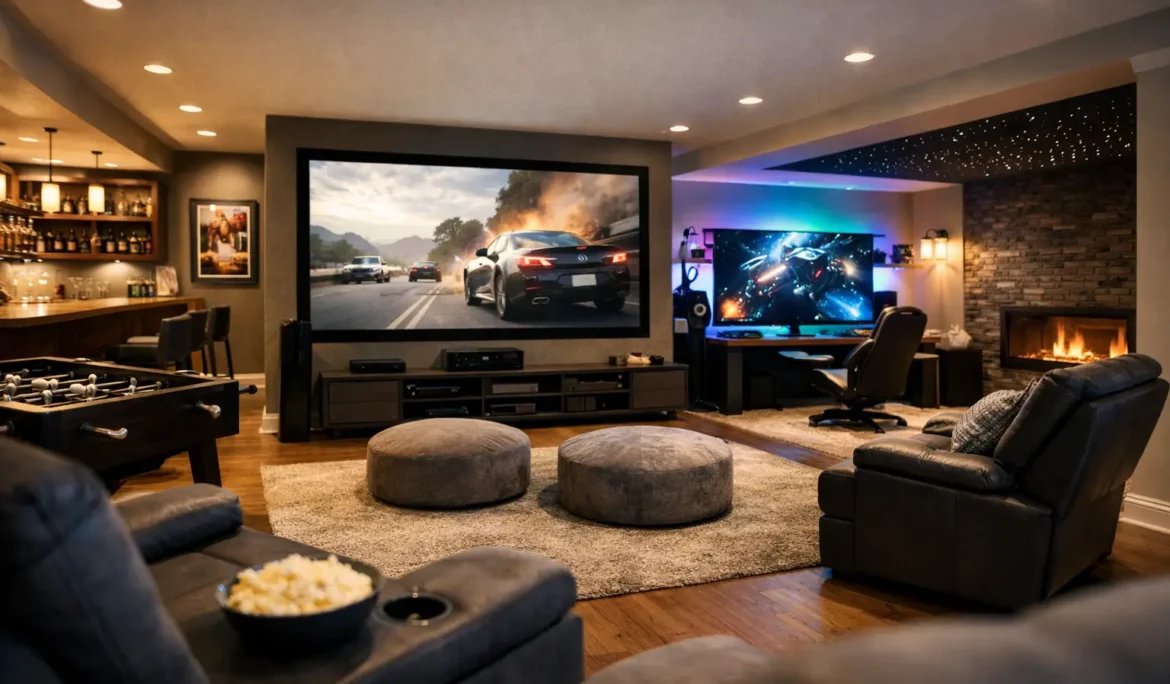
The best media rooms are not built around a single TV or a big speaker package. They are built around how your family actually watches, listens, relaxes, and hosts. That is why smart custom media room ideas start with lifestyle first, then layer in the technology, lighting, acoustics, and design details that make the room feel effortless to use.
A media room can be many things at once. It might be the family movie space on Friday night, the game-day gathering spot on Sunday, and a quiet streaming room after the kids go to bed. The right design does not force the room into one rigid purpose. It gives you strong performance, clean aesthetics, and simple control so the space works every day, not just during special occasions.
What makes custom media room ideas worth it
A custom media room should do more than look impressive in photos. It should solve the problems that show up in real homes – glare on the screen, uneven sound, cluttered components, confusing remotes, and seating that looks good but is uncomfortable after an hour. Customization matters because every room has different dimensions, construction materials, natural light, and viewing habits.
This is also where many homeowners realize that equipment alone is not the answer. A premium display can still underperform in a bright room. Great speakers can still sound harsh if the space is too reflective. Even the best content sources become frustrating if switching between them takes three remotes and a guessing game. The room has to be designed as a system.
Custom media room ideas that improve performance and comfort
1. Build the room around screen placement, not furniture leftovers
One of the most common mistakes is treating the media room like a standard living room with a large TV added at the end. In a custom space, screen placement comes first. The display should sit at a comfortable viewing height, with seating positioned for the right sight lines and distance.
That choice affects almost everything else, from speaker layout to traffic flow. If the room is wider than it is deep, a large flat-panel display may make more sense than trying to force a projection setup. If the room is enclosed and light can be controlled well, a projector and screen can create a more cinematic feel. The better option depends on the room and your priorities.
2. Use layered lighting instead of one bright overhead fixture
Lighting changes the entire experience. A single ceiling fixture may be practical for cleaning the room, but it is rarely flattering during a movie or even casual TV viewing. Layered lighting creates flexibility.
Recessed lights on dimmers, soft sconces, LED accent lighting, and task lighting near seating all play different roles. The goal is to reduce glare while keeping the room comfortable and safe to move through. Lighting control also matters. Homeowners want to press one button and have the room respond appropriately, rather than adjusting multiple switches every time they sit down.
3. Treat the acoustics so the sound matches the investment
If you want the room to feel polished, acoustics need attention early. Hard surfaces like glass, drywall, and wood floors can create reflections that make dialogue harder to understand and surround effects less precise. That does not mean the room has to look like a recording studio.
Acoustic treatments can be integrated in ways that support the design of the room. Fabric wall panels, acoustic art, carpeting, rugs, and strategic furniture choices all help. In many homes, better acoustics do more for day-to-day enjoyment than simply adding more speakers.
4. Hide the technology without sacrificing access
The cleanest media rooms tend to be the easiest to live with. That usually means planning where components, wiring, and power will go before the room is finished. Visible cable bundles and stacked equipment on open shelves can make even a beautiful room feel temporary.
Equipment can often be placed in a dedicated cabinet or rack location to keep the room visually calm and better organized. At the same time, access for service and upgrades should not be overlooked. A good custom design balances aesthetics with long-term practicality.
Design choices that make the room feel intentional
5. Choose seating for the way you actually use the space
Not every media room needs two rows of dedicated theater chairs. For some families, a large sectional is the better fit because the room is used as a casual everyday space. For others, a mix of theater seating and lounge seating creates the right balance.
Comfort matters, but so does placement. You want every seat to have a strong view of the screen and a satisfying audio experience. If the room is used for entertaining, cupholders, side tables, and charging access can make a noticeable difference. Small details often define whether the room feels luxurious or merely equipped.
6. Plan storage so the room stays clean
Media rooms attract clutter. Game controllers, remotes, blankets, charging cables, and accessories need a place to go. Without built-in storage or well-planned cabinetry, the room can lose its appeal quickly.
Storage does not have to dominate the design. Low-profile cabinetry, concealed drawers, and integrated shelving can keep essentials close without making the room feel crowded. When storage is built into the design, the room stays easier to maintain and more enjoyable to use.
7. Make the room versatile with multi-use zones
Some of the best custom media room ideas are not about adding more equipment. They are about making the room more adaptable. A media room may include a small bar area, a gaming zone, or flexible seating that supports both movie nights and casual conversation.
This matters especially in open-concept homes or finished basements where the room is expected to serve more than one purpose. The key is keeping those zones cohesive. The room should still feel like one well-designed environment, not a collection of unrelated features.
Technology choices that simplify the experience
8. Use one control system for the room
A media room should feel easy from the first day forward. If the room requires a lesson every time someone wants to watch a movie, the design has missed the mark. Unified control is one of the most valuable upgrades in a custom installation.
When the display, audio, lighting, shades, and sources are integrated into one simple control platform, the room becomes far more inviting to use. That convenience is not just about luxury. It removes friction and makes the space more likely to be enjoyed regularly.
9. Design for content quality, not just hardware specs
Many homeowners focus on display size and speaker count, but content delivery matters just as much. A media room can only perform as well as the sources feeding it. Reliable streaming, well-organized media access, and a strong home network all shape the experience.
This is where professional planning becomes valuable. The room should not suffer from buffering, signal dropouts, or awkward source switching. In larger homes, networking and distribution need to be considered as part of the room design, not as an afterthought.
10. Add shades when natural light is a challenge
A beautiful room with large windows can become frustrating if daytime viewing is washed out. Motorized shades are one of the most practical media room upgrades because they directly improve screen visibility and help manage ambiance.
They also support convenience. Instead of manually adjusting every window before watching something, shades can respond with the rest of the room. This is especially useful in multi-purpose spaces where the room needs to shift from bright and open during the day to controlled and immersive in the evening.
How to choose the right custom media room ideas for your home
The right direction depends on how formal or casual you want the room to feel. Some homeowners want a dedicated cinema-style environment with dramatic lighting and focused seating. Others want a refined media lounge that blends beautifully with the rest of the home. Both approaches can be excellent if the design matches the way the room will be used.
It also depends on the room itself. Ceiling height, wall construction, ambient light, and adjacent spaces all influence what makes sense. An experienced design team can help you avoid investing in the wrong solutions for the room. That guidance is often what separates a room that looks upgraded from one that feels genuinely complete.
For homeowners in New Jersey and New York, that local planning can be especially helpful when a project involves renovation coordination, smart home integration, or matching technology to the architectural style of the home. Companies like Cine Acoustic approach media rooms as part of a broader living experience, which is why the best results usually come from considering performance, usability, and design together.
A great media room does not need to be overcomplicated to feel impressive. It needs to be thoughtfully designed, easy to use, and tailored to the people who live there. If your room supports the way you relax, entertain, and spend time together, it will keep delivering long after the novelty of new equipment wears off.
The smartest place to start is not with a product list. It is with a clear picture of how you want the room to feel when the lights dim and everything works exactly as it should.