

A new projector, premium display, or Dolby Atmos receiver can look impressive on a specification sheet, yet still leave a movie feeling flat in the room. Dialogue may be hard to follow, dark scenes may lose detail, and action can sound loud without feeling immersive. Home theater calibration is the final, essential step that helps your equipment perform as one system rather than a collection of expensive components.
For homeowners who want movie nights to feel effortless, calibration is not about chasing technical numbers for their own sake. It is about making the picture natural, the sound clear, the controls simple, and the experience consistent whether you are watching a family film, a championship game, or a concert.
What Home Theater Calibration Actually Does
A theater is affected by more than the equipment installed in it. Screen size, seating distance, speaker placement, ceiling height, wall finishes, ambient light, furniture, and even the room’s shape influence what you see and hear. Calibration accounts for those real-world conditions after the system is in place.
On the video side, a professional adjusts the display or projector so brightness, contrast, color, motion settings, and shadow detail are appropriate for the screen and viewing environment. The goal is not an artificially vivid image. It is a balanced picture that preserves the detail filmmakers intended, from a sunlit beach to a dimly lit nighttime scene.
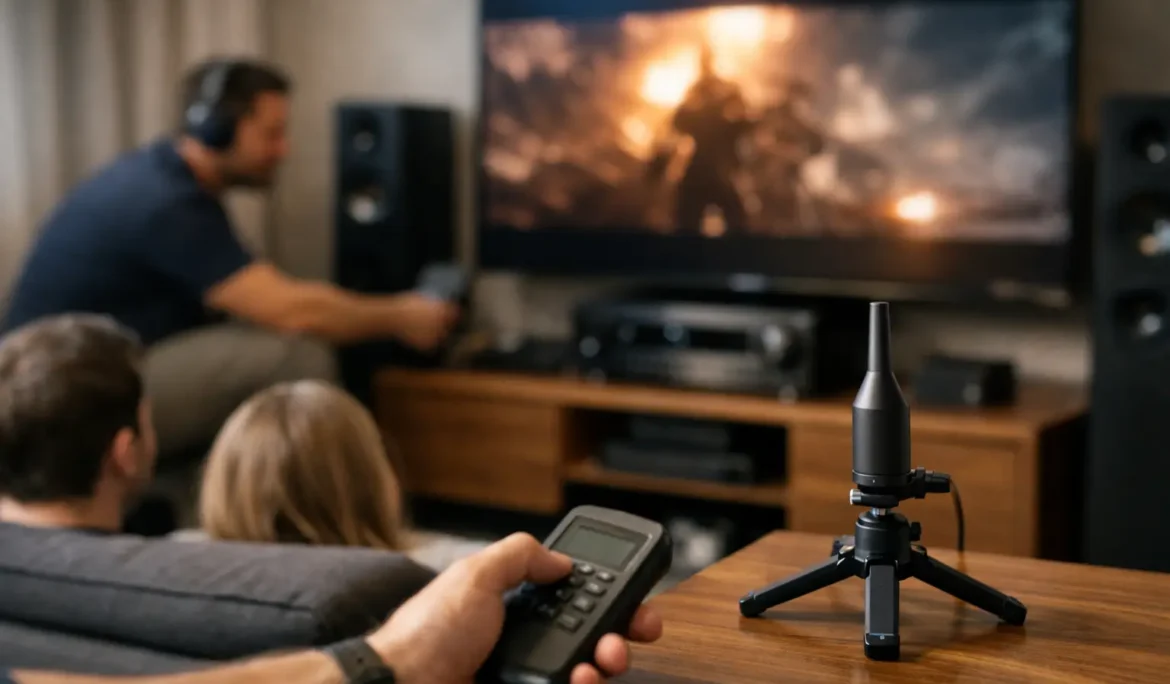
Audio calibration measures how each speaker and subwoofer responds from the primary listening positions. The system is then tuned so sound arrives at the right level and time. A properly calibrated surround sound system creates a convincing sound field around the audience while keeping voices anchored to the screen.
Just as importantly, calibration includes how the theater is used. Source devices, streaming settings, control interfaces, lighting scenes, and audio modes should work predictably. The best technology disappears into the background, leaving your family with a simple way to press play and enjoy the room.
Why a Great System Can Still Sound or Look Wrong
Most audio and video products are designed to work in a wide range of homes. Their default settings are compromises. A television’s showroom mode may push brightness and color to stand out under retail lighting, but that same setting can cause eye fatigue and erase subtle color gradations in a darker media room.
Sound presents a similar challenge. Speakers may be excellent, but the room can reinforce certain bass frequencies while reducing others. That is why one seat can have overwhelming bass and another can seem to have very little. Reflections from hard surfaces can also make dialogue feel less distinct, even when the center speaker itself is high quality.
Automatic setup tools built into modern receivers can provide a helpful starting point. They are not always the final answer. Their results depend on microphone placement, room conditions, speaker layout, and the limits of the software. A trained technician can verify what the system is doing, make informed adjustments, and balance objective measurements with what sounds natural in your room.
Picture Calibration: Detail Without the Artificial Look
A well-calibrated picture should not call attention to itself. Skin tones look believable, white areas are neutral rather than blue, and dark scenes retain texture instead of becoming a solid gray or black mass. You should be able to see the detail in a dark suit without turning the entire image brighter than it should be.
Light control matters before any display setting is changed. A dedicated theater with motorized shades or blackout treatments can support a projector and a more cinematic image. A multipurpose family room with windows and daytime viewing may benefit from a bright premium television and settings tailored for both daytime and evening use. Neither approach is universally better. The right choice depends on how the room fits your lifestyle.
Motion processing is another common trade-off. Some viewers prefer a smooth image for sports, while others find aggressive smoothing makes films look unnatural. A thoughtful setup can create appropriate viewing modes, so the screen does not have to be adjusted every time the content changes.
Sound Calibration: Making Every Seat More Enjoyable
In a theater, sound should feel spacious without making the listener work to understand it. The center channel handles much of the dialogue, so its placement, level, and integration with the left and right speakers are especially important. Raising volume is not a true solution when dialogue is unclear. Correct alignment and room-aware tuning often make voices easier to hear at comfortable levels.
Surround and height speakers provide the dimension that makes a Dolby Atmos soundtrack engaging. Their placement should support the room and seating plan, not simply follow a generic diagram. A room with one row of seats has different needs than a larger entertainment space with several listening positions.
Subwoofers deserve equal attention. They provide impact, but their role is not to overpower every scene. When properly placed and calibrated, bass is controlled, even, and integrated with the rest of the soundtrack. You feel the weight of a helicopter passing overhead or a musical score building, without a constant boom that overwhelms speech and detail.
The Room Is Part of the System
The most refined electronics cannot fully overcome a room that has been overlooked. Hard floors, glass, open-concept layouts, and large reflective surfaces can all influence clarity. That does not mean every theater needs to look like a recording studio. It means the design should consider acoustics early enough that performance and aesthetics support each other.
Speaker locations can be planned around architectural details. Acoustic treatments can be discreetly integrated where they offer meaningful benefit. Lighting control can prevent reflections on the screen while preserving a welcoming path into the room. These decisions are easiest during construction or renovation, but existing spaces can also be improved through careful evaluation.
For homeowners in New Jersey and New York, this consideration is particularly valuable in multipurpose rooms where a theater may share space with family gatherings, entertaining, or everyday living. A successful design respects the room’s broader purpose instead of demanding that everyone adapt to the technology.
Calibration Should Include the Way You Watch
The final test is not a measurement screen. It is the experience of using the theater on an ordinary Friday night. If family members need separate remotes, cannot find the right input, or are unsure which sound setting to select, the system has not been fully finished.
A customized control system can bring the display, audio, sources, lighting, shades, and climate preferences into a clear set of activities. One command can prepare the room for a movie, lower the shades, set the lights to a comfortable level, power the right components, and select the correct viewing mode. The sophistication is behind the scenes, while the interface remains approachable.
This is also where a consultative integrator adds lasting value. The right setup reflects how your household actually uses the space. A serious movie enthusiast may want carefully tuned reference modes and a dedicated viewing environment. A busy family may prioritize reliable access to streaming, sports, gaming, and music without a learning curve. Both deserve a system that feels intentional.
When to Recalibrate Your Theater
Calibration is not necessarily a one-time event. It is wise to review the system after a major equipment upgrade, a move to new seating, a renovation, new window treatments, or changes to speaker locations. Projectors may also need periodic attention as their light source changes over time.
You may notice a need for service if dialogue has become difficult to understand, bass sounds uneven, the image feels too dim or overly bright, or a new source device is not delivering the expected quality. These are not always signs that something has failed. Often, the system simply needs its settings and connections reviewed as the room or your viewing habits evolve.
Cine Acoustic approaches home theater calibration as part of a complete, long-term experience, not an afterthought following installation. The right adjustments turn high-performance technology into a room people want to use, confidently and often. When the picture draws you in, the sound feels natural, and the room responds with a single touch, the technology has done its job quietly.