

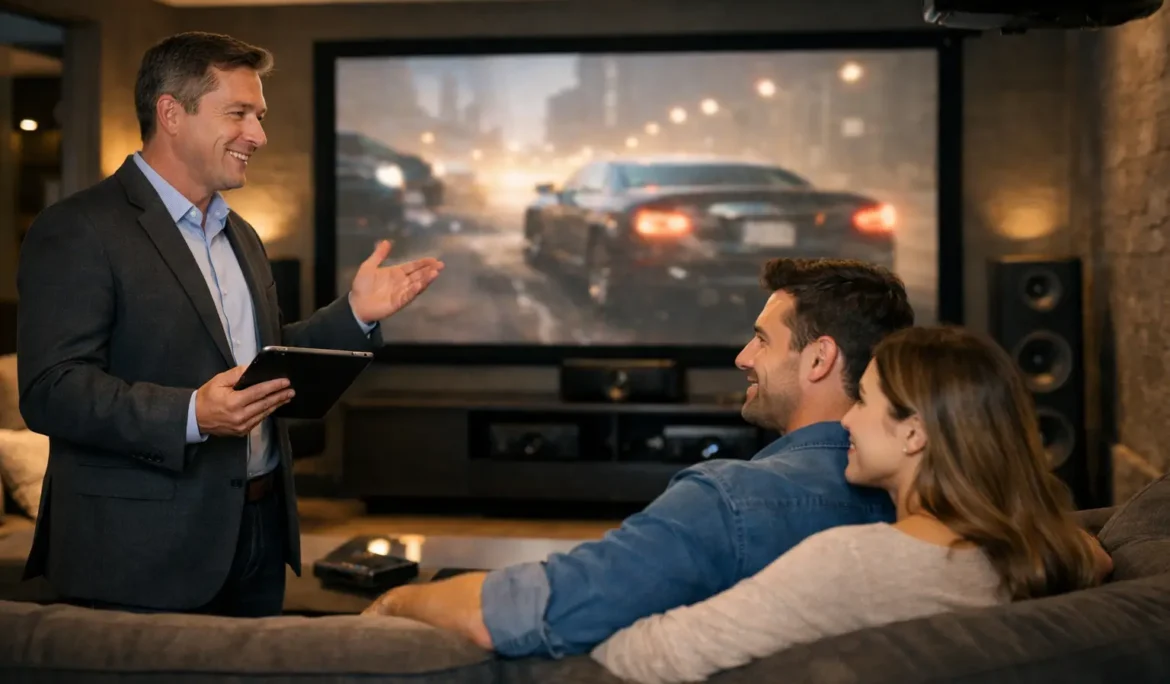
A great theater is not defined by the size of the screen alone. It is the moment the room disappears, dialogue stays clear during a quiet scene, bass feels present without rattling the rest of the house, and every family member knows exactly how to start the movie. A home theater consultant New Jersey homeowners can rely on helps create that experience by making hundreds of technical and design decisions feel simple.
For a dedicated theater, media room, basement renovation, or multipurpose living space, professional guidance keeps the project focused on how you actually want to use the room. The result should feel impressive, but never complicated.
What a Home Theater Consultant in New Jersey Does
A consultant looks beyond individual products to understand the complete experience. That begins with the room itself: its dimensions, ceiling height, natural light, seating plan, construction, and relationship to nearby spaces. A projector may be an excellent choice in one room, while a large direct-view display is the better answer in another. Neither decision should be based on a showroom impression alone.
The process also considers how the system will fit your household. Some clients want a true cinema environment for movies, sports, and gaming. Others need a polished family room that shifts from everyday television to entertaining at the touch of a button. A consultant translates those preferences into a thoughtful system plan, including display technology, speakers, amplification, acoustics, lighting, control, networking, and content sources.
Just as importantly, the consultant coordinates the details that are difficult to change later. Speaker locations, equipment ventilation, wiring pathways, screen placement, lighting zones, and window treatment planning are far easier to address before walls are closed or finishes are complete.
The Room Matters More Than a Spec Sheet
It is easy to compare a display’s size or a speaker’s published specifications. It is much harder to predict how those products will perform in a particular home. A theater designed around the room will usually deliver a more satisfying experience than a collection of premium components selected independently.
Picture quality starts with light control
Windows, recessed fixtures, wall colors, and reflective surfaces all affect the image. A dedicated theater can be optimized for a projector and a cinematic screen, especially when lighting and motorized shades are planned together. In a brighter, open-concept room, a high-performance television may offer the stronger everyday image.
This is a practical trade-off, not a one-size-fits-all rule. Projectors can create remarkable scale and immersion, while large displays bring brightness, convenience, and excellent performance in rooms with more ambient light. The right choice depends on how the room is used at noon as much as it does at night.
Sound needs a plan, not just more speakers
Surround sound is about placement, calibration, and control as much as speaker count. A properly designed Dolby Atmos system creates a convincing sound field with clear dialogue, dimensional effects, and balanced impact across the seating area. It should not leave one chair sounding excellent while everyone else misses the experience.
Acoustic planning also matters. Hard floors, glass, large open areas, and bare walls can make sound feel harsh or muddy. The answer is not always visible acoustic treatment. Strategic speaker selection, placement, calibration, furnishings, and room-friendly solutions can make a meaningful difference while respecting the home’s design.
Seating determines the experience
A theater should be designed around where people will sit, not around an empty floor plan. Sightlines affect screen height and size. Seating distance influences picture choice. The number and location of seats shape the audio design. A consultant considers these elements together so the room feels comfortable for a family movie night as well as a full house for the big game.
Technology Should Feel Easy From the First Use
The best home theater technology fades into the background. You should not need separate remotes, a cheat sheet of inputs, or a family member assigned to make the system work. A well-programmed control solution can bring the display, audio, sources, lights, shades, and climate settings into one intuitive interface.
That simplicity has real value. One button can prepare the room for a movie by lowering shades, setting the lights, powering the system, and selecting the right source. When the movie ends, another command can restore the room for conversation or everyday use. Whether the preferred platform is Control4, Savant, URC, or another appropriate solution, the goal is the same: reliable control that fits naturally into your routine.
Networking is part of that reliability. Streaming, control, gaming, and connected devices all depend on a stable network. A theater can have exceptional audio and video equipment, yet still feel frustrating if streaming drops, controls lag, or wireless coverage is inconsistent. A complete consultation accounts for the network as part of the entertainment experience, not as an afterthought.
Why Planning Early Protects the Design
Home theaters often involve multiple trades and design decisions. Architects, builders, electricians, interior designers, and homeowners each bring important priorities to the project. Early technology planning gives those priorities a clear path forward.
For example, a recessed screen pocket, in-wall speakers, hidden equipment, low-voltage wiring, and lighting keypad locations need to be considered before final construction. If the room includes custom millwork or a fireplace, display positioning and ventilation deserve careful coordination. In a finished home, thoughtful design is still possible, but the available options may differ.
A local consultant can also visit the site, verify conditions, and adjust the plan as the project progresses. That hands-on involvement helps reduce surprises between the original concept and final installation.
A Better Experience Than Buying Components Separately
Homeowners can find no shortage of displays, speakers, soundbars, and streaming devices. The challenge is making them perform as one system in one specific room. Separate purchases can lead to mismatched equipment, visible wires, unreliable controls, and service questions passed from one vendor to another.
A full-service approach brings design, product selection, installation, customization, and support together. It gives homeowners a single expert team responsible for the result, rather than a stack of boxes and a collection of manufacturer instructions.
This does not mean every theater needs the same equipment or level of complexity. A refined media room may need a discreet display, architectural speakers, lighting scenes, and easy control. A dedicated cinema may call for projection, immersive surround sound, acoustic considerations, and a premium movie platform such as Kaleidescape. The system should be scaled to the room and lifestyle, not built around features you will never use.
Questions to Ask Before Choosing a Consultant
The right conversation should start with your goals, not a product list. Ask how the consultant evaluates room conditions, handles coordination with your design or construction team, and approaches long-term service. You should also understand how the system will be demonstrated and personalized after installation.
Look for recommendations that are explained in plain language. You deserve to know why a particular display, speaker layout, control platform, or lighting strategy is being proposed. A dependable consultant will explain the trade-offs clearly and make recommendations that support your priorities.
It is also wise to ask who will support the system once the installation is complete. Technology should continue to feel dependable after the first movie night. Local service, system documentation, and a team that knows your installation make a difference when your needs change or a question arises.
Build a Theater That Belongs in Your Home
A home theater should complement the way your home looks and the way your family lives. That may mean speakers that blend into the ceiling, equipment concealed in custom cabinetry, lighting that shifts with the activity, or a dedicated room built for true cinematic impact. The best designs make those details feel intentional rather than technical.
Cine Acoustic approaches theater design as a complete experience, with the performance, convenience, and long-term reliability homeowners expect from a professionally integrated system. Every decision should serve a simple purpose: helping you enjoy more of the entertainment you love, with less effort.
The most rewarding theater is the one that invites people to sit down, press play, and stay a little longer.