

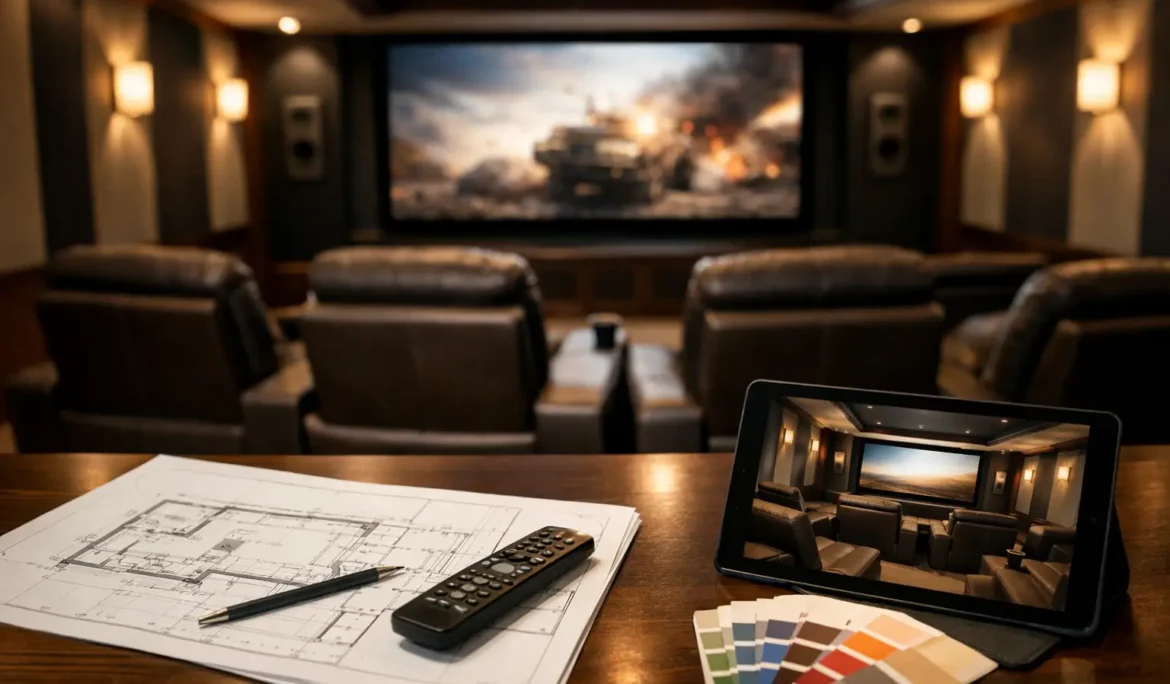
A great theater room usually goes wrong before the first speaker is installed. The screen ends up too high, the seating is squeezed in after the fact, the lighting washes out the image, or the equipment works well but feels frustrating to use. A smart home theater room planning guide starts earlier – with how the room should feel, how it should perform, and how simple it should be for your household to enjoy every day.
That matters because a home theater is not just a collection of products. It is a system. Screen size affects seating distance. Seating affects speaker placement. Speaker placement affects wall construction, acoustic treatment, and wiring. Lighting, shades, and control all shape the final experience just as much as the display or projector. When the planning is thoughtful, the room feels effortless. When it is not, even premium equipment can underdeliver.
Start your home theater room planning guide with the room itself
The room sets the ceiling for performance. You can improve almost any space, but some room conditions make better theaters from the start. A dedicated room with controlled light is ideal because it gives you more freedom with screen choice, speaker placement, and acoustics. A shared media room can still be excellent, but it usually requires more compromise in layout and lighting.
Room proportions matter more than most homeowners expect. A long, narrow room may help with screen placement but create challenges for side speakers and sightlines. A very square room can be tougher acoustically because sound reflections tend to stack up in less favorable ways. Ceiling height also plays a major role, especially if immersive audio is part of the plan.
If you are building or renovating, this is the moment to think ahead. Wall depth, conduit pathways, equipment location, ventilation, and electrical planning are much easier to address before finishes are complete. For design-conscious homeowners, this is also when the room can be shaped to support both performance and aesthetics rather than forcing technology into a finished space later.
Decide what kind of theater experience you want
Not every theater should be built around the same priorities. Some homeowners want a cinematic room primarily for movies, where blackout control, projector performance, and immersive surround sound lead every decision. Others want a flexible entertainment space for streaming, sports, gaming, and family use. Those goals can overlap, but they do not always point to the same equipment or layout.
This is where clear priorities save time and prevent disappointment. If movie night is the focus, image accuracy and room light control deserve special attention. If the room will see daytime use, a high-performance flat panel may be a better fit than a projector in some spaces. If gaming matters, display responsiveness and seating orientation may carry more weight. The right answer depends on how your household actually uses the room, not on what looks impressive in a showroom.
Ease of use should be one of those priorities from the start. Homeowners rarely regret choosing a system that is simple to operate. They often regret one that requires too many remotes, too many steps, or too much guesswork.
Screen size, viewing distance, and sightlines
Bigger is not automatically better. A theater feels immersive when the screen size matches the seating distance and the room layout supports comfortable viewing. If the front row is too close, the image becomes fatiguing. If the screen is too small for the distance, the room loses impact.
Sightlines are just as important. The screen should feel natural to watch, not like something mounted above a fireplace. In a true theater setting, proper screen height supports longer viewing sessions and a more relaxed posture. If you are planning multiple rows, riser height and chair placement need to be worked out carefully so every seat has a clean view.
A common planning mistake is choosing the display before confirming the seating plan. It should usually happen the other way around. Once seating positions are established, screen size and placement become much easier to get right.
Audio planning is where the room comes alive
People tend to shop visually, but sound is what makes a theater convincing. A stunning image with weak or uneven audio never feels complete. That is why speaker layout, room acoustics, and equipment placement should be part of the design conversation early.
Speaker count matters, but placement matters more. Even excellent speakers can disappoint when they are forced into poor positions because the room was not planned with audio in mind. Front speakers need the right relationship to the screen. Surround and height speakers need proper angles to create convincing immersion. Subwoofers need thoughtful placement to avoid boomy or uneven bass.
Then there is the room itself. Hard surfaces reflect sound. Large open areas can reduce impact. Glass, bare walls, and flooring choices all influence clarity. Acoustic treatment does not have to make a room look overly technical, but it should be considered. The goal is not to deaden the room. It is to improve dialog intelligibility, smooth out reflections, and help the system perform the way it was intended.
Why acoustics should be part of the plan
Acoustic performance is one of the biggest differences between a room that sounds expensive and a room that simply cost a lot. Treatments can be integrated into wall panels, ceilings, and finish details in ways that support the design of the space. This is especially valuable in upscale homes where the room needs to look polished without giving up performance.
Lighting control can make or break the image
Even the best display struggles in the wrong lighting conditions. Ambient light reduces contrast, flattens the picture, and pulls attention away from the screen. Good theater lighting is about control, not just dimming.
A layered approach works best. You may want sconces or low-level architectural lighting for ambiance, task lighting for entry and exit, and blackout shades or light-blocking treatments to control outside light. The right lighting plan lets the room shift easily between movie mode, casual viewing, entertaining, and cleaning.
This is also where integrated control becomes valuable. Instead of adjusting lights, shades, and equipment separately, one scene can prepare the room instantly. That kind of simplicity does not just feel elegant. It makes the space more likely to be used the way it was designed.
Equipment location, ventilation, and clean design
A theater should feel refined, not crowded by visible gear and cable clutter. Planning where equipment lives is a practical decision, but it is also an aesthetic one. Some systems can be housed discreetly in cabinetry. Others benefit from a dedicated rack in a separate utility or storage area.
The trade-off is straightforward. Keeping equipment remote can reduce noise in the room and create a cleaner finish, but it requires proper wiring and infrastructure. Leaving everything local may simplify access, but it can affect noise, heat, and appearance. Either way, ventilation cannot be an afterthought. Performance equipment generates heat, and poor airflow can shorten lifespan or cause reliability issues over time.
Control should feel simple, not technical
The best theater technology disappears in use. You press one button, the lights adjust, the display powers on, the correct source appears, and the sound system responds as expected. That level of ease comes from good planning, not luck.
A professionally designed control system also helps future-proof the room. As sources and entertainment habits evolve, the system should remain intuitive rather than becoming a patchwork of workarounds.
Seating, comfort, and how the room gets used
Comfort is part of performance. Seating dimensions affect aisle space, viewing angles, speaker placement, and even how many people the room can support without feeling cramped. If the room is too tightly packed, it may look efficient on paper but feel uncomfortable in real use.
Think beyond the chair itself. Consider where people enter, where they set down drinks, whether there is space to recline fully, and how the room works when only two people are watching versus when the whole family is together. A theater should support your lifestyle, not force everyone into a rigid layout that only works for special occasions.
This is another area where custom planning pays off. Design choices that look minor during installation can have a major effect on long-term enjoyment.
A home theater room planning guide should include the whole experience
The strongest theater rooms are coordinated environments. Audio, video, lighting, shades, networking, and control all need to support one another. If one part is ignored, the room can feel incomplete even when the headline equipment is impressive.
That is why homeowners often benefit from working with a team that looks at the full picture instead of treating each decision separately. For clients in New Jersey and New York, Cine Acoustic approaches theater design as a complete experience – one that should perform beautifully, look appropriate for the home, and remain easy to enjoy for years.
A well-planned theater does more than show movies. It creates a room your family actually wants to use, one that feels polished every time the lights go down and the system responds exactly the way it should. If you are planning one, start with the room, the experience you want, and the way you want it to feel when everything works together.