

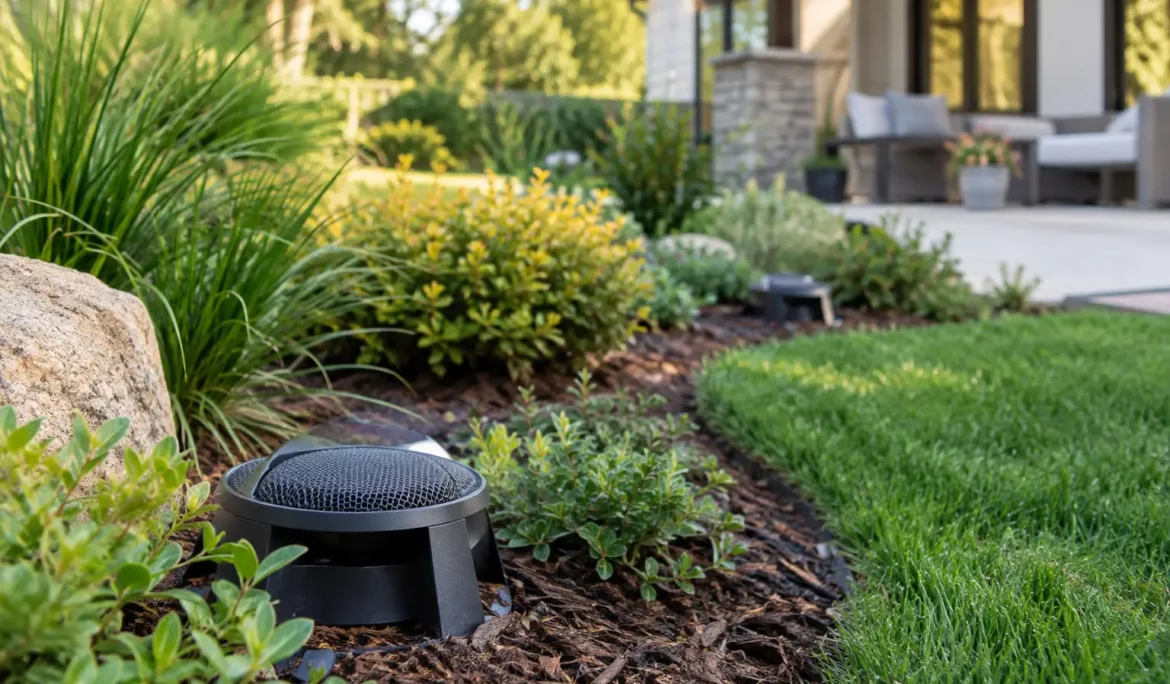
A beautiful backyard can lose its appeal quickly when music comes from one portable speaker near the patio door. Learning how to integrate landscape speakers means treating outdoor audio as part of the property, not an accessory added after everything else is complete. The result should feel natural: clear music around the patio, lawn, pool, and garden without visible equipment or uneven volume.
For homeowners who invest in outdoor living, the goal is not simply to make sound louder. It is to create an enjoyable listening experience that is easy to control, respectful of nearby homes, and designed to perform through changing weather.
Start With How You Use the Outdoor Space
The right speaker layout begins with the way your family uses the yard. A covered dining area, outdoor kitchen, pool deck, fire pit, and garden path may all need sound, but they do not necessarily need the same volume or the same music.
Think about where people gather, where conversations happen, and which areas should remain quieter. Background music for dinner calls for a different approach than an active pool gathering or a game-day watch party. A professional design can divide the property into practical listening zones, allowing you to adjust audio where it is needed rather than turning up the entire system.
This planning also prevents a common outdoor audio problem: trying to cover a large area with a pair of powerful speakers mounted on the house. The sound may be loud near the house but thin at the edge of the yard. Raising the volume to compensate can make the experience less comfortable for guests and neighbors.
Use Distributed Speakers Instead of One Loud Source
Landscape speaker systems are designed around coverage. Rather than relying on one or two large speakers, multiple compact satellite speakers are positioned throughout planting beds, along borders, or near gathering areas. Each speaker plays at a lower level, creating more even sound across the space.
This approach has two meaningful advantages. First, guests can hear music without standing directly beside a speaker. Second, sound can be directed into your yard instead of pushed outward from the house at high volume. Proper placement helps create a full, relaxed sound field while limiting unnecessary spill beyond the property.
Subwoofers matter outdoors as well. Low frequencies give music depth and make movies or sports more engaging, but outdoor subwoofers are often installed below grade or concealed within the landscape. Their placement should be planned carefully, because bass travels differently than higher frequencies and can become overwhelming if it is not balanced with the satellite speakers.
Match Speaker Placement to the Landscape
A landscape speaker should support the design of the property, not compete with it. Speakers are commonly tucked into mulch beds, behind low plantings, near hardscape edges, or aimed across a seating area from the perimeter. The best position depends on sightlines, plant growth, irrigation zones, drainage, and the listening area itself.
Avoid aiming all speakers from one side of the yard. Sound becomes more natural when coverage is distributed around the perimeter and directed inward. It also allows the system to remain effective at lower volumes.
Plant material changes over time, especially in New Jersey and New York where seasonal growth, snow, and landscaping maintenance can affect equipment access. Leave room for service, avoid locations likely to be buried by seasonal mulch, and ensure speakers are not blocked by mature shrubs. A good plan accounts for the landscape you have now and the landscape it will become.
Design the Infrastructure Before the Yard Is Finished
The easiest time to integrate outdoor audio is during a new build, renovation, patio project, or pool installation. Conduit and speaker wire can be routed before concrete is poured, pavers are installed, or planting beds are complete. That protects the system and preserves the finished appearance of the property.
Even in an established yard, careful installation can keep disruption to a minimum. The key is using outdoor-rated wiring, protected pathways, and connections intended for direct-burial or weather-exposed applications. Standard indoor speaker wire and improvised connectors may work temporarily, but they are not a long-term solution for a landscape system exposed to moisture, temperature swings, and lawn maintenance.
Equipment location deserves the same attention. Amplifiers, network components, and source devices should live in a protected, accessible area, often alongside the home’s central technology equipment. This keeps sensitive electronics out of the weather and makes future adjustments much easier.
Plan for Power, Network Access, and Future Growth
Outdoor audio often becomes part of a larger entertainment plan. You may want music by the pool today, then add an outdoor TV, motorized shades, landscape lighting control, or another listening zone later. Building in capacity from the beginning helps avoid reopening finished areas when the system expands.
Reliable Wi-Fi is also worth considering, particularly when music is streamed from phones, tablets, or voice-controlled systems. Outdoor access points can extend dependable coverage to patios and pool areas, reducing the frustration of dropped connections just as guests arrive.
Choose Controls That Everyone Can Use
A well-designed system should not require a lesson before someone can play music. The most successful controls fit naturally into daily life: a wall keypad near the patio door, a handheld remote, a touch panel, a smartphone app, or a familiar home automation interface.
Simple control also makes zones more useful. You might play a relaxed playlist at the dining area while keeping the garden quiet, or bring the entire yard together for a celebration. If outdoor speakers are integrated with a Control4, Savant, or URC system, audio can be coordinated with lighting, displays, and other entertainment features from one interface.
Convenience should not come at the expense of reliability. Discuss how the system will behave if the internet is temporarily unavailable, who will have access to controls, and whether guests need a simple way to select music. The best answer depends on your household and the level of control you prefer.
Balance Audio Performance With Neighborhood Consideration
Outdoor sound has fewer boundaries than a dedicated home theater. Open air absorbs some frequencies, hardscape can reflect others, and evening conditions may carry sound farther than expected. Speaker direction, zone layout, amplifier calibration, and sensible volume limits all play a role in keeping music enjoyable on your property.
This does not mean outdoor audio must be timid. It means the system should be designed for clarity and coverage rather than raw output. When guests can hear detail at a comfortable level, there is less reason to push the volume.
It is also wise to include volume limits for late-night use or create preset scenes for everyday listening, entertaining, and quiet evenings. These settings make the system more considerate without forcing you to adjust multiple controls each time.
Work With the Other Trades Early
Landscape speakers are most successful when the technology plan is coordinated with the people shaping the outdoor environment. Landscape architects, pool builders, electricians, masons, and designers all influence where audio equipment can be placed and how it will be concealed.
Early coordination avoids issues such as a speaker location being covered by a future retaining wall, wiring crossing an irrigation line, or a subwoofer ending up beneath a planned planting bed. It also gives the design team the opportunity to preserve clean lines and protect the visual character of the space.
For a project that includes several connected systems, a technology partner can develop one plan for audio, Wi-Fi, lighting control, and outdoor entertainment. Cine Acoustic approaches this work as a complete experience, with the goal of making sophisticated technology feel dependable and straightforward once the project is complete.
How to Integrate Landscape Speakers for Lasting Enjoyment
The final step is commissioning the system after installation. Each zone should be tested from the places where people actually sit and move, not only from a single point near the equipment. Fine-tuning speaker levels, subwoofer output, and control settings is what turns a collection of components into a comfortable outdoor environment.
Seasonal care helps protect that experience. Check visible speakers after landscaping work, keep equipment areas dry and accessible, and address any damage to wiring before it becomes a larger issue. Quality outdoor-rated components are built for the environment, but every system benefits from thoughtful maintenance and professional support.
Your backyard should not make you choose between great sound and a carefully designed view. With the right layout, discreet equipment, and controls that make sense from the first use, outdoor music becomes part of the setting – ready when the gathering begins and unobtrusive when the evening calls for quiet.