

A room can have beautiful finishes, excellent furnishings, and a premium display, yet still feel unfinished when every light is controlled one switch at a time. This Lutron lighting control review looks at why Lutron remains a leading choice for homeowners who want lighting that feels considered, dependable, and simple to use. The short answer is that Lutron systems deliver exceptional everyday convenience and design flexibility when they are properly planned around the home and the people who live in it.
What Lutron Lighting Control Changes
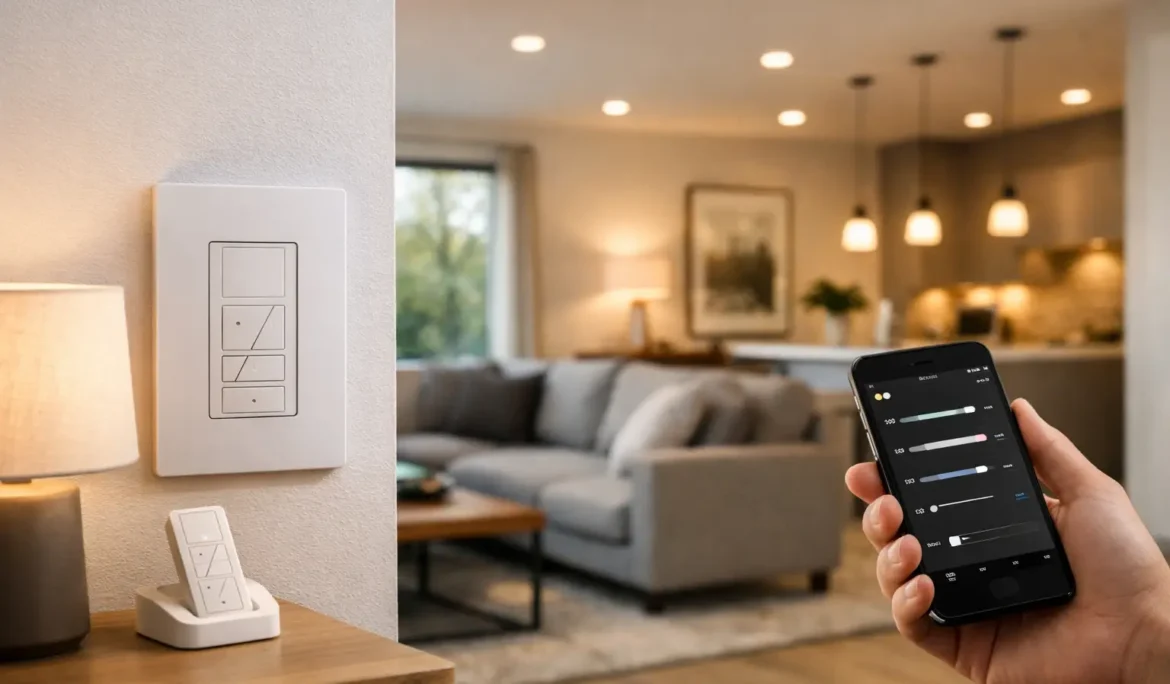
Traditional dimmers improve a single room. A lighting control system improves how the entire home responds throughout the day. Instead of walking through the house to adjust fixtures individually, homeowners can use elegant wall keypads, handheld remotes, mobile control, voice commands, or programmed scenes that set several lights at once.
The value is not just the ability to turn lights on from a phone. It is the ability to choose a scene called “Evening,” for example, that brings kitchen pendants to a comfortable level, adds warmth to the living room, and turns off task lighting that is no longer needed. A “Goodnight” command can shut down selected lighting areas while leaving a safe path lit between bedrooms and bathrooms.
For families, this reduces small daily frustrations. For design-conscious homeowners, it removes the visual clutter of multiple switches and dimmers across a wall. For a home theater or media room, it gives the space the lighting behavior it needs before a movie starts, during intermission, and after viewing.
Lutron Lighting Control Review: The Strengths
Lutron has earned its reputation by focusing on the details that determine whether lighting control is pleasant to use after the novelty wears off. Its systems are known for responsive control, refined keypad design, strong dimming performance, and broad compatibility with residential lighting loads.
Lighting That Dims the Way It Should
A dimming system is only as good as its behavior at low levels. Poorly matched products can create flicker, buzzing, visible steps in brightness, or lights that refuse to dim as low as expected. Lutron’s engineering and compatibility knowledge are major advantages, particularly in homes using a mixture of LED recessed lights, decorative fixtures, under-cabinet lighting, and specialty loads.
That does not mean every fixture will perform perfectly without planning. LED lamps and drivers vary widely, even within familiar brands. The best results come from confirming fixture and driver compatibility before installation, then programming each zone with an appropriate low-end and high-end trim level. This is where professional design makes a noticeable difference.
Keypads That Make the System Easy to Live With
A well-designed keypad replaces a crowded bank of switches with labeled buttons that make sense at a glance. Rather than asking a guest to identify which dimmer controls which fixture, a keypad can offer clear choices such as Entertain, Clean Up, Relax, or All Off.
This is one of Lutron’s most practical strengths. The controls can be tailored to the household’s routines instead of forcing the household to learn a complicated interface. Keypads are also available in finishes and styles that support the home’s interior design, from traditional spaces to clean, contemporary renovations.
Scenes, Scheduling, and Vacation Settings
Scenes allow lighting to support the activity in a room. Bright, functional light is useful for meal preparation and homework. A softer layered scene is better for dining, conversation, or late-night relaxation. The same room can serve both purposes without constant manual adjustment.
Schedules add another level of convenience. Exterior and landscape lighting can follow sunset, common areas can be set for morning routines, and selected lights can operate while the household is away. These functions should be used thoughtfully. Automation should make the home feel occupied and cared for, not create distracting changes that occur at inconvenient times.
A Strong Partner for Motorized Shades
Lighting is more effective when it works with daylight rather than against it. Lutron’s lighting control ecosystem pairs naturally with motorized shades, allowing a room to manage glare, privacy, and brightness as one coordinated experience.
In a media room, shades can lower before a film begins while the lights fade to the preferred viewing level. In a sunny kitchen or great room, shades can reduce harsh afternoon light while preserving the comfortable ambient lighting needed for the space. This coordination is particularly valuable in homes with expansive windows, open floor plans, or carefully selected furnishings that need protection from direct sun.
Choosing the Right Lutron System
Lutron is not a single product with a one-size-fits-all answer. The appropriate platform depends on the size of the project, the desired level of customization, the wiring conditions, and whether lighting will be part of a larger smart home system.
Caseta can be a sensible choice for focused upgrades and smaller areas where homeowners want app control, dimming, and convenient scene control without redesigning an entire home. It is approachable and useful, though it may not offer the keypad options, system scale, or design depth desired for a major renovation or custom residence.
RadioRA 3 is better suited to many whole-home retrofit projects. Its wireless architecture can reduce disruption in an existing home while providing a more polished control experience, expanded keypad choices, and integration potential. It is often a strong fit when homeowners want meaningful control throughout key areas without opening every wall.
HomeWorks is intended for larger, highly customized residences and projects where lighting, shades, and advanced integration are central to the design. It offers the greatest depth of personalization and is often considered during new construction or comprehensive renovations. Its capabilities are substantial, but the system should be specified carefully. More possibilities do not automatically create a better experience unless the controls, scenes, and programming are organized around the client’s actual lifestyle.
Where the Trade-Offs Are
Lutron lighting control is an excellent solution, but it is not the right approach for every project. A homeowner who only wants to dim one dining room chandelier may be better served by a quality standalone dimmer. Whole-home control brings the most value when there are multiple lighting zones, recurring routines, or rooms where light has a major impact on comfort and function.
Another consideration is planning. A system can be added to many existing homes, especially with wireless options, but new construction offers more opportunities to plan panel locations, keypad positions, lighting circuits, and shade wiring from the beginning. Retrofitting can still produce outstanding results, although the design may need to work around existing electrical conditions.
There is also a difference between adding technology and creating a complete lighting plan. Control cannot compensate for poor fixture placement or an absence of layered lighting. The best projects consider ambient light, task light, accent light, natural light, and control together. A kitchen, for instance, may need recessed lighting for overall illumination, pendants for visual interest, under-cabinet lighting for work surfaces, and separate control for each layer.
Integration With Entertainment and Smart Home Systems
Lutron works particularly well in homes where lighting needs to coordinate with entertainment, climate, security, or other control systems. A single button can prepare a room for television, movie viewing, entertaining, or departure. The key is to keep the experience clear rather than trying to automate every possible event.
For a dedicated theater, lighting scenes should be purposeful: arrival lighting, previews, feature presentation, pause, and cleanup. For a whole-home system, a few well-defined scenes often deliver more satisfaction than a long list of commands no one remembers. Thoughtful programming keeps the technology in the background while the home feels more comfortable and intuitive.
This is also why a consultative installation process matters. An experienced integration team can coordinate with electricians, designers, and builders, verify fixture compatibility, recommend appropriate keypad locations, and program controls that reflect how each room is used. Cine Acoustic approaches these decisions as part of a complete home experience, not as a collection of unrelated devices.
Is Lutron Worth Considering for Your Home?
For homeowners who value reliability, attractive controls, and lighting that supports everyday routines, Lutron is one of the strongest options available. Its real advantage is not a single app feature or a dramatic demonstration. It is the cumulative effect of lights that dim properly, scenes that make sense, controls that guests can understand, and shades that respond when sunlight becomes a problem.
The best next step is to begin with the rooms that matter most and identify how you want them to feel at different times of day. From there, a carefully designed Lutron system can make sophisticated lighting control feel as natural as using the room itself.