

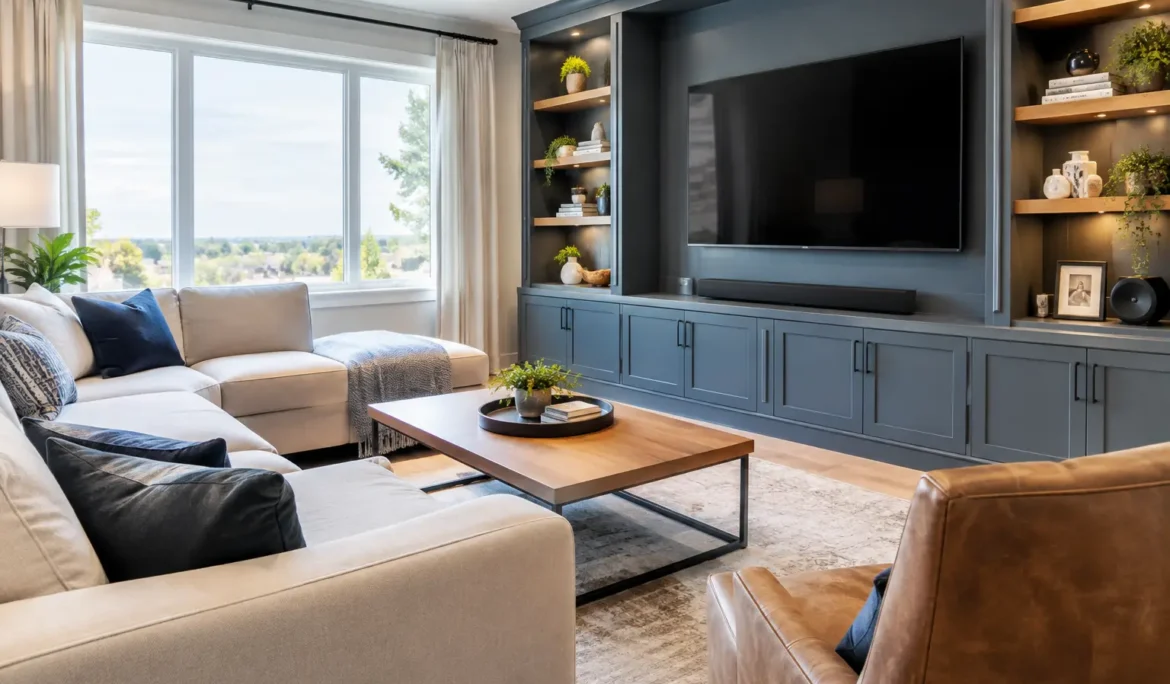
A great new jersey media room makeover does more than put a larger TV on the wall. It turns an underused basement, bonus room, or living area into a place where the screen looks exceptional, the sound feels involving, the lighting supports the moment, and every system works without a stack of remotes. The difference is not simply premium equipment. It is thoughtful design around the way your household actually relaxes and entertains.
For many homeowners, the existing room already has the right potential. What is missing is a coordinated plan. A television may be mounted too high, speakers may compete with the room’s design, Wi-Fi may struggle during a big game, and bright windows may make daytime viewing disappointing. Addressing these pieces together creates a room that is comfortable for a casual weeknight show and impressive enough for movie night with friends.
Start Your New Jersey Media Room Makeover With the Room
The best system begins with the room, not a product list. Before selecting a display, speakers, or controls, consider how the space will be used. Is this primarily a family movie room? A sports-viewing space? A flexible lounge for gaming, music, and entertaining? The answer affects everything from seating layout to screen placement.
A dedicated media room can support more focused choices, such as darker finishes, carefully positioned surround sound, and stronger light control. A multipurpose family room often needs technology that disappears when it is not in use. In that setting, discreet in-wall or in-ceiling speakers, a design-forward television installation, and motorized shades can preserve the room’s character without compromising performance.
Room dimensions matter, but they do not dictate whether a media room can feel cinematic. A smaller room can deliver an outstanding experience when the viewing distance, speaker placement, and display size are properly matched. Conversely, an oversized screen in the wrong location can become tiring to watch. The goal is proportion, not excess.
Design Around Sightlines and Seating
A screen should be placed at a comfortable height for the primary seating position. This sounds straightforward, yet many media rooms are built around a fireplace or architectural feature that places the television far above eye level. There are ways to work with those conditions, but they should be evaluated early so comfort does not become an afterthought.
Seating deserves the same attention. A room should allow clear views for the people who use it most often, adequate walkways, and enough flexibility for guests. If reclining seating is part of the plan, its depth and clearance need to be accounted for before speaker locations and display placement are finalized.
Picture Quality Is About More Than Screen Size
The right display depends on ambient light, viewing habits, wall space, and the type of content your family enjoys. Bright, sun-filled rooms often benefit from a high-performance television that remains clear and vibrant during the day. A more controlled space may be an excellent fit for a larger projection system that brings a theater-like scale to films and sports.
There is no universal winner between a television and projector. A television offers brightness, simplicity, and strong everyday performance. A projector can create a more immersive large-screen experience, especially when the room supports controlled lighting. The right choice comes from understanding the room’s limitations and the homeowner’s priorities rather than following a trend.
Content sources should be considered at the same time. A polished media room can centralize streaming services, live television, gaming consoles, and a premium movie platform such as Kaleidescape without turning the equipment cabinet into a tangle of devices. The objective is simple: sit down, choose what you want to watch, and enjoy it.
Sound Should Fill the Room, Not Clutter It
Picture may draw attention first, but sound is what makes a media room feel convincing. Dialogue should be clear at normal listening levels. Music should have detail and warmth. Action scenes should have impact without forcing the rest of the home to listen along.
A properly designed surround sound system places speakers where they can create a believable sound field, not merely where there happens to be open wall space. Dolby Atmos systems can add a sense of height and movement that makes movies, concerts, and games more engaging. Yet speaker count alone does not guarantee a better result. Placement, calibration, room surfaces, and the seating area all influence what you hear.
For design-conscious spaces, speakers can be integrated into walls or ceilings with finishes that blend into the room. In other rooms, architectural speakers or carefully selected freestanding options may be part of the visual statement. Either approach can perform beautifully when it is designed as a complete system.
Acoustic considerations are also valuable, particularly in rooms with hard floors, expansive glass, or high ceilings. Rugs, upholstered seating, window treatments, and selective acoustic treatments can reduce distracting reflections. The aim is not to make a room look like a recording studio. It is to create clearer sound and a more comfortable place to spend time.
Lighting and Shades Set the Experience
A media room with excellent video can still disappoint if the lighting is harsh or uncontrolled. Layered lighting gives the room versatility: brighter light for conversation or snacks, low pathway lighting for a movie, and a relaxed setting for listening to music. Dimmable fixtures, accent lighting, and thoughtfully placed sconces can create atmosphere without reflecting on the screen.
Motorized window shades are particularly useful in rooms with large windows or doors. They help manage glare, protect furnishings from direct sunlight, and support privacy. More importantly, they can become part of a simple scene. One command can lower the shades, dim the lights, power on the system, and prepare the room for viewing.
This is where automation becomes practical rather than flashy. Homeowners should not need to understand the technology behind the room. They should be able to press “Movie,” “Game Day,” or “All Off” and have the room respond predictably.
Reliable Control Begins With the Network
Many entertainment frustrations are actually network problems. Buffering video, delayed control commands, dropped audio, and inconsistent streaming can undermine an otherwise beautiful installation. A media room needs a dependable wired and wireless network foundation, especially when several devices are streaming or when the household is using connected technology throughout the home.
Equipment should be organized in a properly planned location rather than spread across the room. A clean equipment rack or cabinet improves serviceability, manages heat, protects components, and keeps the room visually calm. It also makes future updates far easier.
Control should be equally organized. A single, intuitive interface can bring together the display, audio, sources, lighting, shades, and room scenes. Whether the preferred control is a handheld remote, wall keypad, touch panel, or mobile device, the experience should feel familiar to everyone in the home. The best control system is the one guests and family members can use without a tutorial.
Make Technology Fit the Rest of the Home
A media room should not feel isolated from the rest of the property. The same system can extend music to adjacent spaces, support whole-home control, or make it easy to move from an afternoon gathering outdoors to a movie indoors. Integration is most successful when it simplifies routines rather than adding more decisions.
A professional design process also prevents common renovation conflicts. Technology infrastructure is easiest to plan before drywall, millwork, paint, and furniture are complete. Coordinating early with architects, builders, and interior designers allows speaker locations, wiring paths, equipment ventilation, shade pockets, and display mounting to be handled cleanly. Retrofitting is possible, but advance planning offers more options and a more refined result.
Choose a Partner Who Designs for Long-Term Use
A media room is not a collection of boxes. It is a daily-use environment that should continue to work well after installation day. That calls for consultation, system design, careful installation, calibration, personalization, and responsive support from one knowledgeable team.
Cine Acoustic approaches each project around the client’s room, preferences, and comfort level with technology. The goal is a reliable entertainment space that feels easy from the first evening and remains adaptable as the household’s needs change.
The most rewarding media rooms are the ones people naturally use. Plan for the family movie that runs late, the playoff game with friends, the quiet music session after dinner, and the simple pleasure of pressing one button when the day is done. When the room supports those moments effortlessly, the makeover has done its job.