

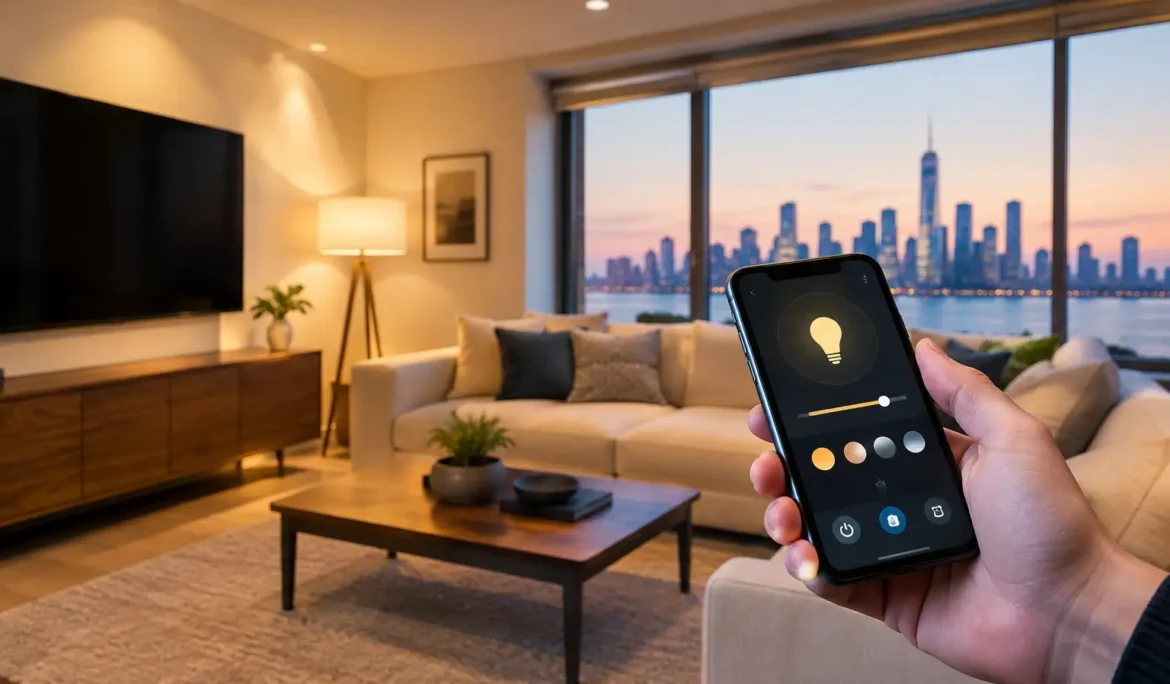
A beautiful home can still feel unfinished when every room relies on individual switches, mismatched bulbs, and lights that never quite suit the moment. New Jersey lighting control replaces that daily friction with an environment that responds naturally to how your household lives, entertains, relaxes, and moves through the day.
The result is not simply a smarter way to turn lights on and off. It is a thoughtfully designed system that brings the right brightness, color temperature, and shade position together through controls that are easy for every member of the family to use.
What New Jersey Lighting Control Changes in a Home
Lighting affects how a room looks, but it also shapes how it works. A kitchen needs clear, useful light for preparation and cleanup, then softer illumination when guests gather around the island. A family room may need bright lighting for playtime, low-level light for a movie, and a subtle path to the hallway after everyone has gone to bed.
With an integrated lighting control system, these settings can be grouped into scenes. Rather than adjusting several dimmers and switches one by one, a single keypad button, touchscreen command, app selection, or voice command can set the room for the activity at hand.
For example, a “Good Morning” scene might gradually raise kitchen and hallway lights while opening motorized shades. An “Entertain” scene can highlight artwork, illuminate the dining area, and dim surrounding lights to create a more comfortable setting. “Goodnight” can turn off selected lights across the house while leaving necessary exterior and pathway lighting active.
The value is in the details. The home remains easy to live in without making technology the center of attention.
Designed Around Your Rooms, Not a Box of Devices
The best lighting systems begin with a conversation about the home and the people in it. A system for a busy household with young children may prioritize simple wall keypads, dependable schedules, and safe overnight lighting. A homeowner who frequently entertains may want layered scenes for the kitchen, dining room, patio, and media room. A renovation or new construction project creates the opportunity to plan control locations, fixtures, window treatments, and equipment placement before walls are closed.
This design process matters because not every room needs the same kind of control. In a formal living room, accent lighting may be essential for architectural features and artwork. In a primary bedroom, convenience, privacy, and a calm transition at night may matter more. Hallways, staircases, and bathrooms benefit from low-level lighting that provides visibility without the harshness of a fully lit room.
A professional design also considers how the controls will look on the wall. Keypads can replace a crowded bank of switches with a clean, labeled interface. That improves aesthetics, but it also makes the system more approachable. Guests and family members should not need instructions just to find the right light.
The Importance of Layered Light
A single overhead fixture rarely makes a room feel complete. Well-planned lighting combines ambient light for general illumination, task light for activities such as cooking or reading, and accent light for visual depth. Control brings those layers together in useful combinations.
This is particularly valuable in open-concept homes, where one large space may serve several purposes throughout the day. Separate zones allow the kitchen, dining, and living areas to feel connected without forcing every light to operate at the same level.
Lighting and Motorized Shades Work Better Together
Natural daylight is one of the most valuable elements in a home, but it changes constantly. Direct afternoon sun can create glare on a television, heat a room, and fade furnishings. Closing shades manually in multiple rooms is easy to postpone, especially when no one is home.
Integrating motorized shades with lighting control creates a more balanced response. Shades can lower during periods of strong sun and raise later to preserve a view. Interior lights can adjust as daylight changes, helping rooms maintain a comfortable appearance rather than shifting abruptly from bright to dark.
There is a trade-off to consider. Fully automated settings are convenient, but they should not make homeowners feel as though the house is making decisions without them. The best approach gives the household sensible automation along with simple manual control. A wall keypad, app, or handheld remote should always make it easy to override a scene when the occasion calls for something different.
Everyday Benefits That Go Beyond Convenience
Convenience is often the first reason homeowners consider lighting control, but it is only one part of the experience. A well-programmed system can support comfort, security, and energy-conscious habits without adding extra steps to daily routines.
At night, occupancy-based settings can bring lights on at a low level in key areas rather than flooding the home with bright light. When leaving the house, one command can turn off selected interior lights and set exterior lighting for the evening. While away, scheduled scenes can make a property appear lived in without relying on the same predictable pattern every day.
Dimming also improves the way fixtures perform over time and lets homeowners use only the amount of light a space needs. Yet the goal should never be automation for its own sake. If a schedule is too aggressive, or a sensor triggers at the wrong time, the system becomes frustrating. Careful programming, product selection, and ongoing support are what turn smart features into reliable daily benefits.
Choosing Controls That Feel Natural
There are several ways to interact with a lighting system, and most homes benefit from more than one. In-wall keypads provide immediate, familiar access in the rooms where people use them most. A dedicated remote or touch panel can coordinate lighting with entertainment in a theater or media room. Mobile control is useful when checking the home while away or making a quick adjustment from another part of the house.
Voice control can be helpful for hands-full moments, such as carrying groceries into the kitchen. However, it should complement physical controls rather than replace them. A homeowner should be able to start a favorite scene with a clearly labeled button, whether the internet is active or not.
This is where an experienced integrator provides real value. Compatibility between lighting, shades, home automation, and entertainment equipment must be considered as a complete system. Selecting quality components is only the beginning. The system needs to be programmed around the household’s routines, tested thoroughly, and explained in plain language.
Planning for a Renovation or New Build
Lighting control is easiest to design when it is considered early, alongside electrical plans, interior finishes, cabinetry, window treatments, and AV equipment. Early coordination can reduce wall clutter, preserve design intent, and ensure that keypads and shades are located where they will be most useful.
That said, an existing home can also benefit from upgrades. The right solution depends on the home’s construction, the desired level of control, and whether the project focuses on a few high-impact rooms or a more comprehensive plan. A consultation should clarify what is practical without forcing unnecessary changes.
For design-conscious homeowners, it is also worth discussing fixture types and trim details with the broader project team. Lighting control performs best when fixture selection, dimming compatibility, and scene design are addressed together. A beautiful fixture cannot compensate for poor light levels, and a sophisticated control system cannot correct every issue created by an afterthought electrical plan.
A System Worth Living With for Years
A lighting control system should feel dependable on an ordinary Tuesday, not just impressive during a demonstration. It should make the first cup of coffee easier, family movie night more immersive, and late-night movement through the house safer and more comfortable.
Cine Acoustic approaches lighting as part of a complete home experience, coordinating controls, shades, entertainment, and automation around the way each client actually lives. The focus remains on clear operation, thoughtful design, and support that continues after installation.
The most rewarding lighting plans are rarely the ones with the most buttons or the most complicated automations. They are the ones that quietly make a home more comfortable, more beautiful, and easier to enjoy every day.