

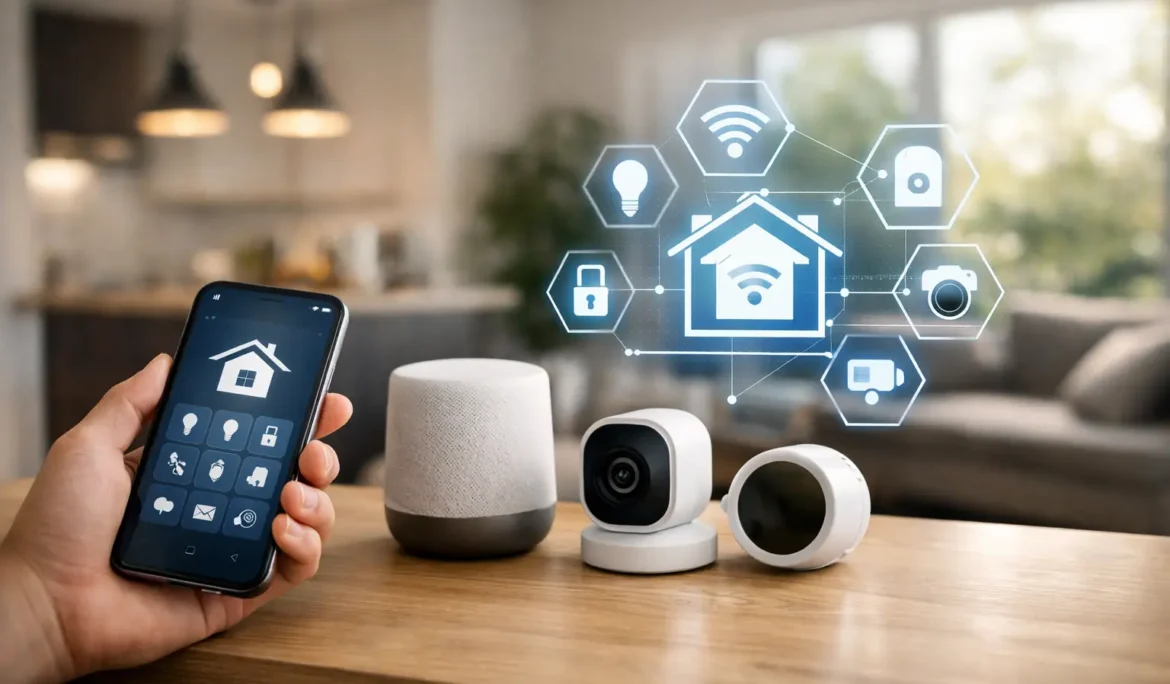
Most homeowners do not start looking at smart home automation systems because they want more apps. They start because daily life feels more fragmented than it should. One remote controls the TV, another handles audio, the thermostat sits on its own schedule, the shades never seem to be where you want them, and the Wi-Fi works great in one room and poorly in the next. The real goal is not more technology. It is a home that responds the way you want it to.
That distinction matters. A smart home should reduce friction, not add another layer of it. The best systems are not defined by how many devices they connect. They are defined by how naturally they fit into your routines, how reliable they are day after day, and how easy they are for everyone in the house to use.
What smart home automation systems actually do
At their core, smart home automation systems bring separate technologies into one coordinated experience. Instead of managing lighting, motorized shades, music, climate, and entertainment as isolated pieces, you control them through a single platform that can respond to a button press, a schedule, a sensor, or a voice command.
In practical terms, that could mean your entry lights turning on as you arrive home, shades lowering in the media room before a movie starts, or the house shifting into an evening setting without anyone walking room to room. It can be simple, or it can be highly customized. The right answer depends on how you live.
That is also where many do-it-yourself setups fall short. On paper, connecting a handful of smart devices seems straightforward. In reality, homeowners often end up with a collection of products that each work fine individually but do not communicate well together. The result is a home that feels patched together instead of thoughtfully integrated.
Why integration matters more than gadgets
A lot of smart technology marketing focuses on features. Color-changing bulbs, voice assistants, camera notifications, streaming zones, app controls. Those features can be useful, but they are not the main event. What matters more is integration.
When systems are properly integrated, your home becomes easier to manage because the technology has a clear structure behind it. Lighting scenes can coordinate with shade positions. Audio can follow the activity in the room. Climate settings can support comfort without constant adjustment. A single interface can replace a pile of remotes and disconnected apps.
This is where professional design makes a noticeable difference. A well-planned system does not just connect products. It considers how rooms are used, who will use them, and what level of control makes sense. A family room needs different automation than a dedicated home theater. A primary suite often benefits from different lighting and shade strategies than a kitchen or outdoor entertainment space.
There is also a reliability factor. The more devices you add, the more the network matters. If the Wi-Fi is inconsistent, the automation experience will be inconsistent too. That is why the underlying infrastructure is just as important as the devices you see on the wall or in the app.
The areas where smart home automation systems make the biggest difference
For most homeowners, lighting control is one of the first places automation proves its value. Good lighting is about more than on and off. It shapes how a room feels, supports daily routines, and helps a home look finished. With preset scenes, one touch can set the right mood for cooking, entertaining, watching a movie, or winding down at night.
Motorized shades are another category that quickly moves from luxury to everyday convenience. They add privacy, help manage daylight, and can protect interiors from harsh sun exposure. More importantly, they work best when tied into the broader system. Shades that adjust with the time of day or coordinate with lighting scenes feel intentional, not gimmicky.
Entertainment is where many homeowners expect automation, and for good reason. A unified control platform makes it easier to enjoy whole-house audio, television, and dedicated media spaces without hunting for remotes or switching between apps and inputs. Instead of teaching guests or family members a sequence of steps, you tap one button and the room behaves the way it should.
Climate control often gets less attention in design conversations, but it has a major impact on comfort. Automation can help rooms stay consistent throughout the day, especially in larger homes or spaces with heavy sun exposure. The best result is subtle. You should notice comfort, not complexity.
Choosing the right smart home automation system
Not every platform is right for every home. Some homeowners want broad control of a few key systems. Others want a fully integrated environment that includes entertainment, lighting, shades, climate, and more. The right platform depends on your goals, your home’s layout, and how much customization you want.
Ease of use should be near the top of the list. If a system looks impressive in a showroom but feels confusing at home, it is not the right fit. The interface should be intuitive enough that everyone in the household can use it without a tutorial. That includes wall keypads, touch panels, remotes, and mobile access.
Compatibility also matters, but it should be approached carefully. A platform that can technically connect to many brands is not automatically the best choice. What matters is whether those integrations are stable, supported, and appropriate for the project. A smaller number of well-chosen components usually performs better than a long list of loosely connected devices.
Homeowners planning a renovation or new build have an advantage because automation can be considered early, when wiring, equipment locations, lighting plans, and room layouts are still flexible. That said, existing homes can absolutely benefit as well. The key is designing a system around the house as it is, rather than forcing a one-size-fits-all package into it.
Common mistakes homeowners make
One of the biggest mistakes is buying products before deciding what the home needs to do. It is easy to get drawn toward individual devices, especially when each promises convenience. But technology decisions make more sense when they begin with lifestyle goals. Do you want easier control of the whole home, better movie nights, improved ambiance, stronger privacy, or fewer day-to-day adjustments? Those answers should lead the design.
Another common issue is underestimating the importance of the network. Smart homes rely on strong connectivity, and weak coverage can affect everything from music streaming to control response times. If the foundation is unstable, the experience above it will be too.
There is also a tendency to overcomplicate. More automation is not always better automation. In some homes, the best solution is extensive behind-the-scenes programming with very simple user control. In others, a lighter approach makes more sense. The goal is not to automate every possible task. It is to make the right tasks easier.
What a professionally designed system feels like
A professionally designed smart home does not constantly remind you that it is smart. It simply works. The lighting feels right at the right time. The shades move when they should. The entertainment system starts without hassle. The controls are consistent from room to room. Guests can use it. Kids can use it. You can walk away for a weekend and come back knowing the home behaved as expected.
That level of consistency comes from planning, product selection, programming, and support. It also comes from restraint. Good design means knowing when to automate and when to leave control in the homeowner’s hands.
For homeowners who want premium results without piecing together multiple vendors, a consultative approach is often the difference between a house full of technology and a home that feels genuinely easier to live in. That is the standard Cine Acoustic focuses on – high performance, straightforward control, and systems designed around the homeowner rather than the other way around.
Smart home automation systems are a long-term decision
It is easy to think about automation in terms of immediate convenience, but the longer-term value is just as important. Homes change. Families grow. Spaces get repurposed. The right system should be able to adapt without becoming cumbersome. That means thinking beyond the trend of the moment and choosing technology that can serve the home well over time.
For design-conscious homeowners, aesthetics matter too. Controls should look appropriate in the space. Equipment should be organized and thoughtfully installed. Speakers, displays, and keypads should support the room, not dominate it. Good integration respects both performance and appearance.
If you are considering smart home automation systems, the best starting point is not a device list. It is a conversation about how you want your home to feel and function each day. When the technology follows that vision, convenience stops feeling like a feature and starts feeling like part of the home itself.
The best smart home is not the one with the most functions. It is the one that makes everyday living simpler, more comfortable, and more enjoyable without asking you to think about the technology behind it.