

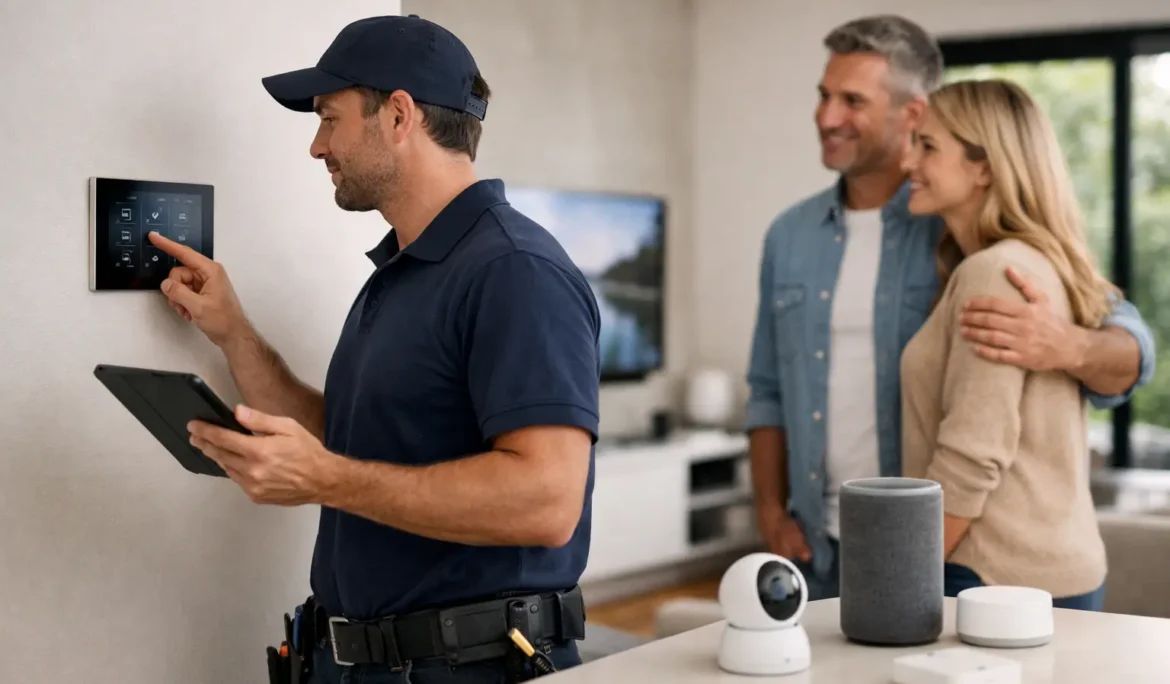
A great home technology project should not leave you with a drawer full of remotes, a dozen unrelated apps, and a Wi-Fi signal that disappears when the family settles in to watch a movie. When homeowners search for a smart home installer New Jersey residents can rely on, they are usually looking for something more valuable than devices: a home that works the way they live.
That may mean starting a favorite playlist in the kitchen and patio, setting lights and shades for movie night, or controlling a theater from one intuitive interface. It can also mean making technology feel nearly invisible, with clean installation, dependable performance, and support from a local team that understands the entire system.
What a Smart Home Installer in New Jersey Should Solve
Smart home technology works best when it is planned as one connected experience. A capable installer does not simply mount a television, add a few speakers, or connect a thermostat. The real work is understanding how the home is used, identifying where technology creates friction, and designing a system that removes it.
For one family, the priority may be a dedicated home theater with immersive Dolby Atmos sound, refined lighting, and a theater control interface that everyone can use. Another homeowner may want reliable whole-house Wi-Fi, distributed audio in everyday living spaces, and motorized shades that improve comfort and privacy. A new construction project may require early coordination with the architect, builder, and interior designer so technology supports the design rather than competing with it.
The right solution depends on the property, the homeowner’s routines, and the desired level of control. A well-designed system can bring together entertainment, lighting control, shades, networking, and automation without making the home feel complicated.
Begin With Lifestyle, Not Equipment
The most useful first conversation is not about model numbers. It is about how you want to use each space. Where does the family gather? Which rooms need music? Is the outdoor area used for game days, dinners, or quiet evenings? Are there rooms where visible electronics would interrupt the interior design?
This approach prevents a common mistake: adding individual products without considering how they will operate together. A television may look excellent on its own, but the experience changes when the remote is confusing, the audio is inconsistent, or the network cannot support streaming in several rooms at once.
A consultative technology team should ask practical questions before making recommendations. They should consider room size, natural light, wall construction, furniture placement, device locations, wiring access, network coverage, and future needs. The goal is not to fill a home with technology. It is to make the technology appropriate for the home.
Design That Respects the Room
High-performance systems do not need to dominate a room visually. Speakers can be selected and positioned for strong sound while fitting the architecture. Motorized window shades can complement the interior palette while helping manage glare. A mirror TV can keep a formal room visually clean until entertainment is wanted.
This is particularly important for homeowners working with designers or renovating a finished space. Early planning gives the installer more options for concealed wiring, equipment placement, speaker locations, and control keypads. Retrofitting is possible in many homes, but planning ahead often produces a cleaner result.
Reliable Wi-Fi Is the Foundation
Many smart-home frustrations begin with an unreliable network. Streaming video buffers, smart devices drop offline, video calls freeze, and outdoor coverage becomes inconsistent. Adding more devices to a basic router rarely resolves the underlying issue.
Professional Wi-Fi design starts with the home itself. Construction materials, square footage, floor plan, outdoor spaces, and the number of connected devices all affect coverage. A properly planned network uses access points in the right locations, organized equipment, and a structure that supports demanding activities such as 4K streaming, gaming, distributed audio, and security-conscious connected devices.
There is a trade-off to consider. Some homes need simple, targeted coverage improvements, while large properties or homes with extensive automation need a more comprehensive network design. A trusted installer should explain why a particular approach fits the property instead of treating every home the same.
One Control Experience Beats a Collection of Apps
Individual smart devices often promise convenience, yet homeowners can end up moving among apps for lighting, shades, music, television, and climate. That arrangement may work for a single device, but it becomes tiresome when a room includes multiple entertainment and environmental controls.
A professionally integrated system from platforms such as Control4, Savant, or URC can bring key functions into a coordinated interface. Instead of sorting through remotes, a homeowner might press one button for movie night: the television or projector turns on, the correct source starts, lights dim to a preferred level, shades lower, and the audio system is ready.
The best controls are designed around the people using them. Some households prefer a handheld remote in the theater and simple wall keypads for lighting. Others want app access for daily control. The answer is rarely one method for every room. Good design gives each space the control that feels natural there.
Entertainment Should Feel Exceptional and Easy
A premium entertainment system is more than a large screen. Picture quality, sound design, lighting, seating layout, acoustics, source selection, and ease of operation all shape the experience.
For a dedicated theater, careful speaker placement and acoustic considerations help deliver clear dialogue, convincing surround effects, and balanced sound. For media rooms, the system may need to perform in a more open, multipurpose setting. Outdoor entertainment requires equipment selected for changing conditions and controls that remain simple when guests arrive.
Content matters, too. A Kaleidescape movie system can offer a refined home cinema experience for households that want exceptional audio and video performance from a curated library. It is not the right choice for every viewer, but it illustrates the difference between adding components and building an intentional entertainment experience.
Whole-house audio offers another everyday benefit. Music can follow the morning routine from bedroom to kitchen, play independently in different areas, or bring the patio and main living spaces together for entertaining. The technology is sophisticated behind the scenes, but using it should be straightforward.
Ask About Installation, Customization, and Support
Choosing a smart home installer is a long-term decision. Technology may be installed once, but homes change. Families add devices, renovate rooms, adjust routines, and want help when something needs attention. That is why the relationship after installation matters as much as the first design meeting.
Look for a team that manages the full process: consultation, system design, product selection, installation, programming, testing, and homeowner training. Each stage affects the final result. Even excellent products can underperform when they are poorly installed, incorrectly programmed, or left unexplained.
Before moving forward, ask how the installer documents the system, organizes equipment, tests network performance, and supports future updates or adjustments. Ask who will coordinate with other trades when work is part of a larger construction project. Clear answers are a sign that the team sees the project as a complete system, not a collection of disconnected tasks.
Cine Acoustic approaches technology integration as a personalized service, helping New Jersey homeowners choose and use systems that support entertainment, comfort, and everyday convenience without unnecessary complexity.
Plan for the Home You Will Have Later
A smart home does not need to be completed all at once. In fact, phased planning is often sensible. The key is establishing the right foundation so future improvements remain practical. Proper wiring pathways, network capacity, equipment space, and thoughtful control planning can make later additions far easier.
For example, a homeowner may begin with a family room entertainment upgrade and upgraded Wi-Fi, then add lighting control, automated shades, or outdoor audio as the project evolves. The systems should be designed with that possibility in mind. A flexible plan protects the finished work and helps maintain a consistent user experience across the home.
The most satisfying smart homes are not the ones with the most features. They are the homes where a family can enjoy a movie, host friends, control a room comfortably, and trust the technology to work without stopping to think about it. Start with the moments you want to improve, then choose an experienced professional who can turn those moments into a system built for your home.