

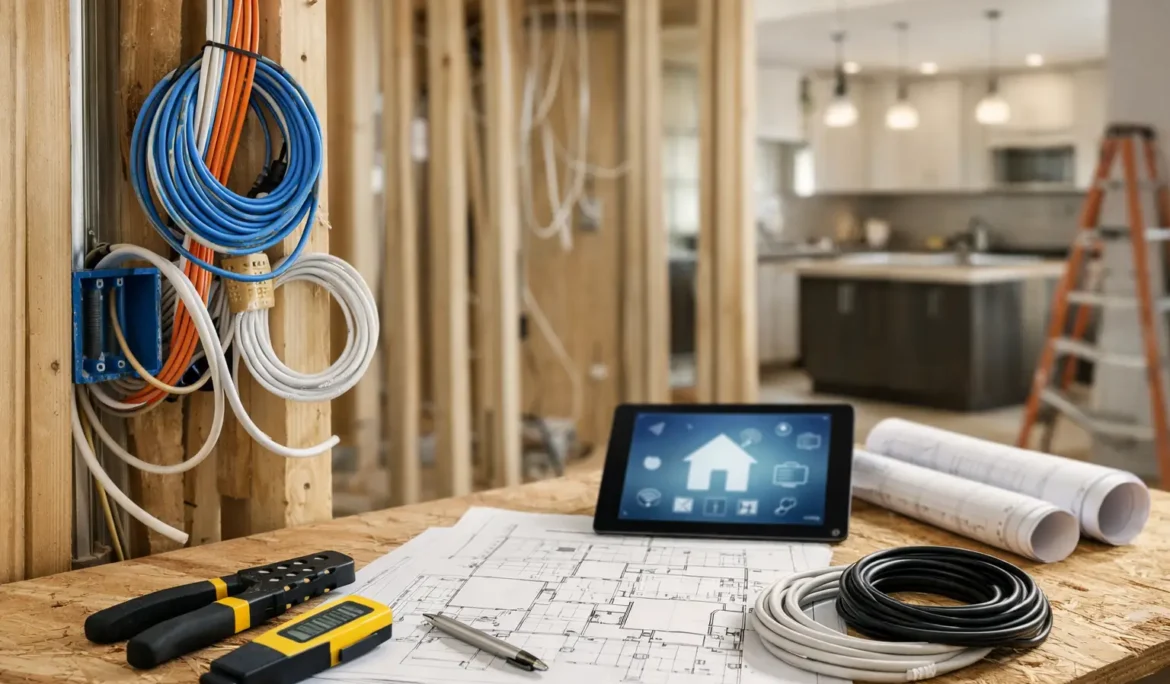
Drywall hides expensive mistakes. If you are building a home or opening walls during a renovation, this is the moment to think through a smart home pre wiring checklist – not after the paint is dry and the furniture is in place. The right wiring plan gives you stronger performance, cleaner rooms, and far more flexibility when your needs change.
Pre-wiring is not about stuffing every wall with cable just because you can. It is about designing the home around how you actually live. A media room has different demands than a kitchen. A home office needs different support than a patio. The best results come from a plan that balances current priorities with sensible future readiness.
Why a smart home pre wiring checklist matters
Wireless technology has improved, but it has not replaced good infrastructure. Streaming, whole-home audio, lighting control, surveillance, motorized shades, and reliable Wi-Fi all work better when the backbone of the system is planned early. That is especially true in larger homes, homes with challenging construction materials, and spaces where appearance matters.
Pre-wiring also protects the design of the home. When low-voltage cabling is installed before drywall, equipment can be hidden properly, TVs can sit flush, speakers can be placed where they belong, and access points can be located for coverage instead of compromise. You avoid the patchwork look of visible wires, add-on solutions, and gear placed wherever someone could make it fit later.
There is also a practical side. Some wire runs are simple while the walls are open and frustrating once the house is finished. Even if you are not installing every feature on day one, creating pathways now gives you better options later.
Start with the rooms, not the gadgets
A useful smart home pre wiring checklist begins with lifestyle. Think room by room and ask what each space needs to do. The family room may center on entertainment, the primary suite may prioritize lighting scenes and shades, and the kitchen may need music, voice control, and strong wireless coverage. Outdoor areas often need more planning than homeowners expect because weather-resistant displays, speakers, lighting, and Wi-Fi all benefit from the right infrastructure.
This approach keeps the project focused. Instead of chasing trends, you build around daily habits. It also helps your integrator coordinate with the builder, electrician, designer, and architect so the technology feels intentional rather than added on.
Wi-Fi and networking come first
Most smart home frustrations start with weak networking, not bad devices. That is why structured wiring for the network should be one of the first priorities. A central equipment location gives your home a clean hub for networking gear, AV components, and control systems. From there, hardwired data lines can run to key rooms and to wireless access point locations throughout the house.
Ceiling-mounted access points are often the right choice for even coverage, but placement depends on square footage, floor plan, materials, and expected device load. A large open-concept area may need a different strategy than a three-story home with masonry elements. Wired connections are also worth planning for TVs, media players, desktop computers, gaming systems, and workspaces where consistency matters.
It is smart to think about rack space, ventilation, and electrical needs in the equipment area as well. A beautiful smart home can become an annoying one if the gear is crammed into the wrong closet.
TV, media, and home theater wiring
Entertainment is one of the biggest reasons homeowners pre-wire. Even in rooms where the setup seems simple, planning ahead makes a visible difference. TV locations should be coordinated with power, data, control, and any in-wall conduit that allows future cable upgrades. If you want a clean install with no exposed equipment, that decision needs to happen before the wall is closed.
For media rooms and dedicated theaters, speaker wiring deserves extra attention. Surround sound, Dolby Atmos speaker positions, subwoofer locations, projector wiring, screen control, and lighting integration all benefit from early design. The exact layout depends on the room size and how serious the performance goals are. Some homeowners want an impressive family movie room. Others want a true cinematic space. The wiring plan should reflect that difference.
Multi-room audio is another common priority. Kitchens, living areas, bedrooms, bathrooms, and outdoor zones can all be pre-wired for distributed music. Even if you start with a few zones, wiring additional locations while access is easy gives you future flexibility without reopening finished spaces.
Lighting control and motorized shades
Lighting often has the biggest day-to-day impact on how a smart home feels. Pre-wiring for lighting control may involve keypad locations, panelized systems, or coordinated wiring plans that support scene-based control. The right solution depends on the home, the level of automation desired, and how much simplicity the homeowner wants at the wall.
This is also the time to think carefully about switch locations. A traditional switch plan does not always match a modern smart home. Great lighting design reduces wall clutter and makes control more intuitive, especially in larger spaces, hallways, and primary suites.
Motorized shades should be included early as well. Shade pockets, recessed details, power requirements, and control integration all need coordination before finish work begins. Waiting too long can limit fabric choices, hardware concealment, and overall appearance. For design-conscious homeowners, this is one of the clearest examples of why technology planning should happen alongside interior planning.
Security, cameras, and entry points
Security wiring should be practical, not excessive. Door contacts, motion sensors, glass break sensors, smart locks, video doorbells, and surveillance cameras all have placement considerations that are easier to resolve before walls and soffits are finished. Exterior camera views should be chosen for coverage and aesthetics, not simply wherever someone can fish a wire later.
It also helps to think about gates, garages, package delivery areas, and secondary entrances. These are often the spots that get overlooked during planning and regretted later. A strong design creates convenient awareness without making the home feel like a commercial building.
Don’t forget outdoor spaces
Outdoor entertainment has become a real extension of the home, and it deserves the same level of planning. Patio TVs, landscape audio, exterior Wi-Fi, lighting control, pool area coverage, and weather-conscious equipment placement all require coordination. Outdoor systems face more environmental stress, so infrastructure matters even more.
Conduit can be especially valuable here. It gives you a path for future upgrades or replacements in areas where trenching or finished hardscapes would make later changes more disruptive.
Future-proofing without overbuilding
Homeowners often ask how much they should pre-wire for the future. The honest answer is that it depends on the property, the construction phase, and the long-term vision for the home. Not every room needs every cable type, and not every trend deserves a dedicated wire run.
What usually makes sense is wiring core locations well, adding conduit where future access may be difficult, and planning for expansion in spaces likely to evolve. Bonus rooms, home offices, flex spaces, and outdoor areas are good examples. Future-proofing works best when it is intentional. Overbuilding without a plan can add clutter to the project rather than value.
A smart home pre wiring checklist to review before drywall
Before the walls close, confirm your plan for network drops, wireless access point locations, TV and media walls, speaker positions, theater wiring, keypad and touchscreen locations, shade power, security devices, camera views, doorbell wiring, garage integration, outdoor entertainment zones, and a dedicated equipment space. Also review conduit paths, power coordination, rack ventilation, and any hidden details that affect finished appearance.
Just as important, verify that the technology plan aligns with furniture layouts, millwork, ceiling details, and lighting design. A speaker, keypad, or TV that works on paper can become awkward once cabinetry, art, or window treatments are finalized.
Work with one plan, not five opinions
The homes that feel easiest to live in are usually the ones where the technology was coordinated from the start. Builders, electricians, designers, and homeowners all bring valid priorities, but smart home infrastructure needs a unified plan. That is where an experienced integration partner can make the process much smoother.
For homeowners who want premium entertainment and automation without unnecessary complexity, thoughtful pre-wiring creates the foundation for a system that performs well and stays easy to use. Cine Acoustic helps clients plan that foundation carefully, so the finished home feels polished, reliable, and ready for real life.
If you are still early in the project, that is good news. The best time to make smart home decisions is before you are forced to work around finished walls.