

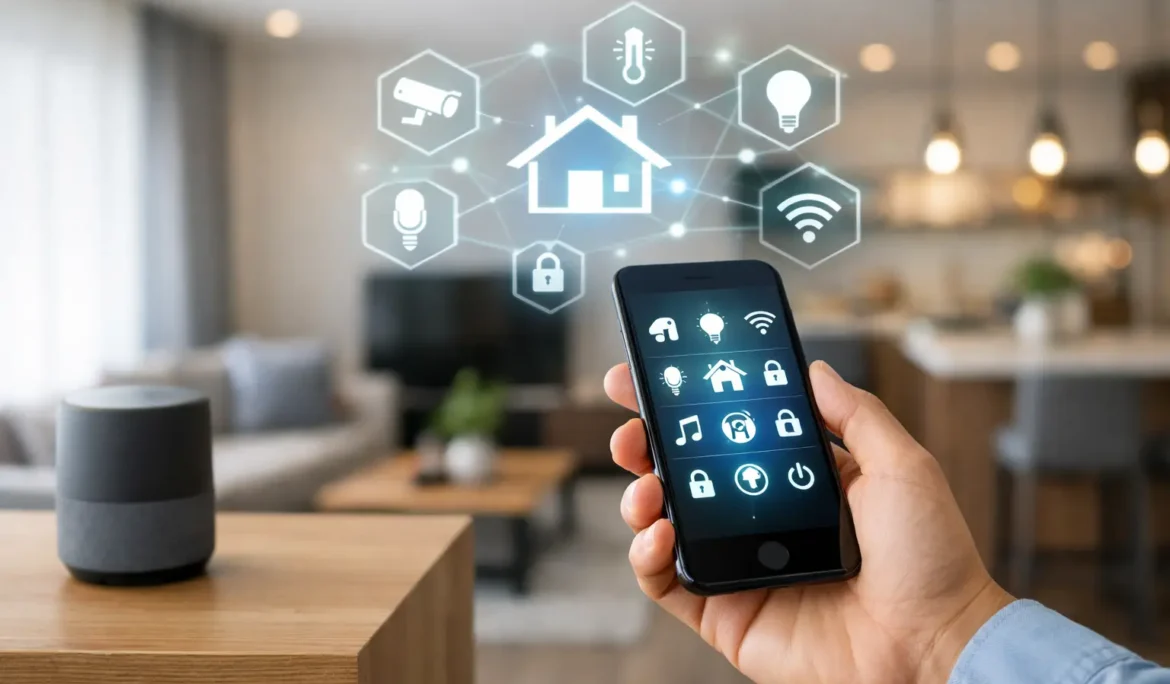
You should not have to open six apps just to dim the lights, lower the shades, turn on music, and lock the doors before bed. That frustration is usually the moment homeowners start asking, what is smart home automation system, and whether it is different from simply owning a few smart devices. The short answer is yes. A true smart home automation system brings your technology together so it works as one coordinated experience instead of a collection of disconnected gadgets.
For most homeowners, that distinction matters more than the technology itself. The goal is not to fill a house with apps, hubs, and voice commands. The goal is to make daily life easier, more comfortable, and more consistent.
What Is Smart Home Automation System Technology?
A smart home automation system is a centralized platform that connects and controls multiple home technologies from one interface. Instead of managing lighting in one app, audio in another, climate in a third, and security somewhere else, the system allows those elements to communicate and respond together.
That central platform might be controlled by a wall-mounted touch panel, a handheld remote, a mobile app, keypad buttons, voice control, or automated schedules. In a well-designed home, you are not thinking about the software behind it. You are pressing one button labeled “Goodnight” and the house responds exactly the way you want.
This is where homeowners often confuse smart devices with smart automation. A video doorbell, a smart thermostat, and a few Wi-Fi bulbs are useful products, but they do not automatically create a unified system. Automation starts when those devices are intentionally designed to work together through a reliable control platform.
How a Smart Home Automation System Works
At its core, the system acts like a conductor. It tells lighting, shades, entertainment, climate, and selected security features when to act and how to behave based on your preferences. That can happen through direct commands, scheduled events, sensor-based triggers, or scenes that control multiple functions at once.
For example, a “Movie Night” scene could dim the lights, close the motorized shades, power on the display or projector, switch the audio system to the correct source, and adjust the room temperature. You are not managing each device separately. The system handles the sequence for you.
That convenience depends on thoughtful integration. Reliable networking, compatible hardware, proper programming, and clean installation all play a role. If one piece is weak, the overall experience can feel inconsistent. That is why professionally designed systems tend to feel simpler, even though they are doing much more behind the scenes.
Common systems it can control
Most smart home automation systems are built around the parts of the home people use every day. Lighting control is one of the most popular because it changes both convenience and atmosphere immediately. Instead of flipping switches throughout the house, homeowners can use scenes for entertaining, relaxing, cooking, or bedtime.
Motorized window shades are another natural fit. They can raise with the morning sun, lower for privacy in the evening, or help reduce glare in media spaces. Climate control also works well in automation, especially when different routines are needed throughout the day.
Entertainment is where integrated systems often stand out. Whole-house audio, media rooms, home theaters, and outdoor entertainment areas become easier to enjoy when one control system handles source selection, volume, and room-by-room access. In many homes, automation also ties together video distribution, TVs, and surround sound for a more polished experience.
Security-related functions may also be included, such as door locks, cameras, alarms, and garage door status, depending on the system and homeowner preferences. The right setup depends on how you live, not on how many features can be added.
The Difference Between Automation and Remote Control
One of the biggest misconceptions is that remote access alone equals automation. It does not. If your phone can turn on a lamp from across town, that is convenient, but it is still just remote control. Automation means the system can perform actions automatically or as part of a larger routine.
For example, lights that turn on at sunset every day are automation. Shades that lower when a room gets too bright are automation. A front entry scene that turns on pathway lighting, adjusts interior lights, and plays music when you arrive home is automation.
This distinction matters because convenience comes from fewer decisions, not just more control options. The best systems reduce friction. They do not ask you to manage your home constantly. They help the home respond more intelligently with less effort from you.
Why Homeowners Choose Smart Home Automation
Most people are not looking for technology for its own sake. They want a home that feels easier to live in. A smart home automation system can improve that experience in several ways.
The first is convenience. Daily actions become simpler when routines are preset and key functions are available from a single interface. Instead of checking every room before leaving, one command can turn off lights, power down entertainment, and secure selected areas.
The second is comfort. Lighting scenes, climate adjustments, and audio control can change how a home feels throughout the day. Small details make a difference, especially in larger homes where managing everything manually becomes tedious.
The third is consistency. A professionally integrated system should work the same way every time. That reliability is often what separates a satisfying smart home from one that becomes frustrating after the novelty wears off.
There can also be lifestyle and design benefits. Fewer visible remotes, cleaner wall controls, and coordinated technology choices help the home feel more intentional. For design-conscious homeowners, that matters just as much as the feature set.
Is Every Smart Home Automation System the Same?
Not at all. Some systems are built for simple single-room control, while others are designed to manage an entire property. Some rely heavily on consumer-grade Wi-Fi products, and others use more structured platforms that support deeper customization and better long-term reliability.
The right answer depends on the home, the architecture, and the homeowner’s expectations. A family renovating a primary residence will likely have different goals than someone adding a few conveniences to an existing space. A dedicated media room, for example, benefits from tighter integration than a casual guest room TV.
There are also trade-offs. DIY setups can look appealing at first, especially when starting with one or two devices. But as more products are added, homeowners often run into compatibility issues, overlapping apps, weak Wi-Fi performance, and inconsistent control. What began as a simple upgrade turns into ongoing troubleshooting.
A professionally planned system is different because it starts with the whole experience. It considers how the technology should function room by room, how it should look in the space, and how the system can remain easy to use over time.
What to Look for in a Well-Designed System
A good smart home automation system should feel intuitive on day one. If basic tasks require too many steps, the system has not been designed well. Simplicity is not about having fewer capabilities. It is about making advanced capabilities easy to access.
Reliability should be the next priority. That includes the control platform itself, the network supporting it, and the quality of the installed devices. Homeowners often blame a smart system when the real issue is poor infrastructure. Strong Wi-Fi and proper system design are foundational.
Customization matters too. The best systems fit your routines instead of forcing you into generic presets. That may mean personalized scenes, hidden technology, room-specific controls, or entertainment options tailored to how your family actually uses the home.
Long-term support is another factor people underestimate. Technology changes. Homes evolve. A system that is designed and installed by a knowledgeable integration team is easier to update, refine, and maintain than a patchwork of products from multiple sources. That service-minded approach is one reason many homeowners work with a specialist such as Cine Acoustic when they want high performance without unnecessary complexity.
Who Benefits Most From Smart Home Automation?
Smart home automation makes sense for many types of households, but it is especially valuable for homeowners who want more than gadget-level convenience. If you are building, renovating, upgrading a media space, or trying to create a more polished whole-home experience, integration delivers benefits that stand-alone devices usually cannot.
It is also a strong fit for busy families and professionals who want the home to support their routine rather than interrupt it. When lighting, shades, entertainment, and climate work together, the home feels calmer and easier to manage.
For larger homes, the value becomes even clearer. More rooms, more devices, and more daily interactions usually mean more chances for things to feel fragmented. Automation helps bring order to that complexity.
A Smarter Home Should Feel Simpler
The best smart homes do not show off how much technology they contain. They quietly do the right thing at the right time and make the space more enjoyable to live in. If you are asking what is smart home automation system, the answer is not just software, devices, or voice commands. It is a carefully designed way to make your home easier, more comfortable, and better aligned with how you live every day.
When the system is planned well, the technology fades into the background – and that is usually the clearest sign it is working exactly as it should.