

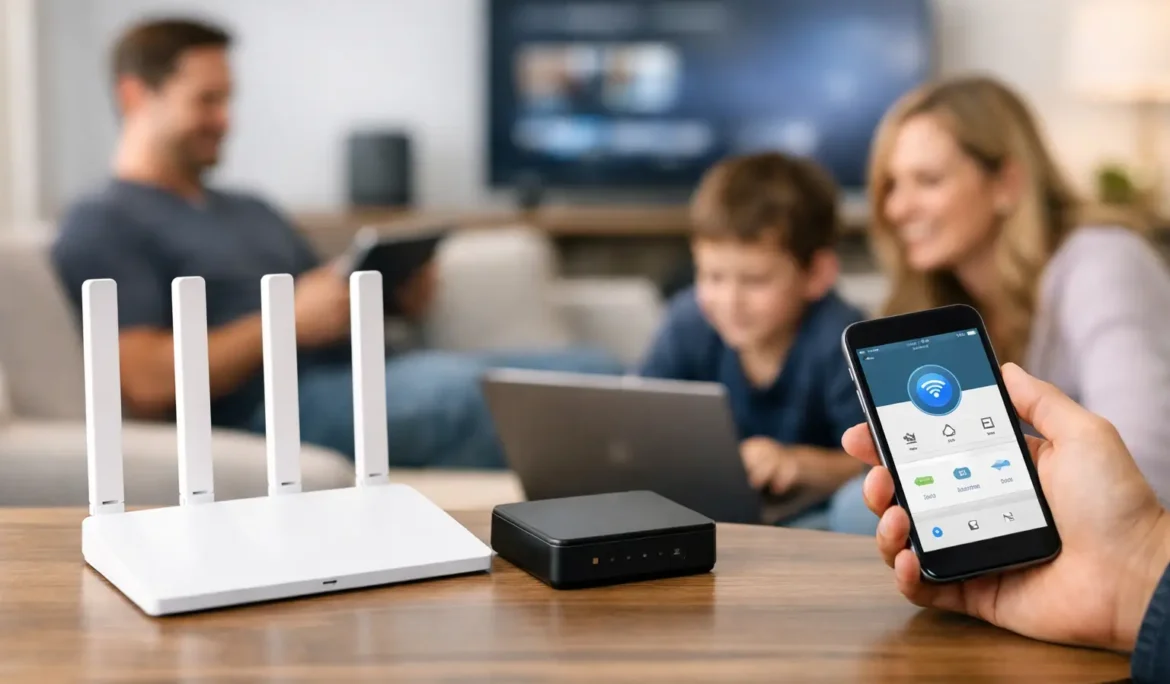
A movie pauses just as the final scene begins. A video call drops while someone is working from the kitchen. The kids’ devices are connected, but the patio camera is not. When these frustrations show up around the house, the issue is rarely one device. It is usually the network behind everything. That is why choose managed home networking is a question worth asking before adding another router, extender, or smart device.
A managed home network is designed as the foundation for connected living. Rather than relying on whatever equipment came with an internet plan or a collection of add-on devices, your Wi-Fi, wired connections, security settings, and coverage are planned to work as one system. The result is technology that feels easier to use because the complex work happens behind the scenes.
What Managed Home Networking Means
Managed home networking begins with a professional assessment of how your household uses technology. A network for a compact home with a few streaming devices has different needs than one supporting a home theater, distributed audio, video conferencing, smart lighting, motorized shades, cameras, and multiple family members online at once.
The system is then designed around the home itself. Building materials, floor plan, outdoor spaces, equipment locations, and the number of connected devices all affect coverage and performance. Access points are placed intentionally, hardwired connections are used where they make the most sense, and equipment is organized in a way that supports dependable operation and future updates.
Management is the other essential part. Instead of installing a network and leaving homeowners to troubleshoot it alone, a managed approach includes ongoing oversight and expert support. When a concern arises, the people who designed the system understand how it is configured and can help identify the source of the problem efficiently.
Why Choose Managed Home Networking Instead of DIY Wi-Fi?
Consumer Wi-Fi equipment can be a reasonable fit for a small apartment or a household with modest needs. It may also work well for someone who enjoys managing settings, firmware updates, device conflicts, and support calls. But as a home becomes more connected, a do-it-yourself approach can turn into a patchwork of separate systems that are difficult to maintain.
A managed network is built for the way a home actually functions. It considers more than the speed advertised by the internet provider. Strong signal coverage, capacity, device handoffs between rooms, wired performance, and network security all contribute to a better experience.
This matters particularly for entertainment spaces. A high-performance home theater or whole-house audio system relies on a stable network for streaming, control, updates, and communication between components. A network interruption can make advanced technology feel complicated, even when every individual product is working correctly.
The same applies to smart home control. Lighting, shades, climate controls, cameras, and touchscreens should respond predictably. When the network is designed as part of the overall technology plan, each system has a stronger foundation and the home is easier for everyone to operate.
Better Coverage Without the Guesswork
Dead zones are not always solved by adding another extender. In some cases, extenders can introduce inconsistent performance, create separate networks, or make devices slow to switch as people move through the house. The issue might be placement, interference, construction materials, or a lack of wired infrastructure.
Managed networking replaces guesswork with a plan. Wi-Fi access points are positioned to serve the spaces where people actually use their devices, including bedrooms, offices, basements, outdoor entertaining areas, and detached structures when needed. The goal is not simply to see a Wi-Fi icon on a phone. It is to provide a connection that performs well when several people are streaming, working, gaming, or using smart home technology at the same time.
Wired connections also have an important role. Devices that benefit from consistent high bandwidth, such as home theater components, televisions, gaming systems, and desktop workstations, can often be connected directly to the network. That leaves more wireless capacity available for mobile devices and provides a more dependable experience where it counts.
A Smarter Approach to Security and Privacy
Every connected device creates another point of access to the home network. Phones and laptops are only part of the picture. Smart TVs, streaming players, cameras, voice assistants, appliances, and lighting systems may all communicate online.
A professionally managed network can separate devices in sensible ways, keep critical equipment protected, and maintain security settings over time. This can help prevent an issue with one device from affecting every system in the home. It also gives homeowners a clearer understanding of what is connected and how the network is being used.
No network can promise complete immunity from every online threat. Good security is an ongoing practice, not a one-time setting. That is one reason continued management matters. Equipment updates, changing household needs, and newly connected products all deserve attention after installation day.
Support From People Who Know Your System
When technology is purchased from several retailers and installed by different providers, troubleshooting can become a frustrating loop. The internet provider may point to the router manufacturer. The router manufacturer may point to the streaming service. Meanwhile, the homeowner is left trying to explain a system that was never designed as a whole.
With managed home networking, there is a knowledgeable team familiar with the equipment, layout, and intended use of the system. That relationship is especially valuable after a renovation, a move to a larger home, or the addition of new technology. It means help is based on the actual environment, not generic instructions read from a script.
For New Jersey and New York homeowners investing in a connected home, local expertise can also make coordination easier. Network planning can be considered alongside entertainment, automation, lighting control, and interior design decisions, rather than treated as an afterthought once walls are closed and rooms are furnished.
Designed for the Home You Will Have Next
Home technology rarely stands still. A guest room becomes an office. A basement becomes a media room. A family adds more devices, cameras, or outdoor entertainment. The best network design accounts for reasonable growth without forcing a complete restart every time the home changes.
That does not mean every home needs enterprise-level equipment or a complicated control interface. The right solution depends on the size of the property, the construction, the number of users, and the systems being supported. The value of professional design is choosing what fits your lifestyle instead of overbuilding or underestimating what the home requires.
Cine Acoustic approaches networking as part of a complete technology experience. A carefully designed network supports the moments homeowners care about: a family movie night that starts on time, a productive workday, music throughout the house, dependable control of lights and shades, and a patio that stays connected when guests arrive.
The Difference Is Confidence at Home
Managed home networking is not just about faster internet. It is about reducing the small points of friction that make connected living feel unreliable. It brings thoughtful planning to the system that supports entertainment, communication, comfort, and control throughout the home.
If your current Wi-Fi works only in certain rooms, smart devices respond inconsistently, or your technology has become harder to manage than it should be, the next step is not necessarily more equipment. It may be a network designed around your home, your routines, and the experience you want every day.