

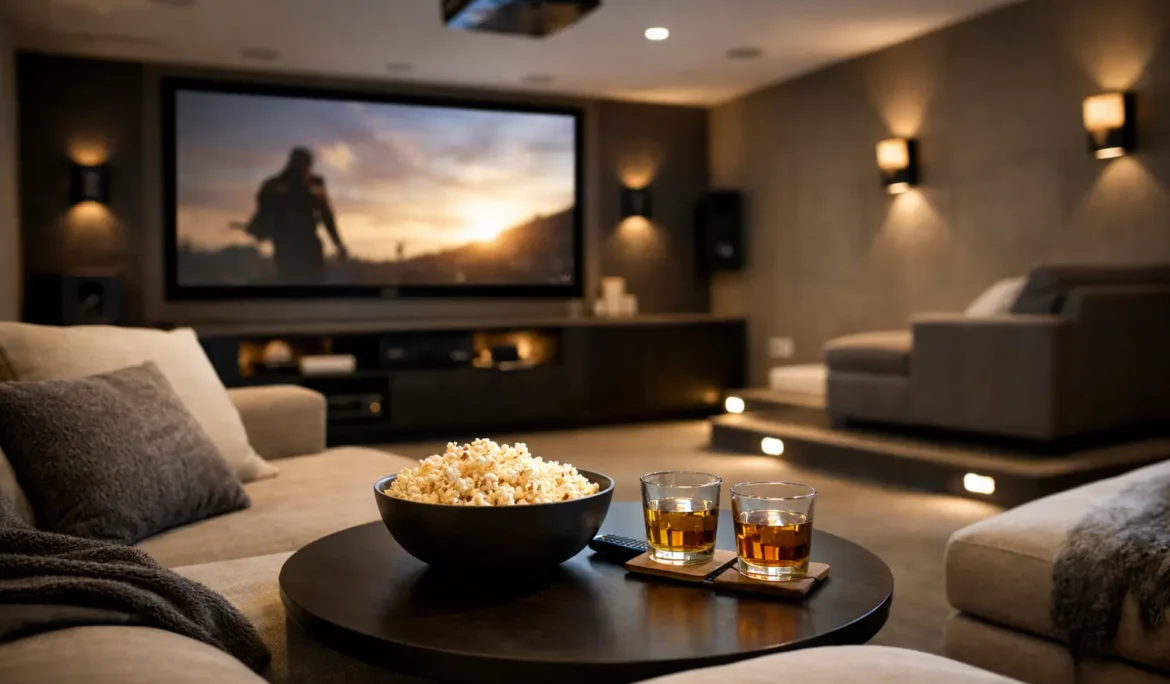
A great movie room is not defined by the size of its screen. It is defined by what happens when the lights dim: dialogue is clear, bass has impact without shaking the rest of the house, the picture feels cinematic, and nobody is hunting for remotes. That is the standard a thoughtful New Jersey home theater design should meet.
For many homeowners, a theater is part of a larger renovation, basement finish, or new construction project. Others want to improve a media room that has a beautiful television but disappointing sound, glare on the screen, and a tangle of equipment. In either case, the best result comes from planning the room as a complete experience rather than selecting components one at a time.
Start With How the Room Will Be Used
Before choosing a display, speakers, or seating, consider the people who will use the room and how they will use it. A dedicated theater built for film nights has different priorities than a family room that needs to handle sports, gaming, streaming, and everyday television. The right design reflects that reality.
A dedicated theater can prioritize light control, focused seating, acoustic treatments, and a projector or large direct-view display. A multipurpose media room may need a brighter screen, furniture that suits daily living, and speakers that blend into the architecture. Neither approach is better. The room should support the lifestyle of the household instead of asking the household to adapt to the technology.
This early conversation also prevents common disappointments. A homeowner who wants friends over for Sunday football may benefit from a wider viewing arrangement than someone focused on movie nights. A family with younger children may value simple control and durable finishes above more specialized theater details. Clear goals guide every later decision.
The Screen Is Only One Part of the Picture
Screen size gets attention because it is easy to see, but viewing distance, room lighting, and content matter just as much. A display that looks impressive in a showroom can feel overpowering when placed too close to the seating area. Conversely, a screen that is too small will not create the immersive experience the room was meant to deliver.
For rooms with controlled light, a projection system can create a true cinema scale. It works especially well in dedicated theaters where blackout shades, dark finishes, and carefully placed lighting support the image. In brighter spaces, a large premium television often provides a stronger daytime picture and can be an excellent fit for mixed use.
The decision depends on the room, not a universal rule. A professional design accounts for sightlines from every seat, ceiling height, window placement, ambient light, and the intended viewing habits. It also considers where equipment will live so the room remains clean and comfortable rather than dominated by electronics.
Lighting Protects the Viewing Experience
Lighting should make the theater more enjoyable before, during, and after the feature presentation. Recessed fixtures, wall sconces, step lights, and accent lighting each serve a different purpose. The key is placing them where they add comfort without reflecting on the screen or distracting from the image.
Layered lighting also makes a room more flexible. Soft pathway lighting helps guests move safely during a movie. Brighter settings support cleaning, conversation, or game night. Motorized window shades can reduce glare and protect the room from harsh afternoon sun without requiring anyone to adjust multiple coverings by hand.
When lighting and shades are integrated into the control system, one button can prepare the room for viewing: shades lower, lights fade, the display turns on, and the source is ready. The technology should feel like a convenience, not another system to manage.
Sound Design Is Where Immersion Begins
A large picture without well-designed audio can still leave a room feeling flat. People often notice this first with dialogue. If voices are hard to understand, viewers turn up the volume, then action scenes become too loud. The answer is not simply bigger speakers. It is proper speaker placement, calibration, and acoustics.
A Dolby Atmos theater surrounds the audience with sound from the front, sides, rear, and above. Done correctly, it places viewers in the action while keeping dialogue anchored and intelligible. Speaker selection should match the room’s size and construction, but positioning is equally critical. Even excellent equipment cannot perform as intended if it is installed wherever there happens to be open wall space.
Subwoofers require the same care. Low-frequency sound is affected heavily by room dimensions, furniture, and construction. A design team may recommend more than one subwoofer to produce more even bass across the seating area. This is not about making every scene louder. It is about making the sound balanced, controlled, and convincing in every seat.
Acoustics Are Not Just for Dedicated Theaters
Hard surfaces can make a room sound bright, echoey, or fatiguing. Large open rooms, glass doors, hardwood floors, and stone surfaces are beautiful architectural features, but they can complicate audio performance. Thoughtful acoustic treatment helps manage reflections so the soundtrack remains clear and natural.
Acoustic panels do not need to make a room look like a recording studio. They can be integrated into fabric walls, decorative treatments, ceiling details, or custom finishes that complement the interior design. The goal is to preserve the character of the room while giving the audio system the environment it needs to perform.
Easy Control Makes a Theater Worth Using
The most sophisticated theater system can become frustrating if it requires separate remotes, multiple apps, and a memorized startup sequence. Homeowners should be able to begin a movie without troubleshooting inputs or asking which remote controls the receiver.
A single intuitive interface can bring the display, audio, streaming sources, lighting, shades, and climate settings together. Whether the preferred control is a handheld remote, wall keypad, touchpanel, or mobile device, it should present simple choices that make sense to the people using the room.
This is also where a custom design provides lasting value. Controls can be personalized around the household’s routines, and the system can be supported by the same local team that designed and installed it. Cine Acoustic approaches technology as a connected experience, helping clients avoid the compatibility issues and clutter that come from piecing together products independently.
Plan Early When Building or Renovating
The best time to design a home theater is before walls are closed. Early planning allows wiring to be concealed, speakers to be located precisely, equipment ventilation to be addressed, and lighting zones to be coordinated with the electrician and designer. It also makes it easier to protect the visual simplicity of the finished room.
That does not mean an existing room cannot become an exceptional theater. Many upgrades can be completed in finished spaces with careful planning. Still, knowing what is behind the walls, where power is available, and how the room is constructed helps determine the most practical approach.
Network reliability deserves attention as well. Streaming, control, and whole-home integration depend on a stable network. A theater should not lose its convenience because the Wi-Fi struggles when several family members are online elsewhere in the home. Designing the network as part of the technology plan supports consistent performance where it matters.
Design for the Experience You Want to Repeat
The strongest home theaters are not built around a spec sheet. They are built around a feeling: family movie nights that start without friction, a game that feels like an event, a favorite concert that fills the room, or a quiet evening when the house becomes a private cinema.
A carefully planned New Jersey home theater design brings picture, sound, lighting, comfort, and control into one dependable experience. Start with the room you have, the way you live, and the moments you want to create. The right system will make those moments easier to enjoy again and again.