

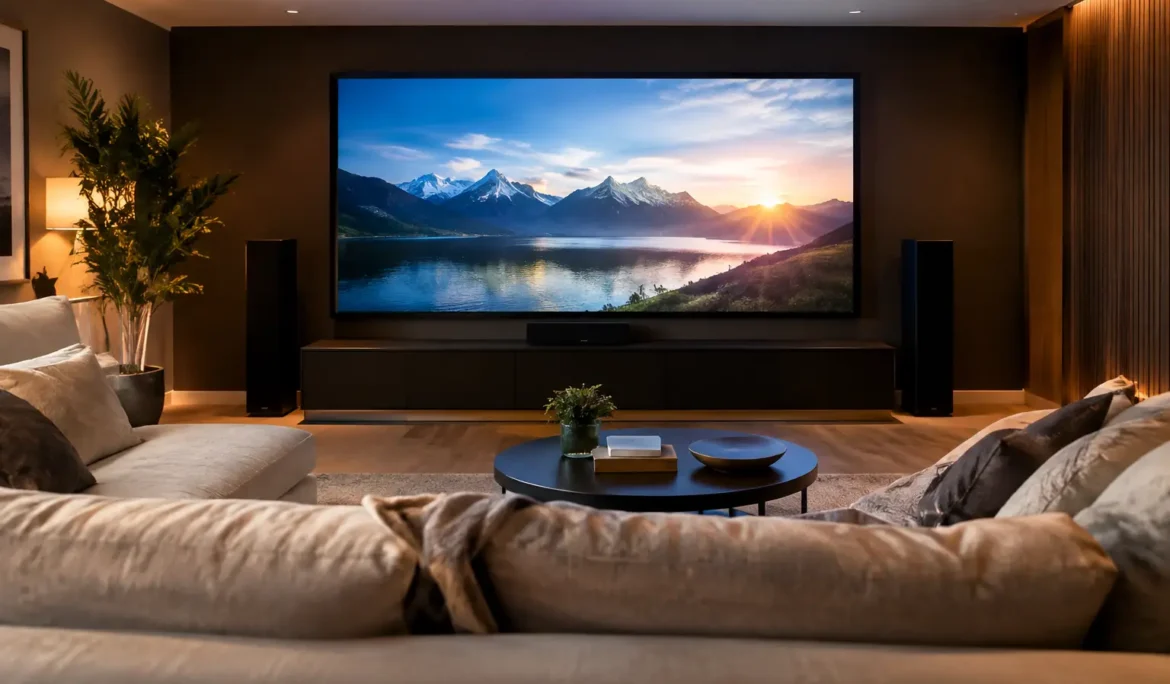
The best home theaters do not feel like a collection of expensive components. They feel effortless: one touch brings the room to life, dialogue is clear in every seat, the picture holds your attention, and the technology disappears once the movie starts. This home cinema guide focuses on the decisions that create that experience, from the room itself to the controls your family will use.
A dedicated theater can be dramatic and immersive, but a beautifully integrated media room can be just as compelling. The right choice depends on how you live, how the space will be used, and which details matter most to you.
Start With the Way You Want to Watch
Before choosing a display, speakers, or seating, define the room’s purpose. Is it a private theater for movie nights? A family room that needs to handle sports, streaming, gaming, and conversation? A multipurpose basement where the screen must disappear when guests arrive?
A dedicated theater gives you the most control over light, acoustics, seating, and screen size. It is the stronger choice for homeowners who want a true cinematic environment with a projector, surround sound, and minimal distractions. A multipurpose media room offers greater flexibility, often pairing a large TV or projection system with furnishings and finishes that support everyday living.
Neither approach is automatically better. A projector can create an extraordinary large-screen experience, but it benefits from careful light control. A premium TV offers bright, high-impact images in spaces with windows and daytime activity. The design should support the room you actually use, not an idealized version of it.
The Room Is Part of the System
Home cinema performance begins well before equipment is installed. Room dimensions, ceiling height, windows, door placement, and construction materials influence everything from bass response to screen location.
A rectangular room is often easier to plan than an open-concept space because sound can be contained and seating can be positioned more deliberately. That does not mean open rooms are off limits. They simply require more thoughtful speaker placement, acoustic planning, and display selection to maintain impact without overwhelming the rest of the home.
Ambient light deserves early attention. Sunlight and reflective surfaces can reduce contrast on a projection screen and create glare on a TV. Motorized shades and lighting control allow the room to shift quickly from bright, social space to a focused viewing environment. They also eliminate the familiar interruption of someone getting up to close blinds after the opening scene has already started.
Finishes matter as well. Darker, low-reflective surfaces are especially helpful in dedicated theaters, where they preserve image contrast and reduce visual distractions. In media rooms, the goal may be more subtle: materials and colors that complement the interior design while avoiding highly reflective surfaces directly around the screen.
Plan the Picture Around Viewing Distance
A bigger screen is not always a better screen. The ideal size depends on seating distance, resolution, room layout, and the type of content your household watches. A screen that is too small can feel underwhelming. One that is too large for the room can make viewers uncomfortable, especially during fast-moving sports or gaming.
For a projector-based theater, screen placement and image size should be designed alongside the projector, not afterward. Throw distance, ceiling location, screen material, and available light all affect the final result. In a media room, a large-format TV may be the more practical fit because it delivers excellent brightness and crisp detail without requiring the room to be fully darkened.
The source matters, too. High-quality content deserves a system that can show it properly. Streaming is convenient, while a dedicated movie server such as Kaleidescape can provide a premium, consistent movie experience for homeowners who care deeply about image and sound quality. The right solution depends on viewing habits, not on adding technology for its own sake.
Build Sound That Feels Natural, Not Loud
A home cinema should make a whispered line easy to understand and an action sequence exciting without turning the room into a wall of noise. That balance comes from speaker design, calibration, acoustics, and the relationship between the system and the room.
Surround sound places effects and music around the audience, while Dolby Atmos adds a height dimension that makes rain, aircraft, and concert performances feel more convincing. But speaker count alone does not guarantee an immersive experience. Speakers need to be located at appropriate angles and heights, aimed correctly, and tuned for the seats that matter most.
Subwoofers are another area where planning matters. Low frequencies interact strongly with room boundaries, which can create boomy bass in one chair and weak bass in another. Proper placement and calibration help deliver depth and impact across the seating area instead of concentrating it in one spot.
Acoustic treatments can be equally valuable. These elements manage unwanted reflections and improve clarity, particularly in rooms with hard floors, glass, drywall, and large open surfaces. They do not have to make a room look technical. When incorporated into walls, ceilings, fabric panels, or millwork, they can support both performance and the room’s visual character.
A Home Cinema Guide to Seating and Sightlines
Comfort is more than selecting attractive theater chairs. Every seat should have a clear view of the screen, reasonable access to the room, and sound that feels balanced. If you plan more than one row, a riser may be needed so viewers in the back are not looking over heads in front of them.
Keep sightlines in mind when choosing screen height. A screen placed too high can cause neck strain over a full-length film, even if it looks dramatic on a wall. The same principle applies to a TV installed above a fireplace. It may be the obvious architectural location, but it is not always the most comfortable viewing position. A professional design can explore solutions that respect both the room’s architecture and the viewing experience.
Allow for the way people move through the space. A beautiful seating layout loses its appeal if someone must cross directly in front of the screen every time they need a drink or step out of the room. Small circulation decisions have an outsized effect on how relaxed the room feels.
Make Control Simple From Day One
The most sophisticated home cinema can become frustrating if each activity requires multiple remotes, several apps, and a memorized sequence of inputs. Your system should replace that friction with simple, personalized control.
A single interface can start a movie, set the appropriate lighting scene, lower shades, select the correct source, and adjust the room to the preferred viewing mode. The same control can make it easy to switch to a game console, music, or a live sporting event without asking anyone which remote operates the receiver.
Reliability starts behind the scenes. Equipment should be installed with serviceability, ventilation, power management, and network performance in mind. A strong Wi-Fi and wired network foundation is particularly important for streaming, control, and connected devices. Technology is more enjoyable when it works consistently, and that is rarely accidental.
Design for the Home You Have Now and the One You Will Keep Improving
A thoughtful home cinema plan considers future needs without making the project unnecessarily complicated. You may want to add a second seating row later, bring distributed audio into adjacent spaces, or update a display as new technology becomes available. Planning pathways, equipment locations, and infrastructure early makes those changes easier to manage.
For renovations and new construction, involve your technology partner while plans are still flexible. Coordination with architects, builders, and interior designers helps prevent compromises such as visible wires, poorly placed outlets, inadequate ventilation, or speaker locations that conflict with lighting and ceiling details. It also gives the design team more freedom to make the technology feel intentional rather than added on.
Cine Acoustic approaches home cinema as a complete environment, not a box of components. The goal is a system tailored to your room, your design preferences, and the people who will use it most.
A well-designed theater invites people to stay for one more episode, one more game, or one more song after the credits. Start with that feeling, then let the room, technology, and controls be built around making it happen every time.