

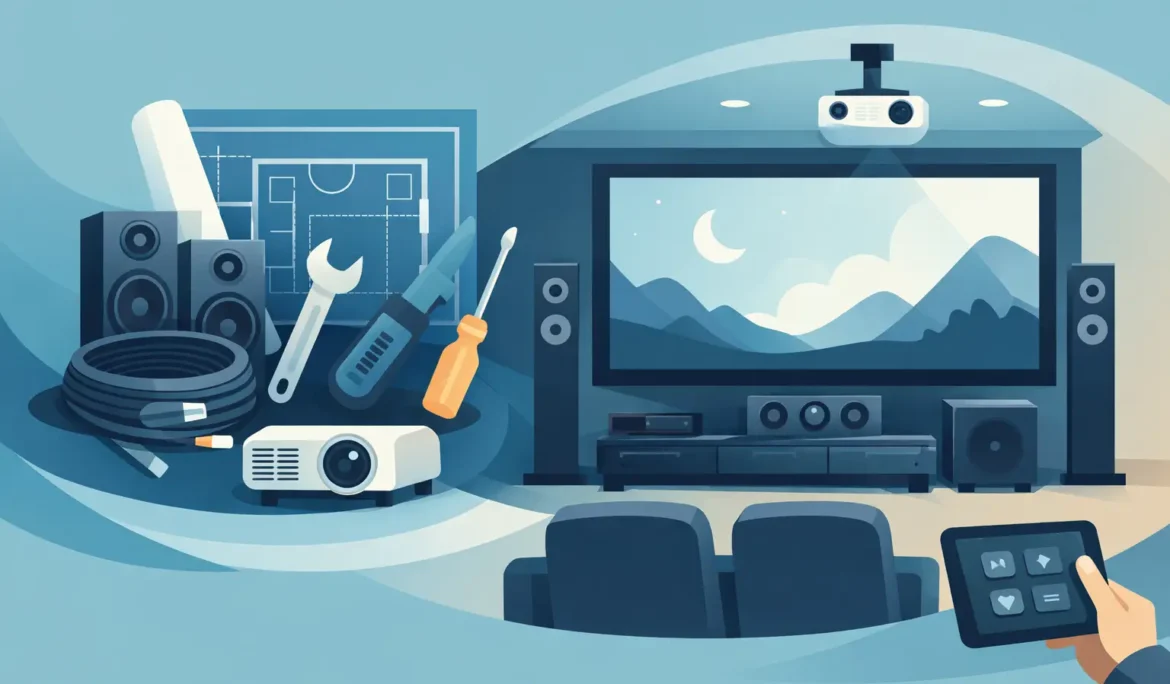
A great movie room usually fails before the first speaker is installed. It happens when the screen is oversized for the seating distance, when the room has beautiful finishes but terrible acoustics, or when a stack of premium components ends up feeling harder to use than the TV in the living room. That is why home theater design and installation should never start with gear alone. It should start with how you want the room to feel, function, and fit into your home.
For most homeowners, the goal is not simply louder sound or a bigger picture. It is a room that looks polished, performs at a high level, and works every time without a complicated routine. Whether you are converting a basement, planning a dedicated theater, or adding cinematic performance to a media room, the best results come from a design process that balances performance, comfort, aesthetics, and control.
Why home theater design and installation needs a plan
A home theater is one of the few spaces in the house where every system affects the others. Audio depends on room shape, finishes, and speaker placement. Video quality depends on screen size, ambient light, and seating position. Control depends on how the sources, network, lighting, and automation are integrated. If one piece is treated as an afterthought, the entire experience can feel off.
This is where many do-it-yourself projects lose momentum. A homeowner may choose a projector first, only to realize later that the ceiling height limits sightlines. Or they may buy high-end speakers without accounting for wall construction, acoustic treatment, or furniture placement. The result is often expensive equipment delivering average performance.
A professional design process avoids that disconnect. It starts by identifying how the room will be used. Some clients want a dedicated theater for movies and sports with controlled lighting and immersive surround sound. Others want a flexible family media room that supports streaming, gaming, and casual everyday use. Both can be excellent spaces, but they require different decisions.
The room matters as much as the equipment
One of the biggest misconceptions in home theater design is that premium products alone guarantee premium performance. In reality, the room itself has a major impact on what you hear and see.
Hard surfaces can create reflections that make dialogue harder to understand. Windows and light-colored walls can wash out projected images. Open floor plans may look attractive, but they can make it harder to achieve the sound isolation and speaker placement a true theater needs. None of these issues are deal breakers, but they do need to be addressed early.
That is why room layout, construction details, lighting control, and finishes should be considered part of the system, not separate from it. Acoustic treatments can be integrated discreetly. Motorized shades can reduce glare while preserving the room’s clean appearance. Lighting scenes can shift from bright and functional to low and cinematic with one touch. When these elements are designed together, the room feels intentional instead of pieced together.
Choosing the right screen, projector, and display approach
The display is often the emotional centerpiece of a theater, but the best choice depends on the room. A projector and screen can deliver a true cinematic scale, especially in a dedicated space with controlled lighting. A large-format TV may be a better fit in rooms with more ambient light or mixed everyday use.
Screen size should be driven by viewing distance, room proportions, and content habits. Bigger is not always better if viewers need to move their heads constantly or if image quality suffers at close range. The right screen should feel immersive without becoming distracting.
Projector selection also depends on practical details that are easy to overlook. Throw distance, ceiling conditions, ventilation, and wiring paths all matter. Even the quietness of the projector can affect enjoyment in a smaller room. These are not glamorous decisions, but they separate a theater that feels refined from one that feels compromised.
Sound is what makes the room feel real
People usually notice picture quality first, but sound is what creates immersion. It gives weight to action scenes, clarity to dialogue, and scale to live performances. It is also where smart design has the greatest payoff.
Speaker layout should match both the room and the listening goals. Some spaces call for a traditional surround setup, while others justify a more advanced Dolby Atmos system with overhead effects. Subwoofer placement is equally important. Poor placement can leave one seat boomy and another weak, even with quality equipment.
There is also an aesthetic conversation to have. Some homeowners prefer visible architectural speakers, while others want in-wall or hidden solutions that preserve a clean interior design. Neither choice is inherently better. It depends on the room, the budget, and how much visual presence you want the technology to have.
What matters most is calibration and integration. Even excellent speakers can underperform if levels, delays, and acoustic behavior are not tuned properly. That final layer of setup often makes the difference between sound that is simply loud and sound that is detailed, balanced, and effortless.
Control should be simple, not impressive
A home theater can include a projector or TV, surround sound processor, amplifiers, media players, gaming systems, streaming devices, lighting, shades, and climate adjustments. Without thoughtful control, that level of technology becomes frustrating very quickly.
The best systems simplify the experience. One button should turn on the right components, select the correct source, lower the lights, and prepare the room for viewing. Family members and guests should not need a tutorial every time they want to watch a movie.
This is where integrated control platforms add real value. Instead of juggling multiple remotes and apps, the system is designed around how the homeowner actually uses the room. It feels easy because the complexity is handled behind the scenes. That kind of usability is not a luxury. For many clients, it is the entire point of hiring a professional.
Home theater design and installation during construction vs. retrofit
The timing of the project affects both flexibility and budget. New construction and major renovations offer the greatest opportunity to hide wiring, plan speaker locations properly, improve sound isolation, and coordinate finishes. If a theater is part of the blueprint from the start, the result is typically cleaner and more efficient.
Retrofit projects can still deliver excellent performance, but they require a more strategic approach. Existing walls, ceiling conditions, and electrical limitations may narrow the options. That does not mean the room cannot be transformed. It simply means the design should account for those realities instead of fighting them.
An experienced team can often find creative ways to work within the space, whether that means selecting low-profile speakers, upgrading lighting control, rethinking furniture layout, or using acoustic solutions that blend with the room’s design. Good design is not about forcing a standard package into every house. It is about building the right system for that specific space.
Budget decisions that actually matter
Most homeowners do not need every premium option to get a premium experience. What they need is a system where the budget is applied in the right places.
In some rooms, investing more in acoustics and calibration will matter more than upgrading to a higher-tier speaker line. In others, lighting control and shading will have a greater impact than a small jump in display specifications. The trade-offs depend on the space and the priorities.
That is another reason a consultative process matters. It helps you avoid overspending on features you may not use while protecting the parts of the system that directly affect performance and daily enjoyment. A good recommendation should reflect your lifestyle, not just a product catalog.
For homeowners in New Jersey planning a dedicated theater or multi-use media space, working with a local specialist like Cine Acoustic LLC can make that process far more efficient. Instead of coordinating separate vendors for audio, video, networking, control, and room environment, you get one team focused on making every part work together.
Support after installation is part of the experience
The job is not finished when the room turns on for the first time. Systems need updates, occasional adjustments, and sometimes expansion as your needs change. A theater may begin as a movie room and later need better gaming support, added streaming sources, or integration with whole-home automation.
That is why long-term service matters. The right partner is not just installing equipment. They are helping protect your investment and keep the system easy to use over time. When support is local and responsive, small issues stay small.
A well-designed theater should feel exciting on opening night and just as dependable months later. It should welcome a Friday movie with the family, a championship game with friends, or a quiet late-night screening without making the technology the center of attention.
The best home theater is not the one with the longest equipment list. It is the one that feels made for your home, your routine, and the way you want to enjoy it.