

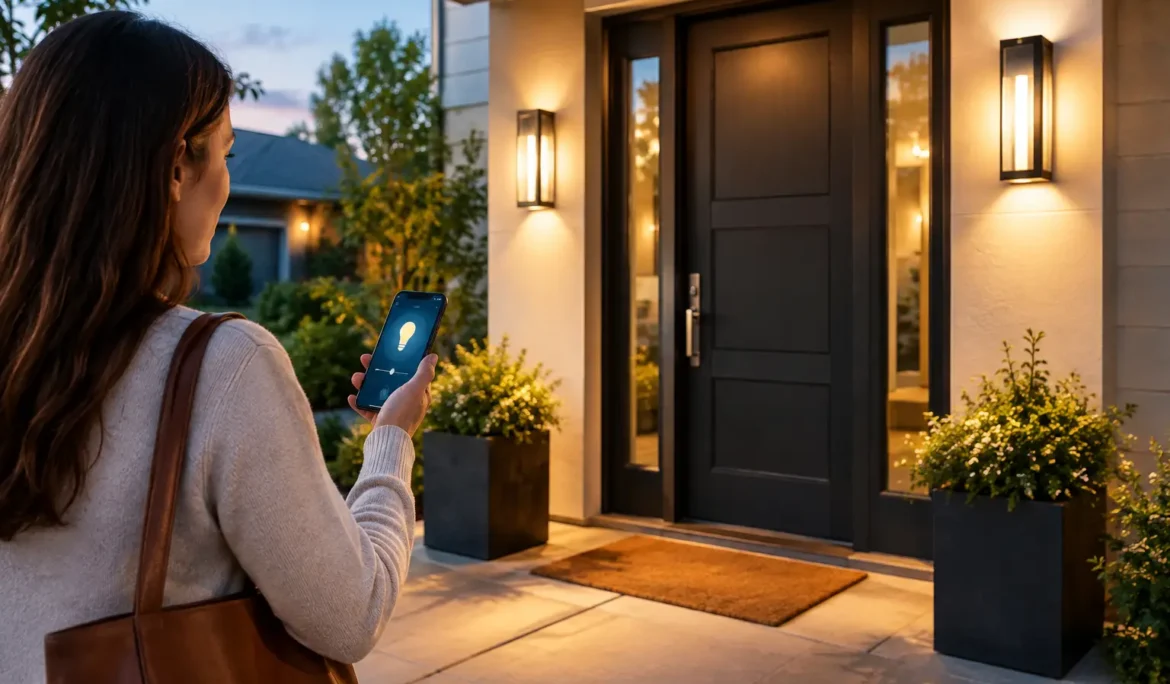
A dark front walk, an armful of groceries, and a search for the right switch is a small frustration that repeats every day. Learning how to automate entry lighting lets your home respond before you reach the door, creating a safer, more welcoming arrival without adding another task to your routine.
The best entry lighting automation feels invisible. Exterior lights come on when they are useful, interior lights guide you inside, and everything turns off when it is no longer needed. The result is not simply a brighter porch. It is a home that recognizes your habits, supports your family, and maintains a polished appearance from the curb to the foyer.
Start With the Arrival Experience
Entry lighting is rarely just one fixture. It may include path lights, sconces at the front door, garage lighting, a foyer chandelier, hallway lights, and sometimes landscape lighting. Automating only the porch light can be helpful, but coordinating the full path of travel is what makes the experience feel intentional.
Begin by thinking through the moments that matter most. A family returning after sunset may need the driveway, front walk, exterior door, and foyer illuminated. Someone arriving through the garage may need a different sequence. You may also want a simple way to activate a welcoming scene for guests before they arrive.
This planning step prevents a common mistake: adding individual smart bulbs or sensors without considering how they will work together. A cohesive lighting control system allows these areas to behave as one experience while still giving each fixture the right level of control.
Choose the Right Way to Automate Entry Lighting
There is no single best trigger for every household. The most reliable design usually combines more than one method, so the lights react appropriately whether you are arriving on foot, driving in, or simply coming downstairs after dark.
Use sunset and sunrise schedules for consistency
A sunset-based schedule is the foundation for many entry systems. Rather than turning lights on at a fixed clock time, the system follows seasonal changes automatically. Front door and landscape lights can turn on around sunset, then dim or turn off later in the evening according to your household’s preferences.
Schedules are dependable because they do not rely on someone being detected. They are especially useful for curb appeal, package deliveries, and guests who need to find the entrance. However, a schedule alone cannot distinguish between an active arrival and an empty home. That is where sensors and scenes add value.
Add motion or occupancy sensors where they help
Motion sensors are well suited to front walks, side doors, garage entries, and mudrooms. When movement is detected after dark, the system can bring lights to an appropriate level for a set amount of time. A side-entry light, for example, may brighten when someone approaches and return to a lower evening level after the area is clear.
Placement matters. A poorly positioned sensor can react to passing cars, branches, or neighborhood foot traffic. It can also miss someone who approaches from an unexpected direction. A professional design considers the sensor’s coverage area, sensitivity, mounting height, and the behavior you want from the lighting.
For interior spaces, occupancy sensing can be more effective than basic motion sensing. Occupancy sensors are designed to recognize that a space is in use, helping prevent the foyer or hallway from going dark while someone is still there.
Create an arrival scene
An arrival scene brings several actions together under one command or event. When the garage door opens after sunset, for example, the system might turn on garage-to-house pathway lighting, bring the mudroom lights to a comfortable level, and illuminate the kitchen at a soft brightness.
A front-door arrival scene can do the same for the exterior entry and foyer. The goal is not to flood every room with light. It is to provide enough illumination for safety, orientation, and comfort while preserving the home’s evening atmosphere.
Scenes are also valuable because they can be adjusted as your routines change. A family with young children may prefer brighter pathways. A homeowner arriving late from work may want low-level lighting that does not disturb others. The controls should reflect the way you actually live, not a generic preset.
Use smart switches and dimmers instead of relying on bulbs
For permanent entry lighting, smart switches and dimmers are typically the more refined choice. They retain familiar wall control, work with decorative fixtures that may not accept smart bulbs, and allow all bulbs on a circuit to respond consistently. Dimmers also make it possible to set useful levels instead of using only on and off commands.
Smart bulbs can make sense for a limited lamp or a hard-to-rewire fixture, but they introduce another point of maintenance. If someone turns off the wall switch, the bulb may lose its connection and stop responding to automation. For key entry areas, a properly designed lighting control system is generally more dependable and easier for every family member to use.
Make Safety Useful, Not Harsh
Brighter is not always better. Excessive light can create glare, make it harder to see beyond the illuminated area, and disrupt the calm character of a home’s exterior. Good automation uses layers and dimming to deliver visibility without turning the property into a parking lot.
Path and step lighting should clearly define changes in elevation. Door lighting should make locks, handles, and faces visible. Foyer lighting should provide an easy transition from outdoors without overwhelming the space. These details are particularly useful during rainy evenings, winter darkness, and the shorter days that New Jersey homeowners know well.
Consider what should happen after the initial arrival, too. Exterior lights may remain at a modest level for security and visibility, while the brighter pathway setting turns off after several minutes. Interior entry lights can fade down after the household has settled in. This layered approach supports safety while avoiding wasted energy and unnecessary light.
Keep Manual Control Simple
Automation should never make your home feel less intuitive. Every entry area still needs easy manual control for the times when you want something different. A well-labeled keypad near the entry can offer options such as Welcome, Evening, Away, or All Off without requiring a phone or a complicated sequence of taps.
Voice control can be convenient, particularly when your hands are full, but it should be an added convenience rather than the only method of operation. Physical controls remain valuable for guests, children, and anyone who wants immediate control without speaking to a device.
It is also wise to define what happens when automation overlaps. If a homeowner manually turns off a foyer light, should the motion sensor turn it back on moments later? If the house is in an Away mode, should a garage arrival trigger interior lighting? These are small programming decisions, but they determine whether the system feels thoughtful or unpredictable.
Coordinate Lighting With the Rest of the Home
Entry lighting becomes more valuable when it works with the systems already supporting your home. A driveway or gate event can initiate a lighting scene. An Away command can turn off interior entry lights while leaving exterior lighting on according to schedule. A Goodnight scene can confirm that exterior doors are secured and reduce selected lights to their overnight levels.
The key is restraint. Not every device needs to react to every event. The best smart home systems are designed around useful actions, with reliable controls and clear behavior rather than a long list of features that no one remembers how to use.
For renovations and new construction, entry lighting should be considered early alongside electrical planning, architectural finishes, window treatments, networking, and security needs. This gives the design team more flexibility with keypad locations, fixture types, dimming compatibility, sensor placement, and concealed equipment. Existing homes can also benefit from targeted upgrades, especially when the goal is to improve a frequently used entry without disrupting the home’s character.
Design for Reliability From Day One
A dependable entry lighting system begins with compatible hardware, correct wiring, a stable network where wireless components are used, and programming that has been tested in real conditions. Test the system at sunset, after dark, during a typical arrival, and with the manual controls. What looks correct on a plan may need a small adjustment once you experience it at the door.
Cine Acoustic helps homeowners turn these details into a simple, personalized experience, from selecting the right control approach to programming scenes that fit the household. The most successful automation is not the one with the most commands. It is the one that quietly makes coming home feel easier every single night.
Before selecting devices, walk your entry route after dark and notice each point where you slow down, search for a switch, or wish you had more light. Those moments are the best blueprint for automation that genuinely serves your home.