

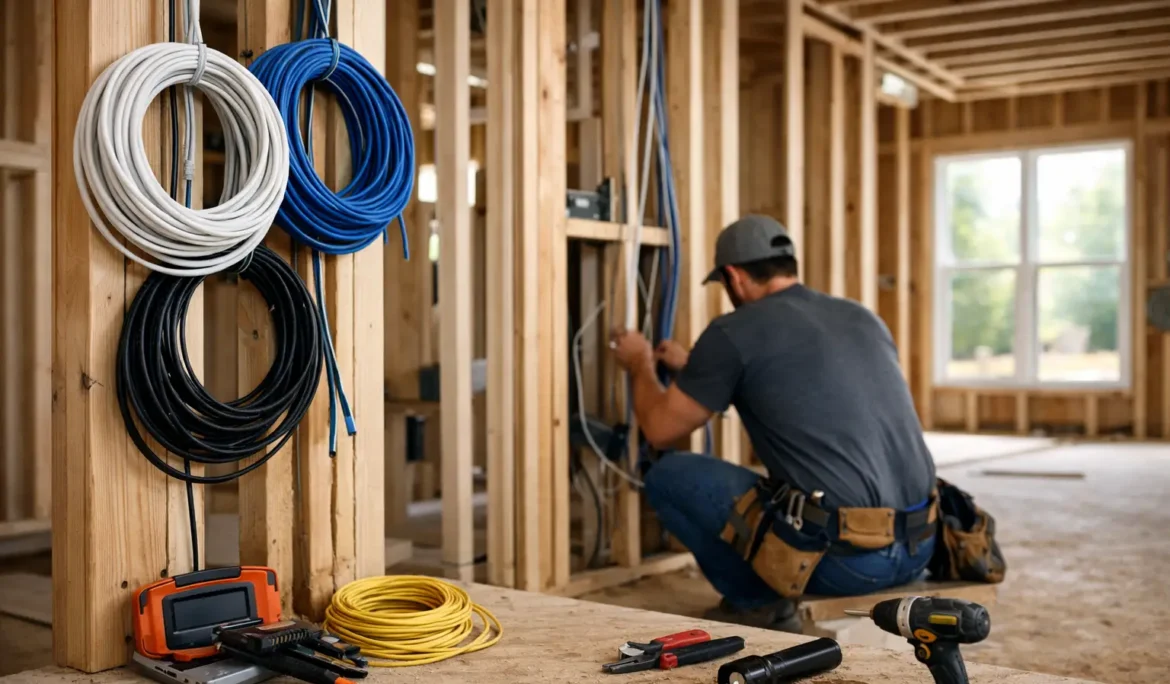
Building a home gives you one rare advantage that disappears fast once drywall goes up. You can plan the technology backbone before it becomes expensive, disruptive, and limited to change. That is why prewiring a new construction home is not just about adding a few cable drops. It is about making sure the house is ready for how you actually want to live in it.
For many homeowners, the biggest mistake is assuming the builder’s standard low-voltage package will cover future needs. Usually, it will not. Basic wiring may support internet service and a television or two, but it often falls short when you want whole-home Wi-Fi that performs consistently, distributed audio, smart lighting, security cameras, motorized shades, or a dedicated media room. A thoughtful prewire plan makes those upgrades cleaner, more reliable, and easier to use from day one.
Why prewiring a new construction home matters
When walls are open, your options are better. You can place wiring exactly where it belongs, route it cleanly, and avoid visible patchwork later. That matters for performance, but it also matters for aesthetics. No homeowner wants beautiful finishes interrupted by extension cords, exposed wire runs, or equipment placed in awkward locations because there was no plan.
Prewiring also protects flexibility. Technology changes, but infrastructure still matters. A home with the right cabling pathways, equipment locations, and power planning can adapt much more easily over time. Even if you are not installing every system immediately, you can still prepare the home so future additions feel intentional rather than improvised.
There is also a usability benefit that often gets overlooked. Homes with properly planned wiring tend to work better because the system was designed as a whole. Instead of separate products added room by room, you get a foundation that supports reliable control, stronger network performance, and cleaner integration between entertainment, lighting, and automation.
Start with lifestyle, not devices
The best prewire plans do not begin with a product list. They begin with questions about how the home will be used.
Do you want music throughout the kitchen, patio, and primary suite? Will there be a dedicated theater, a family media room, or both? Are you planning for home offices that need stable wired network connections? Will the outdoor living area include TVs, speakers, or lighting scenes? Do you want shades and lighting to work together in key spaces? These decisions affect where cabling should go, where equipment should live, and what needs to be ready before trim and finish work begin.
This is where professional guidance makes a real difference. An experienced integrator looks beyond the obvious television locations and thinks through coverage, control, rack space, ventilation, speaker placement, and future expansion. That planning helps avoid common regrets, like realizing too late that a room needs better Wi-Fi coverage, ceiling speaker backing, or wiring for shades that would have been simple to add during construction.
The systems worth planning early
Network and Wi-Fi
A strong home network is the foundation for everything else. Smart home systems, streaming platforms, video doorbells, cameras, lighting control, and whole-home audio all rely on it. In larger homes especially, depending on a single wireless router is rarely enough.
Prewiring for properly placed wireless access points and hardwired network connections gives you a more stable, faster system. It also helps with device density. Modern homes can have dozens of connected devices running at once, and weak network design is often the reason a smart home feels unreliable.
Television and media locations
Most homeowners know where the main TV will go, but secondary spaces deserve the same attention. Bedrooms, offices, kitchens, patios, and bonus rooms often benefit from prewire planning even if a display is added later. The right approach includes not only signal cabling, but also power, conduit where appropriate, and a plan for where source equipment and control hardware will be located.
This is especially important if you want a clean finish with minimal visible gear. A well-planned system can keep equipment centralized and leave living spaces quieter and less cluttered.
Audio distribution
Whole-home audio is much easier to do well when it is considered during framing. Speaker locations, keypad options if desired, equipment placement, and outdoor audio coverage all benefit from early planning. Ceiling speakers can disappear into the design when their placement is coordinated with lighting, HVAC, and architectural features.
The same is true for surround sound. If you are planning a media room or theater, speaker wiring and subwoofer locations should be decided before construction moves too far. Dolby Atmos layouts in particular require forethought if you want the room to perform the way it should.
Lighting control and motorized shades
Lighting and shading have a major impact on comfort, convenience, and how a home feels day to day. They also involve wiring decisions that should not be left until the end. Depending on the system, you may need to plan for panelized control, smart switches, keypad locations, or shade power requirements at windows.
There is no single right solution for every home. Some homeowners want a straightforward approach in a few key rooms. Others want coordinated scenes throughout the property. The important part is making sure the infrastructure matches the level of control you want.
Security and surveillance
Even homeowners who prefer a discreet look usually want better visibility around entries, driveways, and outdoor areas. Camera locations, doorbell positions, gate access, and wiring pathways should be planned early so coverage is useful and the installation looks intentional.
A rushed camera plan often leads to poor viewing angles or equipment mounted where it is easy to see but not where it is most effective. Good prewiring gives you better placement and cleaner results.
What homeowners often miss
One of the most common oversights is failing to plan for equipment space. Technology systems need a home too. A centralized rack or structured wiring location can keep the system organized, protected, and easier to service. Without it, equipment ends up scattered through closets, cabinets, and utility areas, which makes the system harder to manage and less reliable over time.
Another issue is forgetting about outdoor spaces. Patios, pools, covered porches, and landscape areas are often a big part of how a home is enjoyed, especially for entertaining. If outdoor audio, video, lighting, or Wi-Fi might matter later, it is smart to account for those zones during construction.
Conduit is another detail that deserves more attention than it usually gets. Not every location needs it, but strategic conduit runs can be extremely valuable in areas where technology may evolve or where access later would be difficult. It gives you options without forcing you to predict every future device today.
Working with the builder, designer, and integrator
Prewiring works best when it is coordinated, not added as an afterthought. Builders focus on schedules. Designers focus on appearance and flow. Homeowners focus on comfort and lifestyle. The technology plan needs to support all three.
That means speaker locations should respect ceiling design, shade plans should align with window treatments, and keypad or touchscreen locations should make sense within the finished space. It also means catching conflicts early, before a fixture, beam, or HVAC run ends up exactly where your technology needed to go.
A consultative process is especially valuable in custom homes because no two households use technology the same way. One family may care most about a family room and patio that are easy to use when entertaining. Another may want quiet luxury, hidden technology, and strong coverage for work-from-home routines. The right prewire plan reflects those priorities instead of forcing the same package into every home.
A smart plan leaves room to grow
Not every homeowner wants to install every feature at move-in, and that is completely reasonable. The advantage of prewiring is that you do not have to make every final equipment decision immediately to still prepare the house properly. You can wire for future speakers, cameras, shading, control points, and network expansion while access is easy.
That approach keeps your options open. It also helps the home stay aligned with your long-term plans, whether that means adding a dedicated entertainment space later or expanding automation as your family settles in.
For homeowners in New Jersey and New York building a custom residence, this is where an experienced technology partner can bring real clarity. A company like Cine Acoustic helps translate lifestyle goals into a practical infrastructure plan, so the home is ready for high performance without becoming overcomplicated.
The best time to think about home technology is before you feel pressure to make rushed decisions. If you are building now, use the open walls wisely. A well-prewired home is not about adding more technology for the sake of it. It is about making the home easier to enjoy, cleaner to live in, and better prepared for the way you want it to work.