

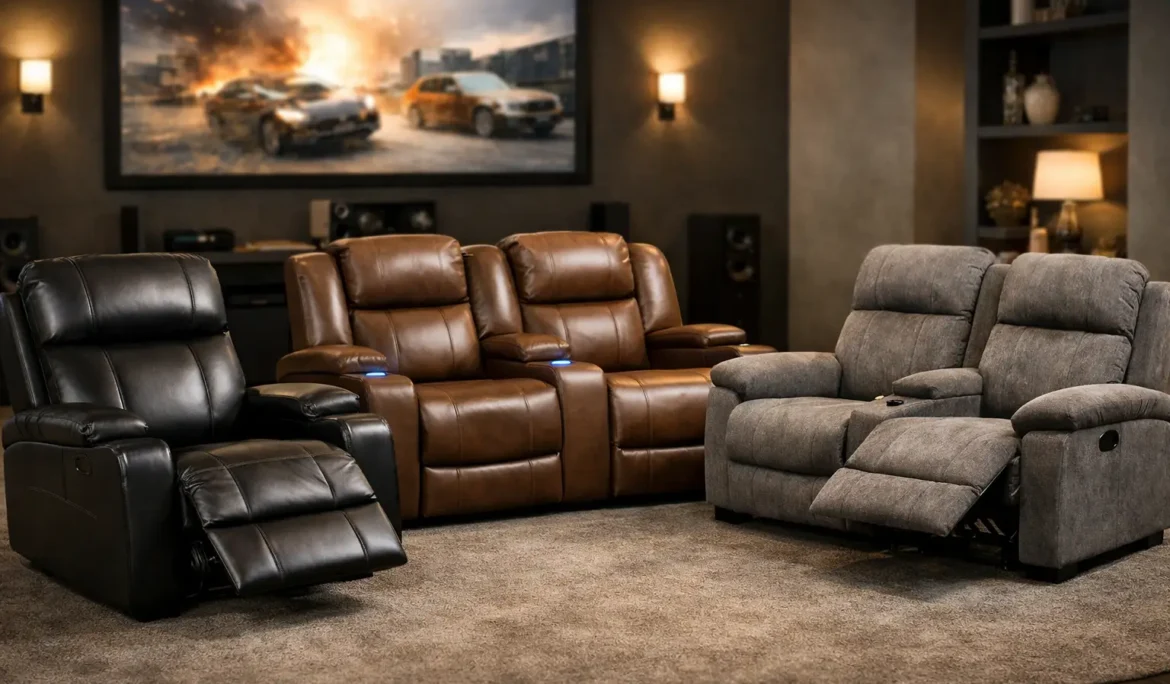
A beautiful theater room can still feel disappointing if the seats are wrong. You notice it the first time a guest blocks the sightline, a recliner stops short of fully opening, or the back row feels too far from the screen to stay immersive. That is why knowing how to choose home theater seating matters early, not after the screen, speakers, and finishes are already in place.
The right seating does more than give everyone a place to sit. It shapes comfort, viewing quality, traffic flow, and the overall look of the room. In a dedicated theater, seating is one of the biggest decisions because it affects nearly everything around it, from riser height to speaker placement to lighting control.
How to choose home theater seating starts with the room
Most homeowners naturally focus on style first. Leather or fabric, modern or traditional, curved or straight. Those details matter, but room dimensions should lead the decision.
Start with the width, depth, and ceiling height of the space. A seat that looks compact in a showroom can take up far more room once fully reclined. Add cupholders, arm widths, walkways, and spacing between rows, and the layout changes quickly. This is where many theater plans get compromised. A room that seems large enough for two full rows may actually function better with a spacious front row and a smaller second row, or with a sectional-style media setup instead of traditional row seating.
Sightlines are equally important. Everyone should be able to see the entire screen comfortably without leaning or adjusting position. If a second row is planned, riser height has to be coordinated with screen height and seat back height. A taller luxury recliner can improve comfort but also interfere with rear-row visibility if the room is not designed carefully.
The room should also guide the type of seating. A dedicated dark theater with acoustic wall treatments calls for a different approach than a multipurpose media room that opens to the rest of the home. One space may benefit from full recliners in a classic row format, while the other might be better served by a combination of loungers and a rear bar or sofa-style seating.
Comfort is not one-size-fits-all
When clients ask how to choose home theater seating, comfort usually means softness. In practice, true comfort is about support, proportions, and how the seat feels during a full movie, not just the first two minutes.
Seat depth matters more than many people expect. If the seat is too deep, shorter family members may sit forward and lose back support. If it is too shallow, taller viewers may feel cramped. Back height, headrest angle, arm width, and leg support all play a role. This is especially important in family homes where one room needs to work for adults, teens, and guests.
Reclining performance matters too. Some homeowners prefer a deep lounge position for movie nights, while others want a more upright posture for sports or casual viewing. Power recline gives more flexibility than fixed positions, and powered headrests can make a major difference in neck comfort, especially in rooms with large screens where viewers naturally tilt upward.
There is also a practical side to comfort. Plush oversized chairs can feel inviting, but they may reduce seat count, crowd the room, or create awkward spacing. A slightly slimmer profile can actually produce a better overall experience if it improves circulation and sightlines.
Seat count should support the way you actually use the room
It is tempting to maximize capacity. On paper, more seats can sound like better value and better entertaining. In reality, a packed layout often makes the room feel smaller, less comfortable, and harder to enjoy.
A better approach is to think about your most common use case. Is this a family movie room used three nights a week by four people? A dedicated theater for frequent entertaining? A flexible space for movies, gaming, and occasional gatherings? The honest answer should drive the seating plan.
Many of the best theaters are not the ones with the highest seat count. They are the ones where every seat feels intentional. That may mean choosing six excellent seats instead of squeezing in eight. It may mean a front row of premium recliners with a rear row designed for occasional overflow. It may also mean leaving extra aisle space so entering and exiting the room never disrupts the experience.
If children are part of the picture, think ahead. A layout that works for young kids today may feel undersized in a few years. Planning for long-term use usually leads to better decisions than designing only for current needs.
Materials, maintenance, and appearance all matter
The finish you choose affects both aesthetics and day-to-day ownership. Leather and performance fabrics are both popular, but the best option depends on how the room will be used.
Leather offers a refined look and is often easier to wipe clean, which appeals to homeowners who want a polished finish in a dedicated theater. It can also pair nicely with other high-end design elements in the room. Fabric can feel warmer and softer, and certain performance materials hold up very well in active family spaces. It may also reduce slipping and feel less cool when the room is first used.
Color should be considered from both a design and viewing standpoint. Lighter finishes can look beautiful, but darker tones typically perform better in theater environments because they reduce visual distraction and reflected light. That does not mean every room needs black seating. It means the seating should support the cinematic effect rather than compete with it.
Style matters too, but the best-looking seat is the one that belongs in the room. A sleek contemporary chair may suit a modern media space, while a more traditional design may work better in a classic dedicated theater. The seating should feel integrated with the architecture, millwork, and lighting, not like an afterthought.
How to choose home theater seating for the best viewing experience
A great seat in the wrong location is still the wrong seat. Placement and viewing angles are just as important as upholstery and features.
The primary row should be positioned for comfortable immersion. Too close, and the image can feel overwhelming. Too far, and the room loses some of the cinematic impact that makes a dedicated theater special. The ideal distance depends on screen size, screen type, and how the room is designed, which is why seating should never be selected in isolation.
Speaker placement also deserves attention. In a well-designed theater, audio should feel balanced and enveloping from every main seat. If chairs are too tall, too close together, or pushed too far back, they can interfere with how sound reaches the listener. This is one reason professional planning makes such a difference. Seating, acoustics, and system layout all need to work together.
Aisle access is another detail that affects the experience more than people expect. Guests should be able to move in and out without squeezing past extended footrests or disrupting others. In larger rooms, loveseat configurations can be a nice touch, but too many shared-arm layouts can make access less convenient.
Features worth considering and features to question
Modern theater seating can include power recline, adjustable headrests, lumbar support, hidden storage, tray tables, LED base lighting, and more. Some of these additions are genuinely useful. Some are simply attractive in a showroom.
The best features are the ones that improve usability without adding complexity. Power recline is often worthwhile because it allows each person to fine-tune comfort. Headrest adjustment can be especially valuable with large screens. Soft aisle lighting can help with movement during a movie without affecting the room.
Other features depend on the household. Storage arms may be handy in a casual media room but less relevant in a formal theater. Decorative lighting can look impressive, yet if it is too bright or distracting, it works against the room. The goal is not to add every option. It is to choose the features that make the room easier and more enjoyable to use.
The best seating choice is part of the full theater plan
Home theater seating should never be the last decision. It belongs in the design conversation alongside the screen, audio system, lighting, room finishes, and control experience. That is how you avoid the common problems that show up after installation, like blocked views, tight walkways, awkward recline clearance, or seats that look good but do not match the way the room actually functions.
For homeowners creating a premium entertainment space, the smartest path is to treat seating as both a comfort decision and a system-design decision. At Cine Acoustic, that is often where the best results come from – matching the room, the technology, and the lifestyle so the theater feels effortless every time you use it.
The right seat should disappear once the movie starts. You should not be thinking about posture, legroom, or whether someone behind you can see. You should just be enjoying the room you built for that exact purpose.