

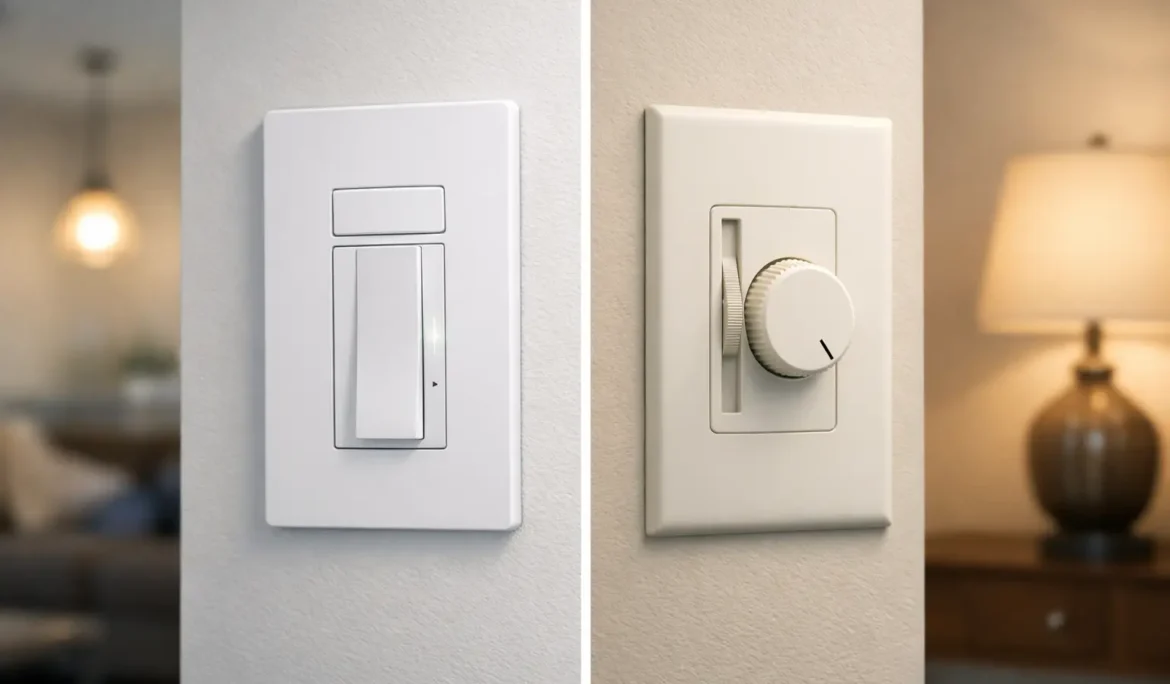
A dimmer seems like a small decision until you live with the wrong one every day. Lights that flicker, sliders that never feel quite right, and rooms that still look harsh at night can make a well-designed home feel unfinished. When homeowners compare lutron vs traditional dimmers, they are usually deciding between basic light adjustment and a more refined lighting experience.
For some spaces, a standard dimmer is enough. For others, especially homes with layered lighting, LED fixtures, smart home goals, or design-sensitive interiors, the difference becomes much more noticeable. The right choice depends on how you use the room, what fixtures are installed, and how much control you want now and later.
Lutron vs traditional dimmers at a glance
Traditional dimmers do one core job – they reduce light output from a fixture. In the simplest setup, that means a wall control that lets you raise or lower brightness manually. They can work well in a bedroom, dining room, or older living area where expectations are modest and the lighting load is straightforward.
Lutron dimmers also dim lights, but they are designed with a broader goal in mind. Depending on the model, they can offer smoother dimming performance, better compatibility with modern LED loads, more polished wall controls, scene setting, scheduled automation, remote control, and integration with larger smart home systems. That added flexibility is often what separates a basic convenience feature from lighting that truly supports the way a home functions.
This is why the comparison is not just about one switch versus another. It is about whether you want isolated controls or a lighting system that can support comfort, ambiance, and automation over time.
Where traditional dimmers still make sense
Not every room needs advanced lighting control. A traditional dimmer can still be a sensible option in a simple environment with one fixture, one switch location, and no future plans for integration. If the goal is only to soften light in a guest room or reduce glare in a casual sitting area, a standard dimmer may do the job.
That said, performance can vary more than many homeowners expect. Traditional dimmers are not always ideal for today’s LED bulbs and fixtures. Even when the packaging says compatible, real-world results may include limited dimming range, visible stepping as the light changes, low-end flicker, or buzzing. Sometimes the issue is not the dimmer alone, but the combination of dimmer, bulb driver, and electrical load.
This is where a lot of frustration starts. The switch technically works, but the experience feels inconsistent. In a home where lighting matters to comfort and design, that gap becomes hard to ignore.
Why Lutron stands out in everyday use
Lutron has earned its reputation because the user experience tends to be more consistent. The controls feel better, the dimming curve is often smoother, and the system options are built for real homes rather than one-off hardware swaps.
One of the biggest differences is LED performance. Modern homes rely heavily on LED recessed lights, decorative pendants, tape lighting, and under-cabinet illumination. These loads can be more sensitive than older incandescent fixtures. Lutron dimmers are widely known for handling LED applications more gracefully, which can help reduce common issues like shimmer, dropout, or uneven dimming.
There is also the matter of aesthetics. In a renovated kitchen, media room, or open-concept great room, wall controls are visible every day. Traditional dimmers can look purely functional. Lutron offers control styles that feel more intentional and more aligned with a finished interior. That matters when lighting is part of the overall design, not just an electrical necessity.
Then there is convenience. In many homes, people do not want to walk around adjusting five different switches just to make one room feel right. Lutron systems can support scenes such as entertaining, movie night, dining, or evening wind-down. Instead of manually setting each light level, one button press can bring the room where it should be.
Performance matters more than people expect
The biggest mistake in this category is assuming all dimmers create the same effect. They do not. Two controls can dim the same fixture and still deliver very different results.
A strong lighting control experience feels natural. Lights fade evenly. The room reaches the right level without trial and error. The controls respond predictably. There is no distracting hum, awkward delay, or visual instability. In a media room, family room, or primary suite, those details shape how comfortable the space feels.
Lutron is often the better fit when homeowners care about that polished result. Traditional dimmers may still perform adequately, but they are more likely to be chosen as standalone devices rather than as part of a carefully designed lighting plan.
Lutron vs traditional dimmers for smart home planning
This is where the choice becomes more strategic. If you expect your home to include automation, app control, voice control, occupancy-based behavior, or integration with shades and entertainment systems, traditional dimmers can become limiting very quickly.
A standard dimmer is typically just that – a local wall control. It may not communicate with anything else in the home. It may not support scenes across multiple rooms. It may not fit neatly into a broader control platform.
Lutron, by contrast, is often selected because it can grow with the home. A homeowner may begin by improving a few heavily used rooms, then later connect lighting into a larger ecosystem. That can be especially useful during renovations or phased upgrades, when it makes sense to plan for future capability even if every feature is not activated on day one.
For design-conscious homeowners, that flexibility has another benefit. You can preserve a clean, uncluttered look while gaining better control behind the scenes. Instead of filling walls with mismatched switches and workarounds, the lighting can feel organized and purposeful.
Installation is part of the decision
On paper, dimmers can look like a simple product choice. In reality, the result depends heavily on proper selection and setup. The dimmer has to match the load type, the fixture behavior, the electrical conditions, and the homeowner’s expectations for use.
This is one reason many people end up disappointed after trying to solve lighting issues with random hardware changes. The wrong dimmer can create problems that seem like fixture defects. The right one can make the exact same lighting look dramatically better.
Lutron products are often at their best when they are part of a full lighting control strategy rather than an isolated replacement. In homes with multiple zones, architectural lighting, motorized shades, or integrated control, thoughtful design matters as much as the hardware itself. That is where an experienced technology partner can make the process much easier and the results more consistent.
Which option is right for your home?
If your needs are basic, your lighting is simple, and you only want manual dimming in a single room, a traditional dimmer may be enough. There is nothing wrong with a straightforward solution when the application truly is straightforward.
If you want better LED compatibility, cleaner aesthetics, smoother control, room scenes, smart home readiness, or a lighting experience that feels more tailored to the way you live, Lutron is usually the stronger choice. It is especially compelling in kitchens, media rooms, primary suites, open-plan living spaces, and larger homes where lighting plays a major role in comfort and atmosphere.
The real question is not whether one category is always better than the other. It is whether the control on the wall supports the level of performance your home deserves. In many cases, homeowners start out thinking about a switch and end up realizing they are really choosing how the home should feel at night, when entertaining, or when settling in to watch a movie.
For homeowners planning an upgrade, that is the value of getting the decision right the first time. A well-chosen lighting control system does more than dim lights. It makes the home easier to enjoy, easier to manage, and noticeably more refined every single day.
If you are already investing in better interiors, better entertainment, or better everyday comfort, your lighting controls should keep up.