

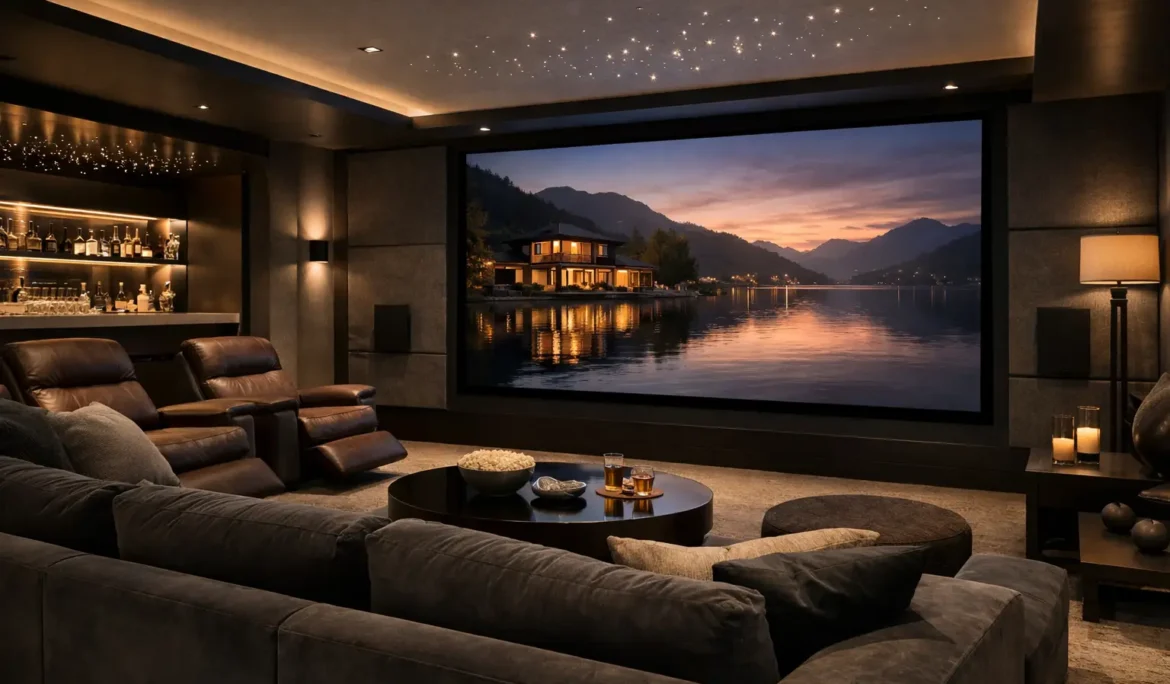
A great media room does more than place a large TV on a wall. It gives your family a comfortable place to watch the big game, enjoy a movie night, listen to music, or host friends without turning technology into a collection of remotes and visible wires. This luxury media room design guide focuses on the decisions that create an elevated experience: thoughtful layout, immersive performance, refined aesthetics, and controls that feel effortless.
Unlike a dedicated home theater, a media room is often designed for everyday living. It may share space with a family room, basement lounge, bonus room, or open-concept entertaining area. That flexibility is valuable, but it also makes proper planning essential. The room needs to perform beautifully for different types of content and different times of day.
Start With How the Room Will Be Used
The first design question is not which display or speaker to choose. It is how the room should work for the people who live there. A family that watches movies together every weekend will prioritize different features than homeowners who want a polished space for sports, gaming, and casual entertaining.
Consider how many people should be comfortably seated, whether the room needs to accommodate conversation while media is playing, and how much natural light enters at different hours. A media room that serves as a daily gathering space usually benefits from a brighter display, flexible lighting, and furniture that does not feel overly theatrical. A lower-level room with few windows may support a more cinematic approach with a projection system and deeper acoustic treatment.
This is also the right time to decide whether the room should support more than video. Whole-house audio can extend music from the media room into adjacent living areas, while a karaoke setup can make the space a natural destination for parties. The goal is not to add features for their own sake. It is to build a room around the experiences your household will actually use.
Plan the Screen and Seating Together
Screen size should feel engaging, not overwhelming. The best viewing distance depends on the display size, resolution, room dimensions, and the content you enjoy. Sitting too close to an oversized screen can become tiring during a two-hour film. Sitting too far away can make a premium display feel ordinary.
For many media rooms, a large 4K television provides exceptional brightness, crisp detail, and easy everyday operation. It is often the right choice for rooms with windows or multipurpose spaces where lights are frequently on. A projector and screen can create a larger, more theater-like image, particularly in a dedicated or light-controlled environment. The trade-off is that projection performs best when the room design actively manages daylight and reflected light.
Seating deserves equal attention. Avoid placing the primary seats directly against the back wall when possible, since sound can become less balanced there. Leave enough space for walkways, reclining seats, side tables, and the practical movement of a busy household. A well-designed sectional can feel relaxed and social, while dedicated theater seating offers more individual comfort and a defined viewing orientation. Both can be luxurious when their scale suits the room.
Keep Sightlines Comfortable
The center of the screen should generally sit at a comfortable eye level from the main seating position. Mounting a television too high is one of the most common compromises in media rooms, especially when a fireplace drives the layout. It may look convenient architecturally, but prolonged viewing with your head tilted upward is rarely comfortable.
If a fireplace must be part of the design, careful planning can reduce the compromise. A recessed installation, a motorized mount, or a mirror TV can preserve a clean focal wall while providing a more appropriate viewing position when the screen is in use.
Build the Room Around Sound, Not Just the Picture
A premium image gets attention first. Sound is what makes a movie, concert, or game feel present. Dialogue should remain clear at every seat, music should have depth without becoming harsh, and bass should feel controlled rather than boomy.
Dolby Atmos systems create a more dimensional experience by placing sound around and above the listener. The result can be striking, from a crowd roaring behind you during a game to rain falling overhead in a film scene. But speaker count alone does not determine quality. Speaker placement, room construction, furnishings, and calibration all influence the outcome.
A media room with hard floors, expansive glass, and bare walls may look clean but can produce excessive echo. Rugs, upholstered furniture, drapery, and discreet acoustic treatments help the room sound more composed while supporting the interior design. Acoustic solutions do not need to make a room look like a recording studio. They can be integrated into wall panels, fabric finishes, artwork-style elements, and architectural details.
Low-frequency performance also requires restraint and expertise. More bass is not always better. The right subwoofer design delivers impact while keeping dialogue and music clear. In larger rooms, multiple subwoofers may provide more even bass across the seating area than one oversized unit. The best approach depends on the room, the seating plan, and the desired listening level.
Control Light for Better Viewing and Better Living
Light control is one of the defining elements of a luxury media room. It protects image quality while helping the room shift from an everyday lounge to a cinematic environment in seconds.
Motorized shades can reduce glare during daytime viewing and add privacy at night. Layered lighting gives the room personality and usability: recessed lighting for general illumination, wall sconces for warmth, accent lighting for architectural features, and low-level pathway lighting for safe movement during a movie. Dimmable fixtures allow these layers to work together rather than compete.
The most satisfying rooms use scenes instead of asking homeowners to adjust every fixture manually. A “Movie” scene might lower shades, dim the lights, turn on the display, and select the correct audio source. A “Game Day” scene can keep the room brighter for conversation while preserving a strong image. These adjustments should happen through a simple keypad, touchscreen, remote, or app, not through a confusing sequence of separate controls.
Make Technology Disappear Until You Need It
Luxury is often felt in what the room does not show. Visible cables, crowded equipment shelves, multiple remotes, and inconsistent Wi-Fi can quickly undermine an otherwise beautiful space.
A professionally designed system organizes sources, amplifiers, networking equipment, and control components in an appropriate equipment location. This keeps the room clean while making service and future upgrades easier. Proper ventilation and power planning are part of this work, especially when equipment is housed in cabinetry or a nearby rack.
Reliable networking matters as much as the display. Streaming services, high-resolution content, gaming, control systems, and connected devices depend on a network designed for the home. A strong Wi-Fi signal in one corner of the room is not the same as dependable performance across every device and viewing session.
Content should also be simple to access. Whether the system includes streaming platforms, cable or satellite, gaming consoles, or a premium movie server such as Kaleidescape, the experience should bring the right source forward with minimal steps. The homeowner should not need to remember which remote controls which component.
Choose Finishes That Support the Experience
Media-room finishes should feel intentional, but they should also work with the screen and sound system. Glossy surfaces can reflect light onto the display. Very light walls can reduce perceived contrast in a projection-based room. Darker, matte finishes around the screen typically create a more focused image, while warmer textures keep the room inviting.
This does not mean every media room must be dark. In a family room, a designer may use neutral colors, refined millwork, and integrated speakers that blend into the architecture. In a dedicated entertainment lounge, richer wall coverings, darker paint, and layered fabrics can create a stronger sense of occasion. The right direction depends on whether the room needs to disappear into the home or become a destination within it.
Coordinate technology early with the architect, builder, or interior designer. Preplanning allows speakers, screens, shades, lighting keypads, and wiring to fit the design instead of becoming late-stage additions. It also avoids awkward compromises such as cutting into finished walls or placing equipment where it interrupts the room’s visual balance.
Design for Easy, Long-Term Enjoyment
The finest media room is not the one with the longest equipment list. It is the one everyone knows how to use. A child should be able to start a movie, a guest should be able to adjust volume, and the homeowner should feel confident that the system will respond consistently.
That is why a consultative design process matters. Cine Acoustic helps homeowners align room aesthetics, performance expectations, and daily usability before installation decisions are finalized. The result is a space that feels personal, polished, and ready for the moments that bring people together.
When planning your room, focus on the experience you want to create after the lights go down or the guests arrive. The right design will make that experience feel natural every time.