

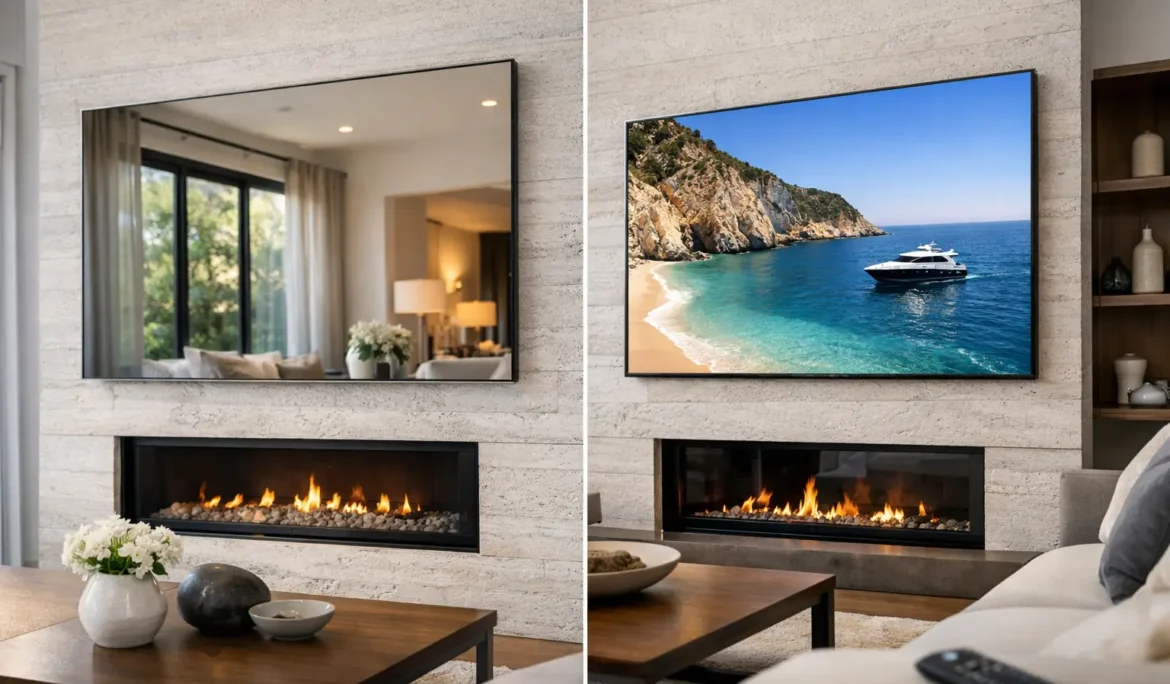
A television above the fireplace can be practical, but it can also become the one black rectangle that interrupts an otherwise carefully designed room. That is where the mirror TV pros cons conversation becomes more interesting than a simple question of screen size. When switched off, a mirror TV functions as a polished mirror. When switched on, it delivers entertainment without requiring the room to look like a dedicated media space.
For homeowners planning a renovation, furnishing a new home, or refining a formal living area, a mirror TV can be an exceptional design solution. It is not automatically the right solution for every room, however. The best choice depends on viewing habits, light conditions, room layout, and the level of finish you expect.
What Is a Mirror TV?
A mirror TV combines a display with a specialized two-way mirror surface. The mirror is designed to reflect the room when the screen is off while allowing the image to show through when the display is on. Depending on the installation, it may be integrated into a custom frame, recessed into millwork, or built into a feature wall.
This is different from simply hanging a standard television near a mirror. The display and glass must work together, and the surrounding installation needs to account for power, ventilation, signal distribution, control, and access for future service. A properly planned mirror TV should feel intentional from every angle.
Mirror TV Pros and Cons at a Glance
The primary advantage is aesthetic flexibility. A mirror TV allows a fireplace wall, bedroom, dressing area, or formal sitting room to retain its visual purpose when no one is watching television. Instead of designing around electronics, the technology becomes part of the architecture and decor.
The main trade-off is that the mirror layer affects viewing conditions. Even high-quality systems are not identical to a conventional television viewed in a dark theater. Reflections, ambient light, and the viewing angle matter more. This does not make mirror TVs a poor choice. It simply means they should be selected and designed for the right role.
Pro: A cleaner, more intentional room design
A mirror TV is especially valuable in rooms where appearance matters as much as entertainment. Over a fireplace, it can preserve a symmetrical focal point. In a bedroom, it can serve a practical purpose without adding another large screen to the wall. In a dressing room or primary bath area, it can blend a useful mirror with news, music, or streaming content.
Custom framing creates further flexibility. The television can resemble a traditional framed mirror, align with surrounding artwork, or complement cabinetry, stone, and metal finishes. For homeowners working with an architect or interior designer, this creates more freedom than trying to hide a standard television after the room is complete.
Pro: Entertainment where a conventional TV feels out of place
Not every television is meant to be the main event. A mirror TV works well for casual viewing in a kitchen, bedroom, lounge, or multipurpose space. It can provide access to a favorite show, a big game, or family movie night without turning every room into a media room.
It also fits neatly into a whole-home entertainment system. A homeowner can use one familiar interface to select sources, control volume, and manage the TV alongside lighting or motorized shades. That simplicity matters. Technology should not require a stack of remotes or a separate set of instructions for each room.
Pro: An integrated solution for fireplace walls
A fireplace wall often needs to accommodate competing priorities: heat considerations, comfortable viewing height, wiring, speakers, decorative finishes, and the desire for a clean installation. A mirror TV can help resolve the visual side of that equation, particularly when the television must sit above the mantel.
That said, the fireplace itself must be evaluated carefully. Heat can shorten the life of electronics, and a TV mounted too high can be uncomfortable for extended viewing. The final design may need a mantel, heat deflection, a recessed cavity, or another protective approach. The right answer depends on the fireplace type and the wall construction, not just the desired look.
Con: Picture quality depends more on the room
The mirror surface naturally reduces some of the brightness and contrast that a display can deliver on its own. In a dim bedroom or a softly lit living room, the result can be excellent. In a sun-filled room with large windows directly opposite the screen, reflections may be noticeable and daytime viewing may feel less satisfying.
This is why light control should be part of the conversation early. Window orientation, fixture placement, dimming capability, and motorized shades all influence the experience. A thoughtfully designed room can make a mirror TV look far better than one installed as an afterthought.
If cinematic picture quality is the first priority, a dedicated home theater or media room with a conventional high-performance display is often the stronger choice. If the goal is an elegant television that disappears when idle, the mirror TV offers a different kind of value.
Con: Installation details cannot be improvised
A mirror TV installation involves more planning than hanging a display on a wall. The wall must accommodate the display depth, mounting structure, airflow, electrical connections, and video sources. If the TV is recessed or surrounded by custom materials, technicians also need a sensible way to access the equipment later.
Poor planning can create avoidable frustrations, such as visible cables, inadequate ventilation, difficult service access, or a frame that does not align with the room. Professional coordination is particularly important when the TV is part of stonework, cabinetry, wallpaper, tile, or a built-in mirror wall.
For a new build or major renovation, planning the mirror TV before the walls are finished creates the cleanest result. In an existing home, an experienced integration team can assess what is feasible while protecting the finishes you already value.
Con: It may not suit the main viewing room
A mirror TV can absolutely be used in a primary living room, but the room’s use should guide the decision. Families who gather for long movie nights, frequent sports viewing, or serious gaming may prefer a larger conventional display at a more comfortable height. A mirror TV can still be beautiful in that setting, but it should not force compromises that make everyday viewing less enjoyable.
A practical approach is to assign each space a purpose. Put the best performance display where the household watches most often. Use a mirror TV where concealment, style, and occasional viewing are equally important. This approach delivers a better experience throughout the home than trying to make one product solve every need.
Questions to Ask Before Choosing a Mirror TV
Start with how the room will be used when the TV is both on and off. Consider who watches there, how long they typically watch, and whether the space receives direct sunlight. Think about where people sit, whether the TV will be above a fireplace, and whether its frame needs to coordinate with existing finishes.
It is also worth deciding how you want the system to operate. A premium installation should make source selection and everyday control simple. The display can be part of a larger system that brings together streaming, cable or satellite programming, distributed video, audio, lighting, and shades through one intuitive control experience.
The most successful installations begin with a clear expectation: a mirror TV is an architectural technology feature, not just a television with reflective glass. When it is designed around the room, it can make the entire space feel more refined.
A Better Way to Plan the Finished Look
Before selecting the display, review the wall elevation, furniture layout, sightlines, lighting plan, and desired frame style together. This avoids decisions made in isolation, such as choosing a screen size before confirming a comfortable viewing distance or finishing a fireplace wall before accounting for ventilation and wiring.
Cine Acoustic helps homeowners turn those details into a cohesive system that is easy to use and built for the way the household lives. The goal is not to add technology for its own sake. It is to create a room that looks complete, performs reliably, and still feels effortless on an ordinary weeknight.
A mirror TV is at its best when it earns its place twice: first as a beautiful part of the room, and then as entertainment that is ready the moment you want it.