

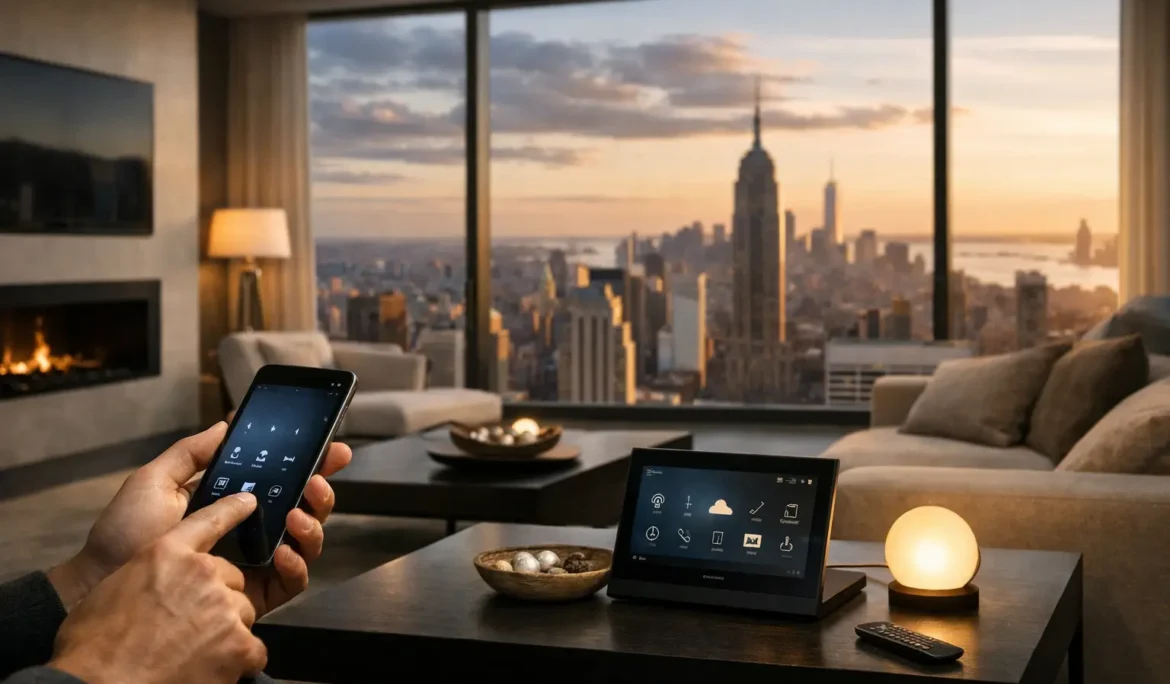
The elevator opens directly into your residence. Instead of reaching for a row of switches, remotes, and apps, one touch sets the tone: lights warm to the right level, motorized shades adjust for the view, music begins in the living area, and the room is ready to receive guests. That is the promise of New York penthouse automation when it is designed around the way you actually live.
A penthouse is not simply a larger apartment. It is often a carefully composed combination of architecture, art, views, entertaining spaces, and private retreats. Technology should support that experience quietly. The objective is not to fill the home with gadgets. It is to bring lighting, comfort, entertainment, and control together in a way that feels natural for everyone in the household.
Why New York Penthouse Automation Requires a Different Approach
Penthouse technology has to work within a particular set of realities. Glass walls create extraordinary daylight and city views, but also make glare and heat management more demanding. Open floor plans are ideal for entertaining, yet they can make sound, Wi-Fi coverage, and lighting consistency harder to manage. Construction coordination may involve building rules, limited access hours, and the need to protect finished surfaces.
That is why a successful system starts well before devices are selected. A technology plan should be coordinated with the architect, interior designer, electrician, window-treatment professional, and builder. The best locations for keypads, speakers, access points, displays, shades, and equipment are determined while the design still has flexibility.
For a renovation, the planning process is just as valuable. Wireless solutions can reduce the need to open finished walls, but wireless should be used strategically rather than treated as a shortcut. Permanent devices such as televisions, audio equipment, and networking hardware benefit from a dependable infrastructure behind the scenes.
Build the System Around Daily Moments
The most useful automation is based on moments that repeat, not on a long list of features. A good control interface makes those moments simple to access from a wall keypad, touchscreen, remote, or phone.
Arrival and departure
An arrival setting can bring on entry and hallway lights at a comfortable level, adjust the main living area, and turn on background music if desired. When leaving, a single command can turn off selected entertainment systems, lower shades, and set the home to its preferred away state. The exact behavior should reflect the household’s routine, not a preset that looks impressive in a demonstration.
Entertaining with a view
A penthouse entertaining scene may light the kitchen island for serving, soften the living room, illuminate artwork, and set outdoor areas for evening use. If the sun is low over the skyline, shades can reduce glare without covering every window. Music can follow guests from the kitchen to the terrace while each zone remains easy to control.
The trade-off is that more control options can create more complexity. The answer is not to eliminate flexibility. It is to create a few intuitive favorite scenes while keeping deeper adjustments available when they are wanted.
Movie night without a pile of remotes
A dedicated theater deserves cinema-grade performance, but a living room media system should be equally easy to use. One command can turn on the display or projector, select the source, set the right lighting, and bring audio to the correct level. For homeowners who value premium movie presentation, a Kaleidescape system can be integrated into the experience alongside high-performance surround sound and Dolby Atmos.
The right setup depends on how the room is used. A formal media room can accommodate a larger display and more immersive speaker layout. In a design-focused living area, a mirror TV, discreet speakers, or architectural audio may better preserve the room’s character.
Lighting and Shades Set the Emotional Temperature
Lighting control is frequently the most noticeable part of a penthouse automation system because it changes the feeling of a room immediately. Rather than relying on one ceiling fixture or a collection of unrelated dimmers, lighting can be organized into layers: ambient light for the room, accent light for art and architecture, and task light where work or food preparation takes place.
A well-planned keypad replaces visual clutter with clear, useful commands. In the primary suite, for example, a bedside keypad can offer reading, relax, and off settings without requiring a phone. In the kitchen, a single button can shift the room from bright daytime activity to a softer evening atmosphere.
Motorized window shades deserve the same level of planning. They can filter harsh sun, protect furnishings, improve privacy, and reduce screen glare while preserving the view that makes the residence special. Shade fabric, mounting details, and control strategy all matter. In some rooms, automated schedules are helpful; in others, residents may prefer direct control because light conditions and personal preferences vary throughout the day.
Lutron lighting and shade systems are often a strong fit for this level of detail, particularly when coordinated early with interior finishes and electrical design.
A Reliable Network Is the Foundation
Beautiful controls mean little if streaming pauses, video calls drop, or devices lose connection. In a penthouse, dependable Wi-Fi is not a separate convenience. It is the foundation for entertainment, automation controls, work, and connected devices.
A professional network design considers the shape and materials of the residence. Concrete, steel, stone, glass, and dense neighboring wireless networks can affect signal performance. Access points should be placed for coverage and capacity, not hidden wherever there happens to be space. Equipment should also be organized so that support and future changes do not disrupt the home.
Whenever possible, critical entertainment and control components should have wired connections. Wireless remains essential for mobile devices, but a thoughtful mix of wired and wireless infrastructure produces more consistent performance. This is especially relevant in homes where multiple residents stream content, conduct video meetings, game, or use whole-house audio at the same time.
Control Should Be Easy for Guests and Everyday Use
The sophistication of the system should be felt in its reliability, not in the number of menus it presents. A homeowner should not need a manual to turn on music, watch a film, or adjust the dining room lights. Guests should be able to use a familiar keypad or clearly labeled touchscreen without asking for instructions.
Platforms such as Control4, Savant, and URC can bring multiple systems into one personalized control experience. The best choice depends on the home’s needs, existing equipment, desired interface, and long-term service expectations. Brand selection matters, but design and programming matter just as much. The same platform can feel either effortless or frustrating depending on how carefully it is configured.
It also helps to avoid automating every possible action. A residence should still feel personal. Give residents simple control over the features they use most, then let automation handle the repetitive tasks that add real convenience.
Design for Service, Change, and Long-Term Enjoyment
Technology changes, and a penthouse may evolve from a quiet weekday residence into a home used more often for family gatherings or entertaining. A well-designed installation leaves room to adapt. That can mean allowing capacity in equipment locations, documenting the system clearly, and selecting products that can be supported over time.
Ongoing service is part of the ownership experience. When an app changes, a network needs adjustment, or a new source is added to the media system, homeowners should have a knowledgeable team that understands the original design. Cine Acoustic approaches projects as a complete technology plan, from consultation and coordination through installation, programming, and continued support.
The right penthouse system does not compete with the interiors or demand attention. It helps the home respond gracefully to a quiet morning, a workday, a film with family, or an evening with the city lights outside. That is when automation becomes more than technology: it becomes a comfortable, dependable part of home.