

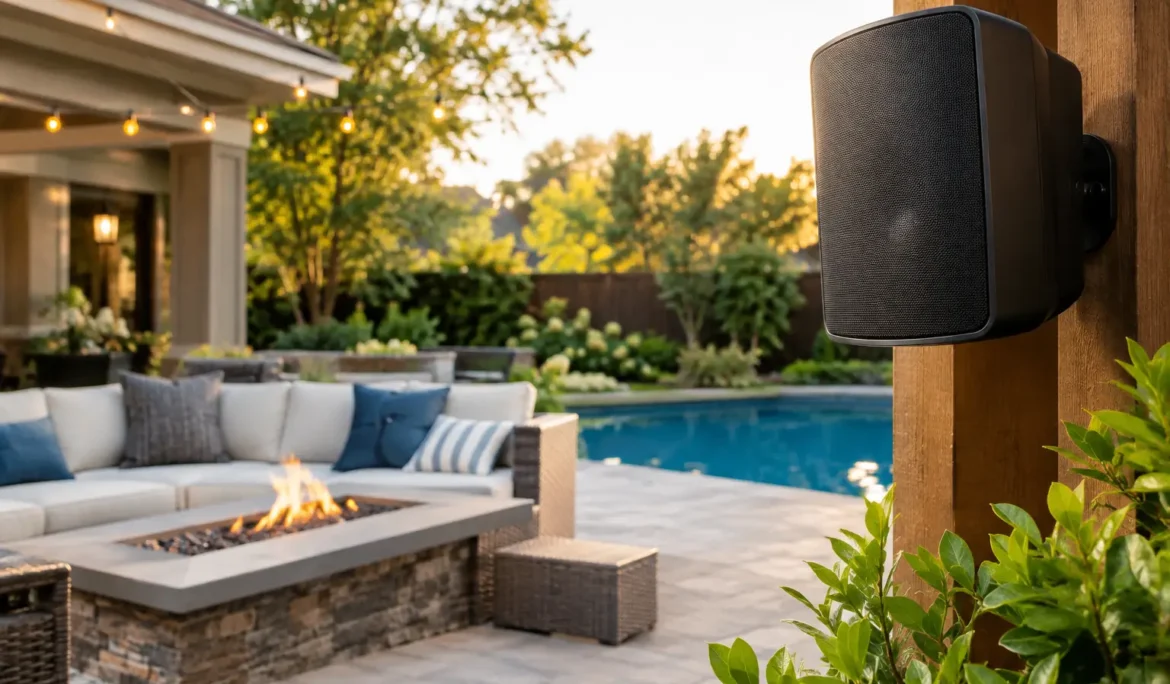
The first warm evening of the season should not begin with carrying a portable speaker outside, searching for an outlet, and turning the volume up until the music sounds harsh. Properly designed outdoor audio gives your patio, pool area, garden, and outdoor kitchen the same easy access to entertainment you enjoy inside – with sound that is clear, balanced, and built to stay outdoors.
For homeowners who have invested in a beautiful exterior living space, sound is often the missing piece. The right system can make dinner on the patio feel more inviting, keep the energy up around the pool, or create a relaxed backdrop for a quiet Sunday afternoon. The goal is not simply to make music louder. It is to make it feel naturally present wherever people gather.
Outdoor Audio Should Be Designed for the Space
A backyard is not a room with a roof removed. It has open air, changing wind conditions, hard surfaces that reflect sound, landscaping that absorbs it, and neighbors who deserve consideration. That is why a few oversized speakers mounted near the house often produce disappointing results: the people closest to them hear too much, while guests farther away hear very little.
A better approach distributes sound through multiple speakers placed thoughtfully around the listening area. Each speaker can play at a comfortable level, creating even coverage rather than one loud source. Guests can talk without shouting, and music remains enjoyable whether someone is seated under a pergola, preparing food at an outdoor kitchen, or relaxing near the fire feature.
The layout should begin with how the space is actually used. A small terrace may need a pair of weather-rated speakers and simple control. A larger property may benefit from a combination of landscape speakers, in-ground subwoofers, and separate zones for the patio, pool, and outdoor bar. The right answer depends on the property, the architecture, and the way your household entertains.
Speaker placement matters more than volume
Outdoor sound becomes more refined when the system is designed for coverage instead of raw power. Landscape speakers can be tucked into planting beds and aimed toward seating areas. Their compact form helps music blend into the environment rather than dominate it visually.
For deeper, more complete sound, buried or partially concealed outdoor subwoofers can add the low frequencies that small speakers cannot reproduce on their own. This matters at modest listening levels, not just during parties. Music with a balanced low end feels fuller and more natural, without requiring excessive volume.
Wall-mounted speakers remain a practical option for covered patios, cabanas, and outdoor kitchens. They work especially well when there is a defined listening area and an appropriate mounting location. Still, they should be chosen for the architecture rather than treated as an afterthought. A speaker that performs well but interrupts a carefully planned exterior is not a complete solution.
Choosing the Right Outdoor Audio Zones
One of the greatest advantages of a professionally planned system is zoning. Instead of treating the entire yard as one large listening area, zones allow different spaces to work independently.
For example, music can play softly on the patio while the pool area has its own playlist or remains quiet. During a gathering, the outdoor kitchen and dining area can share the same source while the fire pit plays at a lower level. When the evening winds down, there is no need to turn off the entire backyard just because one area is no longer in use.
Zoning also gives families more flexibility. One person may want a game or a playlist outside while another prefers a quieter garden setting. With the right controls, switching sources, adjusting volume, and selecting zones should take only a few taps – not a trip to an equipment rack or a frustrating sequence of apps.
A unified control platform can bring outdoor entertainment into the same interface used for indoor audio, lighting, shades, and other connected home features. That simplicity is valuable because the best technology does not demand attention. It simply works when you want it.
Weather Resistance Is Only Part of the Equation
Weather-rated equipment is essential, but the label alone does not guarantee long-term performance. Outdoor speakers, wiring, connections, and equipment locations all need to be selected with the local environment in mind.
New Jersey and New York homeowners experience humid summers, heavy rain, freezing temperatures, and seasonal debris. A system should be designed to handle those conditions without leaving exposed connections, vulnerable equipment, or poorly protected cable runs. Proper installation also helps preserve the clean appearance of the property by keeping wiring discreet and equipment out of sight.
Amplifiers and source equipment are typically located indoors or in a protected, serviceable area rather than left exposed outside. This improves reliability and makes future support easier. It also allows the outdoor system to integrate with the home network and entertainment sources without cluttering the patio with components.
Wi-Fi deserves attention as well. Streaming music is only as dependable as the network carrying it. If the signal drops near the pool or at the far end of the yard, a premium speaker system cannot deliver the experience it should. Extending reliable network coverage outdoors is often an important part of the overall plan.
A beautiful yard should not look like a speaker showroom
Many homeowners want great sound but hesitate because they picture large black boxes attached to every wall. Today’s outdoor options offer much more flexibility. Landscape speakers can disappear among shrubs and planters, while architectural models can complement covered entertaining areas. Subwoofers can be hidden below grade or integrated into the landscape.
Discretion should never come at the expense of performance. The strongest designs balance both. Speakers should be positioned where they can deliver useful sound, then selected and finished to suit the visual character of the space.
This is especially important for projects involving landscape architects, builders, or interior designers. Planning technology early gives every trade a clearer path forward. Speaker locations, conduit, power, networking, and control points can be coordinated before hardscaping and planting are complete. The result is cleaner, more intentional, and easier to maintain.
Build for Everyday Listening and Entertaining
A common mistake is designing an outdoor system only for the biggest event of the year. A backyard system should certainly support a celebration, but it should be equally enjoyable during ordinary moments. Morning coffee, family dinners, gardening, and an evening by the fire are all better experiences when music is easy to access and pleasant at lower levels.
That is why sound quality and control matter more than maximum volume. Well-distributed speakers create an immersive atmosphere without forcing the system to work too hard. A properly calibrated setup can deliver satisfying detail and depth while remaining considerate of nearby homes.
Source options should fit the household as well. Some clients primarily stream music, while others want television audio available on the patio or want outdoor speakers to be part of a whole-home music system. The system should be tailored to those habits, not built around features that will go unused.
At Cine Acoustic, the planning process starts with the experience you want from the space. That means considering listening areas, architectural details, landscaping, network performance, preferred control methods, and the future of the property. A thoughtful design creates an outdoor system that feels like it has always belonged there.
When to Plan an Outdoor Sound System
The best time to plan outdoor audio is before a renovation, new pool installation, patio build, or major landscaping project. Access is easier, wiring can be concealed, and speaker locations can be coordinated with lighting, drainage, planting, and hardscape details.
That said, an existing backyard can also be upgraded successfully. A careful site evaluation can identify practical cable routes, equipment locations, and speaker options that minimize disruption. The appropriate solution depends on the layout and the desired level of integration.
If your outdoor space already brings people together, it deserves sound that does the same. Start by thinking about where people naturally sit, cook, swim, and relax. Those everyday moments will point to the outdoor audio design that makes your backyard more welcoming long after the last guest leaves.