

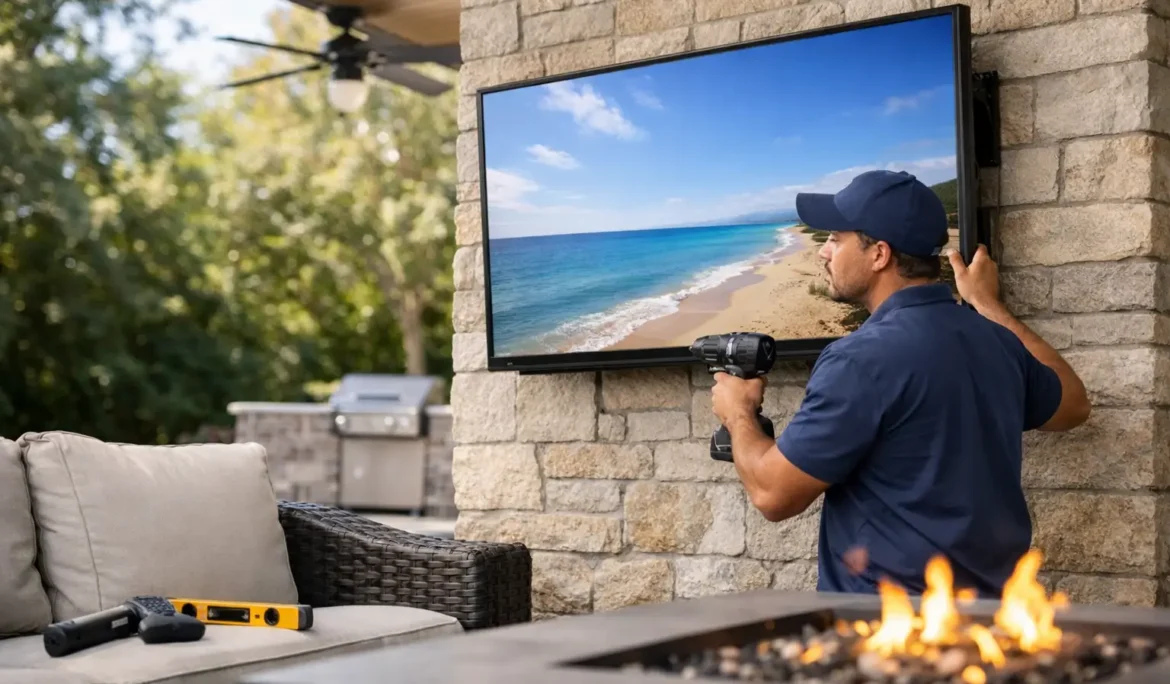
A great backyard movie night can be spoiled by one small oversight: a screen placed where the afternoon sun turns every scene into a reflection. The best outdoor TV installation tips begin with planning the entire viewing experience, not simply mounting a television on an exterior wall. Placement, weather exposure, power, audio, Wi-Fi, and controls all affect whether your outdoor entertainment area feels effortless or becomes another device that needs constant attention.
Start With How You Will Use the Space
Before selecting a display or choosing a mounting location, picture the moments the system is meant to support. A covered patio used for family dinners has different needs than a poolside lounge, outdoor kitchen, or dedicated sports-viewing area. Consider where people will sit, how many viewers you expect, and whether the television will be used mainly during the day, after dark, or both.
Viewing distance matters as much as screen size. A TV that seems large when mounted near a seating area may look undersized from a dining table farther away. At the same time, an oversized display can dominate a more intimate patio and conflict with the architecture. A professional plan helps balance screen size, sightlines, and the overall design of the space.
It also helps to plan for the way people move through the area. Avoid placing the screen where guests must turn sharply, look through a cooking area, or compete with foot traffic. The most comfortable setups make the television easy to see without making it the only thing anyone notices.
Choose a TV Built for the Outdoors
An indoor TV inside a weatherproof cover may sound practical, but it is rarely the best long-term solution. Outdoor-rated televisions are designed to handle changing temperatures, moisture, dust, insects, and brighter ambient light. Their enclosures, internal components, connections, and brightness levels are built for conditions an indoor display was never intended to endure.
The right category depends on the location. A fully shaded porch may be appropriate for a shade-rated outdoor TV, while a patio that receives direct or partial sun needs a brighter model designed for those conditions. Direct sunlight is not only a visibility issue. It can create excessive heat that shortens the life of the display.
Look beyond the label when comparing options. Brightness, glare reduction, operating temperature range, and the protection of input connections all deserve attention. A quality installation also leaves enough room for ventilation. Even a weather-resistant television needs airflow around the cabinet to manage heat properly.
Find the Best Location Before the Wall Mount Goes Up
Sunlight changes throughout the day and across the seasons. The location that appears perfect during a morning walkthrough may become difficult to watch by late afternoon. Visit the space at the times you are most likely to use it, or evaluate the sun path during the design process.
Mounting the TV perpendicular to the strongest sunlight is usually more effective than facing it directly toward or away from the sun. A covered patio roof, pergola, awning, or strategically placed shade can further improve viewability. Still, shade structures should support comfort, not trap heat around the TV.
A wall mount with tilt or full-motion adjustment can be useful when the viewing area serves multiple zones. It allows the screen to be angled toward a seating group while limiting glare. However, more movement also means more care is needed to protect wiring and preserve a clean appearance. The mount should be rated for the display’s weight and specifically suited to the exterior mounting surface.
Plan Weather Protection Beyond Rain
Rain is only one part of outdoor exposure. Wind-driven moisture, humidity, pollen, salt air near coastal locations, dust, and winter temperature swings can all affect equipment over time. Even a covered outdoor area may receive moisture from the side, especially during storms.
Outdoor TV installation tips should account for the entire system, including cable connections, power equipment, source devices, and audio components. Connections need proper weather protection, and cable entry points should be sealed and routed to prevent water from following a wire into the wall or enclosure.
Avoid tightly enclosing equipment without ventilation. A cabinet that keeps rain away but holds heat and humidity inside can create a different problem. The ideal solution protects electronics from the elements while allowing the system to operate within its intended temperature range.
For New Jersey and New York homeowners, seasonality deserves special attention. Summer heat, freezing winter temperatures, and repeated moisture exposure make product selection and installation details especially important. A system designed for local conditions will be more dependable when the weather is less predictable.
Make Power Safe, Accessible, and Code-Compliant
Outdoor power should never be treated as an afterthought. A television, streaming device, audio equipment, and network hardware may all require power, but extension cords running across a patio are unsafe, inconvenient, and visually distracting.
A properly planned installation uses weather-protected electrical connections installed in the right locations for the equipment. The outlet should be accessible for service but discreet enough to preserve the finished look. In many cases, a recessed or protected power solution keeps the TV closer to the wall while helping conceal connections.
Surge protection is also wise. Outdoor electronics can be vulnerable to electrical events, and replacing a damaged display is far more disruptive than protecting the system from the start. Electrical work should be completed by qualified professionals who understand applicable requirements and the needs of connected entertainment equipment.
Do Not Let Weak Wi-Fi Limit the Experience
Streaming a game or movie outdoors depends on a stable network connection. A signal that works inside the house may become unreliable at the far end of a patio, around masonry walls, or near a pool area. Buffering and dropped connections can make even an excellent outdoor TV feel disappointing.
Whenever possible, a wired network connection offers the strongest reliability for a fixed television location. If wiring is not practical, the outdoor Wi-Fi coverage should be evaluated before the system is finalized. A properly designed wireless network can extend dependable coverage to the areas where people actually gather, rather than simply hoping an indoor router reaches the backyard.
Consider the other devices using the network at the same time. Families may be streaming indoors, using phones outside, controlling smart lighting, or connecting guests’ devices. Reliable coverage comes from planning for real-world use, not just a single speed test near the back door.
Treat Audio as Part of the Design
Built-in TV speakers are seldom enough outdoors. Open air absorbs sound, while traffic, conversation, wind, and pool equipment compete with dialogue. Turning up a TV’s small speakers often creates harsh sound close to the screen without making voices clearer for everyone else.
Weather-resistant outdoor speakers can distribute sound more evenly across the seating area at a more comfortable volume. This improves clarity and helps keep sound directed toward your property. Speaker placement should be considered early, especially if the goal is to conceal wiring and integrate the equipment with landscaping, ceilings, or architectural details.
The right audio design depends on the space. A compact covered patio may need only a focused solution near the television. A larger yard with multiple activity areas may benefit from audio that supports both TV viewing and music without forcing every guest to sit directly in front of the screen.
Keep Controls Simple for Every Member of the Household
A sophisticated system should not require a stack of remotes. The easiest outdoor entertainment areas let you turn on the TV, choose a favorite source, adjust volume, and control lighting from a familiar interface.
Integrated control is especially valuable outdoors, where remotes can be misplaced and equipment may be located out of sight. A well-designed system can bring TV, streaming, audio, lighting, and shades together in a straightforward control experience. The goal is not to add technology for its own sake. It is to remove friction between arriving outside and enjoying the space.
Cine Acoustic can design an outdoor entertainment system around the way your family uses the property, with equipment and controls selected to work together reliably. That consultative approach matters because a clean finished installation is only successful when it remains easy to use season after season.
Protect the Finished Look
Outdoor technology should complement the home, not look added on after the fact. Concealed wiring, color-matched components, carefully selected mounting hardware, and thoughtful speaker placement make a meaningful difference. These details are especially valuable in design-conscious outdoor kitchens, covered porches, and renovated backyards.
Plan access for future service as well. Equipment should be protected and discreet, but not permanently hidden behind materials that require major disassembly to reach a connection. A thoughtful installation gives you a polished result while keeping maintenance practical.
The most satisfying outdoor TV setups feel like a natural extension of the home: comfortable in daylight, clear after dark, protected from the weather, and simple enough that guests can enjoy them without asking how anything works.