

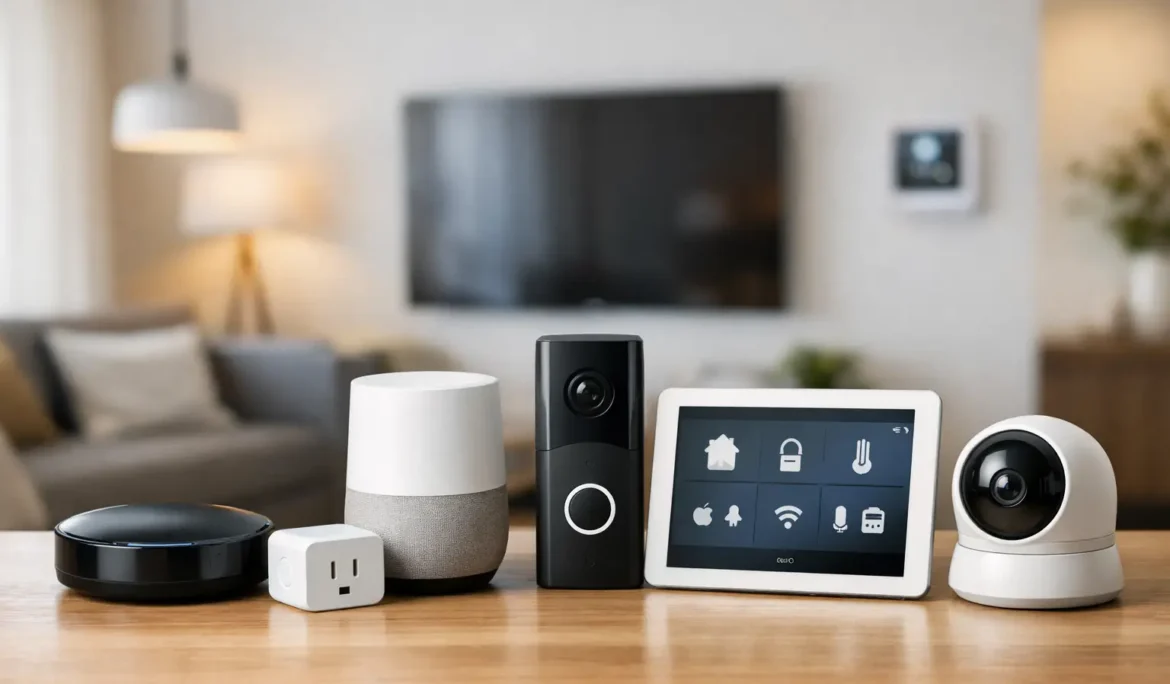
A smart home should not feel like a part-time job. If you are comparing the top 5 home automation systems, the real question is not which platform has the longest feature list. It is which one will give you dependable control over lighting, audio, video, shades, climate, and security without creating daily frustration.
That distinction matters more than most homeowners expect. On paper, many systems can turn lights on and off or let you adjust the thermostat from an app. In a lived-in home, the difference shows up in how quickly the interface responds, how well devices work together, how clean the installation looks, and whether the system still feels simple when your family uses it every day.
For homes that prioritize performance, ease of use, and a polished experience, five names come up again and again: Control4, Savant, URC, Lutron, and Crestron Home. Each brings a different strength. The right fit depends on how you live, what you want automated, and how much customization your home actually needs.
How to evaluate the top 5 home automation systems
Before looking at brands, it helps to define what a good system should do in a real home. A strong automation platform brings separate technologies into one reliable experience. That means your lights, TVs, music, shades, climate control, and security features should feel coordinated rather than patched together.
Usability comes first. If your family cannot use the system without asking for help, it is not well designed for your home. The best platforms offer intuitive apps, clean touchscreens, responsive remotes, and scenes that make sense, such as Good Morning, Entertain, Movie Night, or Away.
Reliability is just as important. Homeowners often come to integrators after trying to manage multiple apps, mixed brands, and inconsistent Wi-Fi performance. A proper automation system reduces that chaos. It should be stable, fast, and supported by professional design and programming.
Then there is scalability. Some homes need elegant control for a media room, lighting, and shades. Others need full-property automation across indoor and outdoor entertainment zones, multiple floors, and dedicated spaces like theaters or wellness rooms. Not every system handles those demands equally well.
1. Control4
Control4 is one of the most well-rounded platforms available for residential smart homes. It is often the first recommendation for homeowners who want broad integration, a polished interface, and room to expand over time.
Its biggest strength is balance. Control4 works well across lighting, distributed audio, video, climate, shades, door locks, and security integrations. It also offers multiple control options, including touchscreens, handheld remotes, in-wall keypads, voice control, and mobile apps. That flexibility is valuable for families because different people prefer different ways to interact with the home.
Control4 is especially strong in homes where entertainment and whole-house control need to work together. A single button can lower shades, dim lights, turn on the projector, and start a movie source. For homeowners who want automation to feel easy rather than flashy, that kind of consistency matters.
The trade-off is that Control4 performs best when it is thoughtfully designed and programmed. It is not a DIY platform, and that is part of the appeal. Done well, it feels unified and dependable. Done casually, it can feel underused.
2. Savant
Savant is known for its refined user experience and premium feel. Homeowners who care about elegant interfaces, Apple-friendly control habits, and a luxury-forward presentation often gravitate toward this platform.
The app experience is one of Savant’s strongest selling points. It looks clean, feels modern, and handles entertainment and environmental controls in a way that feels approachable. For design-conscious homes, that matters. Technology should support the home, not visually compete with it.
Savant also performs very well with lighting, shades, audio, and video control. In homes where entertaining is a major priority, it delivers an impressive experience. You can move music between rooms, set scenes for different times of day, and create a more curated atmosphere with minimal effort.
Where Savant needs careful planning is in matching the system to the client’s expectations. It is an excellent fit for many high-end homes, but some projects may call for broader customization or a different integration approach depending on the equipment mix. This is where expert design becomes valuable.
3. URC
URC has long been respected for control systems that emphasize straightforward operation, especially in entertainment-focused environments. If your priorities center on home theater, media rooms, whole-house audio, and practical daily control, URC deserves serious consideration.
One of URC’s strengths is simplicity. It can deliver a clean user experience without overcomplicating the system. For homeowners who want reliable access to music, TV, lighting scenes, and key room controls, that simplicity can be a major advantage.
URC is also a smart choice in projects where remote control performance matters. In homes with multiple viewing spaces or a strong emphasis on AV integration, it can provide the kind of familiar, tactile control many people still prefer over relying entirely on phones.
The trade-off is that URC may not be the first choice for every large-scale automation project. It can absolutely support wider control goals, but some estates or highly customized smart homes may benefit more from platforms built around deeper system-wide automation.
4. Lutron
Lutron is not always framed as a full home automation platform first, but it remains one of the most important systems in any smart home conversation. That is because lighting and shading are often the foundation of comfort, ambiance, privacy, and energy-conscious living.
Few companies do lighting control better. Lutron systems are known for reliability, intuitive keypads, smooth dimming, and beautifully controlled motorized shades. If your goal is to make the home feel better throughout the day, not just more high-tech, Lutron has enormous value.
In many homes, lighting is the automation feature people use most. A well-programmed scene can change the mood of a kitchen, great room, or theater instantly. Shades can respond to time of day, sunlight, or privacy needs. Those are not gimmicks. They shape how the home functions.
Lutron becomes even more powerful when paired with a broader control platform. In that setup, it handles lighting and shades at a very high level while another system manages AV, climate, and whole-home control. For many homeowners, that combination is the sweet spot.
5. Crestron Home
Crestron Home brings a high level of sophistication and is often associated with large luxury residences and advanced integrated environments. It is a powerful option for homeowners who want a premium control experience with substantial capability behind it.
Its strength lies in handling complex homes with many subsystems and a need for refined control logic. If a property includes extensive lighting zones, multiple entertainment areas, dedicated theater spaces, and layered automation scenes, Crestron Home can be a strong contender.
This is a platform that rewards thoughtful planning. In the right home, it can deliver an impressive experience with deep integration and excellent control. But it is not always the best answer for every project simply because it is highly capable. Some homes benefit more from a platform that is slightly less complex and more tailored to the family’s day-to-day habits.
That is an important point across all five systems. The best technology is not the one with the biggest reputation. It is the one that fits the home and the people living in it.
Which of the top 5 home automation systems is best?
There is no honest one-size-fits-all winner. Control4 is often the best all-around choice for homeowners who want broad smart home control with a strong entertainment component. Savant stands out for luxury feel and interface design. URC is excellent for AV-centered control and straightforward usability. Lutron leads in lighting and shading, and Crestron Home is well suited to larger, more demanding integrated homes.
The deciding factors usually come down to three things: how you want to control the house, which systems matter most to you, and how customized the final experience should be. A family that wants simple one-touch routines may not need the same platform as a homeowner building a fully integrated theater and whole-property automation plan.
That is why professional system design matters so much. A well-selected platform should match your lifestyle, your home’s layout, and the technology you will actually use every day. For homeowners in New Jersey and New York, working with an experienced integration team helps avoid the most common mistake in smart home planning – choosing products first and only later realizing they do not create a cohesive experience.
A smart home should feel calm, intuitive, and ready when you need it. The right system does not call attention to itself. It simply makes the house work better.