

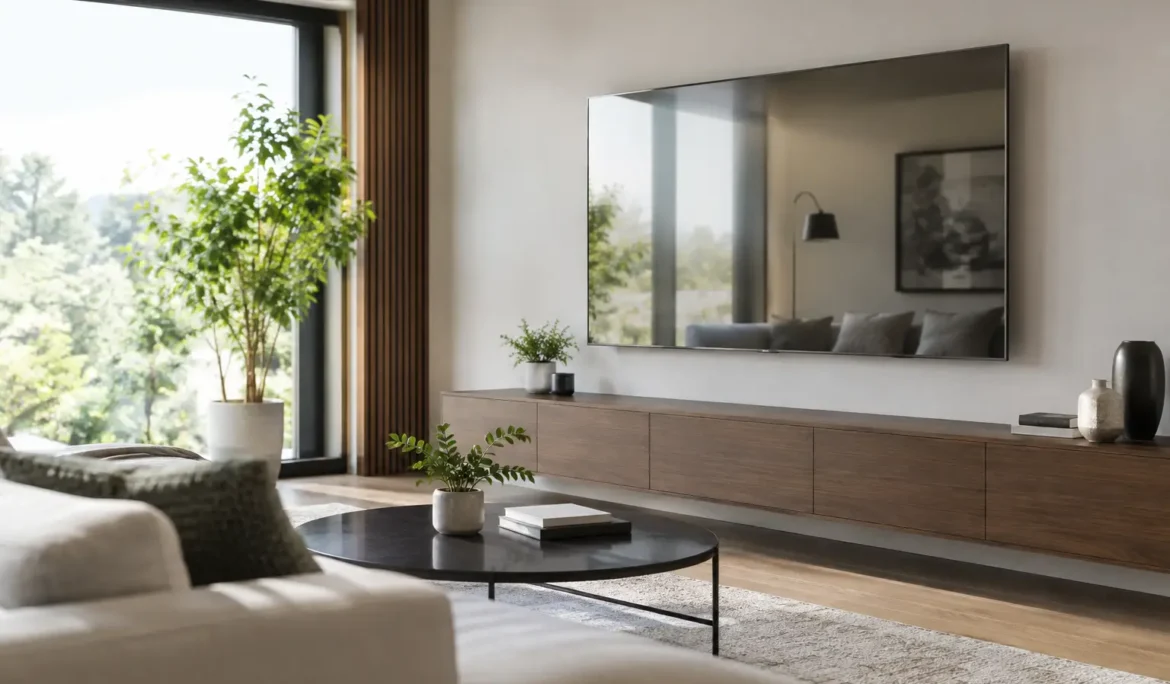
A television above the fireplace can solve an entertainment need while creating a design problem. A mirror TV takes a different approach: when it is off, it looks like a framed mirror. When it is on, it becomes a full display for movies, sports, streaming, and more. But are mirror TVs worth it for your home? For the right room and the right homeowner, they can be one of the most satisfying ways to combine high-performance entertainment with a clean, intentional interior.
The key is to view a mirror TV as part of a complete room design, not simply as a television with reflective glass in front of it. Display quality, placement, lighting, framing, audio, controls, and installation all influence the result.
Are Mirror TVs Worth It for Everyday Living?
Mirror TVs are especially worthwhile when a conventional black screen would interrupt the look and feel of a room. Formal living rooms, primary bedrooms, bathrooms, dressing areas, and fireplace walls are common examples. In these spaces, the television may be used regularly, but it should not dominate the room every hour of the day.
When the display is off, a properly designed mirror TV gives the wall a finished appearance. Rather than arranging furniture and artwork around a large dark rectangle, homeowners can incorporate a functional mirror that supports the room’s architecture and decor. This is particularly valuable in rooms where natural light, symmetry, and visual balance matter.
The experience also extends beyond appearance. A professionally integrated mirror TV can work with a home control system, so the display, audio, lighting, and shades are easy to manage from one familiar interface. Instead of searching for remotes or adjusting several devices before watching a movie, the room can be set for viewing with a simple command.
That said, a mirror TV is not automatically the best choice for every television location. If your main goal is the most cinematic, dedicated viewing experience possible, a purpose-built media room or home theater display may be the better fit. Mirror TVs are at their best when excellent entertainment and elegant room design need to coexist.
Where Mirror TVs Make the Most Sense
A fireplace wall is one of the strongest applications. Many homeowners want the fireplace to remain the visual focal point but also want a television available for family movie nights and weekend games. A mirror TV keeps the wall calm and refined when no one is watching, without asking the room to choose between warmth and entertainment.
Bathrooms are another natural setting. A vanity mirror or wall mirror can double as a display for morning news, workout programming, or a favorite show while getting ready. Because bathroom conditions require thoughtful product selection and installation, this is not a place for an ordinary television adapted as a do-it-yourself project.
In a primary bedroom, a mirror TV can preserve a restful atmosphere. The room still has convenient access to entertainment, but the television does not become the first thing seen when entering. This can be especially appealing in bedrooms with carefully selected furnishings, custom millwork, or a view worth protecting.
Design-conscious homeowners also use mirror TVs in sitting rooms, home bars, and dressing rooms. In each case, the benefit is the same: technology is present when wanted and visually restrained when it is not.
The Trade-Offs to Consider Before Choosing One
A mirror TV is a specialty solution, which means planning matters more than it does with a standard television. The glass that creates the mirror effect can affect how the screen appears in certain conditions. High ambient light, direct sun, window reflections, and bright fixtures may influence daytime viewing. The right display and glass combination, along with lighting and shade control, helps preserve a clear, enjoyable picture.
Viewing angle should also be considered. A mirror TV may look excellent from the primary seating position, but room layout determines whether everyone gets a comfortable view. This becomes more important in a larger family room or an open-concept space where people watch from several locations.
Then there is sound. A thin display placed over a fireplace or in a refined bedroom rarely delivers the kind of audio that makes a movie, concert, or game feel engaging on its own. Thoughtful speaker placement can provide full, natural sound without cluttering the room with visible equipment. In many designs, discreet architectural speakers or a custom sound solution make the television feel like part of a complete entertainment system rather than an isolated screen.
Finally, consider how often the TV will be used. If it will be on for most of the day and is the household’s primary screen for serious viewing, a conventional display may be more appropriate. If it is used often enough to be valuable but needs to disappear gracefully between viewings, a mirror TV is a compelling option.
Design Details That Separate a Good Result From a Great One
The frame is not an afterthought. It is the detail that lets a mirror TV complement the rest of the room. A frame can echo the finish of cabinetry, metal accents, wall trim, or other mirrors in the space. In a traditional setting, it may feel like a classic decorative mirror. In a modern interior, it can be clean-lined and understated.
Placement is equally important. Mounting a TV too high above a fireplace can make viewing uncomfortable, regardless of how attractive it looks. The height of the mantel, seating distance, screen size, and the room’s intended use should all be reviewed before installation. Sometimes the best answer involves a different wall, a recessed installation, or a specialized mounting approach that improves the viewing position.
Lighting control can make a meaningful difference as well. Bright, uncontrolled light can create glare, while carefully designed dimming and motorized shades can improve comfort during the day and create an inviting atmosphere at night. A mirror TV becomes even more effective when it is considered alongside the room’s lighting plan instead of being added after the fact.
Equipment needs a home, too. Streaming devices, video distribution components, control processors, and audio equipment should be accessible for service while remaining out of sight. A professional design accounts for ventilation, wiring paths, network reliability, and future support before the wall is closed or the finish work is complete.
Reliability Should Be Part of the Decision
A beautiful wall is only successful if the system is easy to use. Homeowners should not need a separate remote for the TV, another for the sound, and a third for streaming. A simple control solution can bring the experience together, whether the room is used for a quick morning program or an evening movie.
Reliable connectivity matters just as much. Streaming quality depends on a stable network, and a carefully planned installation avoids exposed cables, weak wireless performance, and frustrating device handoffs. This is where a full-service technology partner provides real value: the system is designed as one experience, then supported as one experience.
How to Decide if a Mirror TV Is Right for Your Room
Start with the room’s purpose. Is it primarily a place to watch content, or is it a living space where the television needs to recede into the background? If appearance is a major concern and the TV is important but not meant to command attention at all times, a mirror TV deserves serious consideration.
Next, look at the wall itself. Consider daylight, nearby windows, fireplace height, seating locations, wall materials, and available space for equipment. These practical details determine whether a mirror TV will perform as beautifully as it looks.
It also helps to think beyond the display. The most successful installations include the right audio, lighting, networking, and controls for the way a household actually lives. Cine Acoustic helps homeowners in New Jersey and New York evaluate those details early, creating systems that feel straightforward for the family while respecting the design vision of the home.
A mirror TV is not for every wall, but it can be the right answer for a room that should feel polished first and entertaining second. When the design, viewing conditions, and technology are planned together, it lets your home deliver both without compromise.