

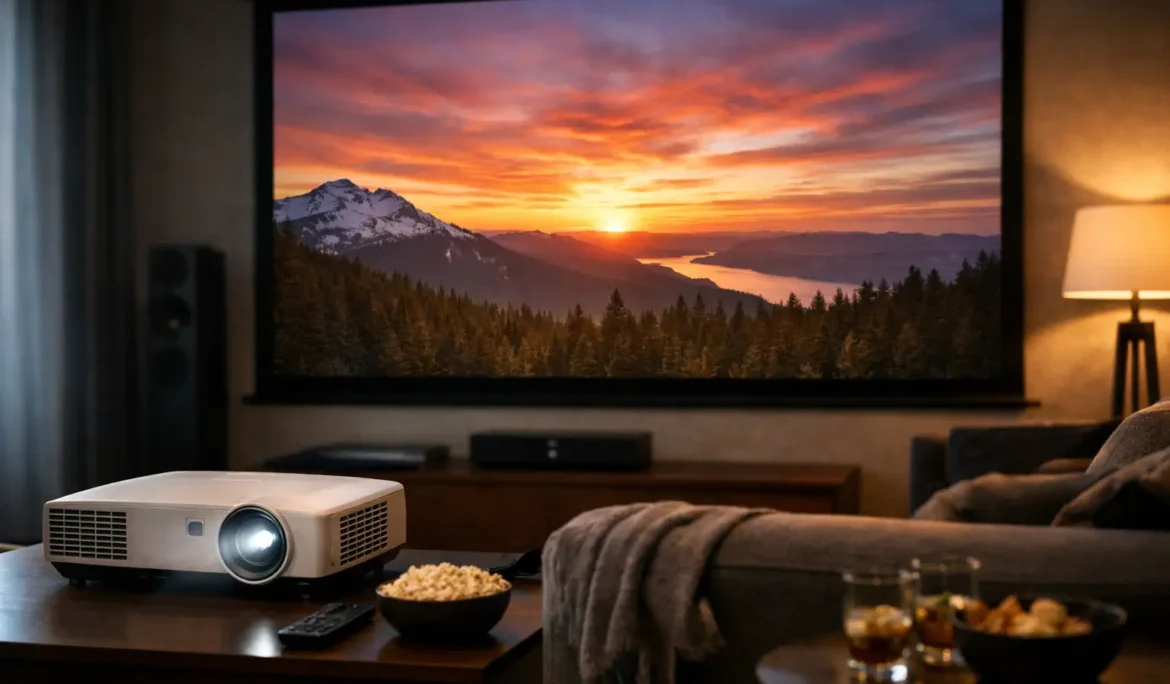
A projector can deliver a remarkably large image, but the screen determines how much of that performance you actually see. The best home theater projector screens are not simply the biggest screens that fit on a wall. They are matched to the room’s dimensions, seating distance, lighting, projector type, speaker layout, and the way your family wants to use the space.
For a dedicated theater, screen selection should happen early in the design process. A screen affects the placement of speakers, the height of the projector, wall finishes, seating layout, lighting control, and even the visual balance of the room. Getting those decisions right creates the immersive, comfortable experience homeowners expect from a professionally designed theater.
What Makes a Projector Screen the Right Choice?
There is no single “best” screen for every home. A bright multi-purpose media room with windows has different needs than a light-controlled theater built for movie nights. A screen that performs beautifully with one projector may be a poor match for another.
The right choice begins with three questions: How much light will be in the room? Where will viewers sit? And where will the speakers be located? Once those answers are clear, it becomes much easier to choose the proper screen material, size, format, and mounting style.
A quality screen also gives the projector a consistent, neutral surface. Painted walls can look acceptable at first, but texture, uneven color, reflected light, and framing limitations often reduce image clarity and contrast. In a premium home theater, the screen is a core performance component, not an accessory.
Fixed-Frame Screens for Dedicated Theaters
A fixed-frame screen is often the preferred choice for a dedicated home theater. Its screen material is stretched tightly within a rigid frame, creating a perfectly flat viewing surface. The frame is typically finished in black velvet or another light-absorbing material that helps define the image and improves perceived contrast.
For homeowners who want a theater that is always ready to perform, fixed-frame designs offer dependable results with minimal complexity. They do not need to be lowered, retracted, or aligned before a movie starts. They also provide a clean, intentional focal point that works especially well in rooms designed around the screen.
The trade-off is permanence. A fixed-frame screen is visible all the time, so it is best suited to a room where cinema is the primary purpose. In a shared living area or design-forward multipurpose space, a concealed motorized screen may make more sense.
Choosing the Right Aspect Ratio
Most home theaters use a 16:9 screen because it matches television, streaming, gaming, and much of today’s video content. It is a practical, flexible choice for households that use their theater for more than movies.
A wider 2.35:1 or 2.40:1 screen creates a more cinematic presentation for many films. It can be an excellent option in a theater focused on movie viewing, particularly when paired with a projector and video system designed to manage different content formats gracefully. However, television shows and sports will display with unused space at the sides unless the system is configured to adjust the image.
The best choice depends on viewing habits. Families who regularly watch sports, play games, and stream series often prefer 16:9. Film enthusiasts may appreciate the wider presentation of a cinemascope screen. Neither is automatically better – the goal is to make the screen work naturally for the content you enjoy most.
Acoustically Transparent Screens Put Sound Where It Belongs
In a commercial cinema, voices seem to come directly from the actors on screen because the front speakers sit behind the image. An acoustically transparent projector screen can create that same effect at home.
These screens use either a woven material or a perforated surface that allows sound to pass through while preserving the projected image. This permits the left, center, and right speakers to be placed behind the screen at the proper height, rather than below or beside it. The result is more convincing dialogue placement and a cleaner theater design.
Acoustically transparent screens are especially valuable when a large image would otherwise force the center speaker too low. They also help maintain symmetry in a room, since speakers and wiring can remain hidden behind a false wall or screen structure.
There are important design considerations. The material can slightly affect brightness and high-frequency sound, so the projector, speakers, and audio calibration must be selected accordingly. Screen distance and speaker placement also matter. This is one area where thoughtful system design delivers a noticeably better result than choosing components independently.
Ambient Light Rejecting Screens for Brighter Rooms
Not every entertainment space can be completely darkened. Great rooms, family rooms, and finished basements may have windows, open floor plans, or lighting that cannot always be turned off. In these environments, an ambient light rejecting, or ALR, screen can improve daytime and casual viewing.
ALR materials are engineered to reflect projector light toward the audience while rejecting more light from other directions. This can help maintain contrast and prevent the image from looking washed out when some ambient light is present.
The benefit comes with limits. An ALR screen is not a substitute for good lighting control, and its performance depends on projector placement and room geometry. Some materials are directional, meaning the projector must be mounted within a specific range. Viewing angles can also be narrower than with a traditional white screen.
For a room that must serve multiple purposes, the best strategy is often a combination of screen material, appropriate projector brightness, motorized shades, and scene-based lighting control. That approach protects picture quality without requiring the room to feel like a dark theater during everyday use.
Match Screen Material and Gain to the Projector
Screen gain describes how reflectively a screen directs light back to the viewer. A gain of approximately 1.0 is considered neutral and provides broad viewing angles with balanced brightness. Higher-gain materials can make an image appear brighter, but they may narrow the best viewing area and can introduce visible brightness variation across the screen.
For a light-controlled theater, a neutral white or light gray material is often an excellent choice. White materials can provide a bright, natural image, while gray surfaces may improve perceived black levels in rooms with modest ambient light. The right material also depends on the projector’s light output, contrast performance, and intended image size.
Ultra-short-throw projectors require special attention. They project from just inches away from the screen at a steep angle, so they need a screen material designed specifically for ultra-short-throw optics. A conventional screen can create hot spots or uneven brightness. This is a common compatibility issue that is easy to avoid when the projector and screen are selected as a pair.
Size the Screen for Comfortable Viewing
Bigger is exciting, but an oversized screen can make viewing tiring. If viewers are too close, they may notice image structure, move their eyes excessively during fast scenes, or feel overwhelmed by the picture. If the screen is too small, the theater loses some of the impact that makes projection special.
The ideal size is determined by seating distance, resolution, content preferences, and the room’s physical boundaries. A large 4K image can support closer seating than older lower-resolution formats, but comfort still matters. The screen should fill enough of the viewer’s field of vision to feel engaging without making subtitles, scoreboards, or action difficult to follow.
Screen height is just as important. The lower portion of the image should sit at a comfortable level for seated viewers, while leaving room for speakers, cabinetry, or a stage if those are part of the design. A screen that is centered on the wall is not always positioned correctly for the people watching it.
Motorized Screens Preserve the Room’s Design
A motorized projector screen is an appealing solution when a room serves as both a living space and an entertainment space. At the touch of a button, the screen can lower from a ceiling recess, cabinet, or surface-mounted housing. When it is not in use, it disappears and allows artwork, windows, or architectural details to remain the visual focus.
For a polished installation, the screen can be integrated with lighting, shades, and control. A single “Movie” command can lower the screen, activate the projector, set the audio system, dim the lights, and close motorized shades. The technology should feel simple because the programming and hardware are designed to work together.
Motorized screens require careful planning. The housing location, electrical needs, ceiling construction, drop distance, and service access should be addressed before drywall or millwork is complete. During a renovation or new build, early coordination avoids compromises later.
The Best Home Theater Projector Screens Start With the Room
Screen shopping becomes much easier when it begins with a complete view of the room rather than a product specification. The projector, screen, audio system, seating, lighting, shades, and control experience all influence one another. A screen can be technically impressive yet still feel wrong if it is too large, poorly positioned, incompatible with the projector, or difficult to use.
For New Jersey and New York homeowners creating a dedicated theater or refining a media room, a professional design consultation can turn those variables into a clear plan. Cine Acoustic helps clients select and integrate performance-focused systems that fit the room, the architecture, and the way the household lives.
The most satisfying theater is the one that disappears when the lights go down: the picture looks natural, the dialogue comes from the screen, and every control feels effortless. A well-chosen screen gives that experience the foundation it needs.