

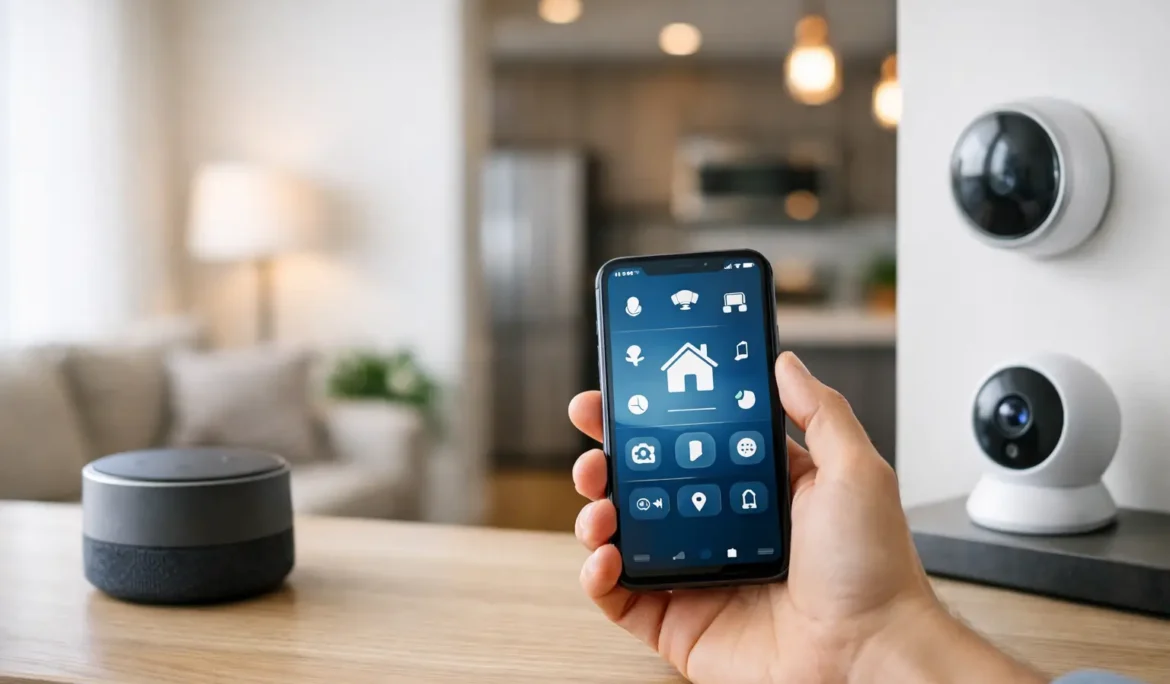
When movie night means opening one app for the TV, another for the receiver, a third for lights, and a fourth for shades, the technology is not making life easier. The best smart home control apps replace that patchwork with a clear, dependable way to manage the rooms and routines that matter most.
For many homeowners, the right answer is not simply the app with the most features. It is the app that feels natural for the household, responds consistently, and brings entertainment, lighting, comfort, and security together without turning every family member into a technician.
What Makes a Smart Home Control App Worth Using?
A control app is only as good as the system behind it. A polished screen cannot fix weak Wi-Fi, incompatible products, or an automation design that overlooks how your family actually uses the home. The strongest platforms combine thoughtful programming with clear controls for everyday moments: arriving home, entertaining friends, starting a movie, putting children to bed, or leaving for vacation.
Look for an app that offers room-based control, personalized favorites, reliable remote access, and meaningful automation. It should also work alongside physical controls. A wall keypad, handheld remote, or voice command is often faster than reaching for a phone, particularly for lighting and home theater use. The app should be the convenient center of control, not the only way to operate your home.
The Best Smart Home Control Apps for Integrated Homes
1. Control4: Best for Whole-Home Integration
Control4 is a leading choice for homeowners who want one interface for a broad range of connected systems. Its app can bring together lighting, motorized shades, climate, multi-room audio, video distribution, surveillance, garage doors, and more, depending on the equipment in the home.
Its greatest advantage is customization. A properly designed Control4 system can present simple room controls to one user while giving another access to deeper settings. A “Goodnight” button might turn off selected lights, lower shades, adjust temperature, and shut down entertainment throughout the house. For a dedicated theater, it can coordinate the projector, surround sound, source equipment, lighting scenes, and shades in a single command.
Control4 is best suited to homes where integrated control and professional design are priorities. It depends on careful installation and programming, which is a strength when reliability and an organized experience matter more than do-it-yourself experimentation.
2. Savant: Best for Design-Conscious, Apple-Friendly Homes
Savant is known for a refined interface and strong support for personalized home scenes. The app is particularly appealing to homeowners who value elegant presentation, intuitive control, and a system that feels tailored to their daily routine.
Within a Savant-equipped home, users can manage entertainment, lighting, shades, climate, and security from a unified experience. Scenes can be arranged around lifestyle rather than device categories. Instead of asking which switch controls which fixture, a homeowner can select “Dinner,” “Entertain,” or “Relax” and let the system set the environment.
Savant is a strong fit for clients who appreciate a polished visual experience and want premium home technology to complement, rather than distract from, interior design. As with other professionally managed platforms, the quality of the outcome depends on the design, installation, and long-term support behind the app.
3. Lutron: Best for Lighting and Shade Control
For lighting control and motorized window shades, Lutron remains one of the most trusted names in the category. Its app is focused, straightforward, and especially effective for creating lighting scenes, scheduled shade movement, and comfort-focused routines.
The appeal of Lutron is consistency. Homeowners can adjust lights by room, set scenes for specific activities, and manage shades to reduce glare, protect furnishings, or create privacy. A morning routine can gently raise shades and bring up the kitchen lights. An evening scene can set pathway lighting while lowering shades throughout key living areas.
Lutron can also integrate with broader automation systems such as Control4 and Savant. That combination often makes sense in larger or more customized homes: use Lutron for the lighting and shade foundation, then access those features through a whole-home control app alongside audio, video, and other systems.
4. URC Total Control: Best for Straightforward Entertainment Control
URC Total Control is well suited to homeowners who want a direct, practical way to manage entertainment and connected home systems. Its app can be configured for televisions, audio systems, lighting, climate, cameras, and other compatible technology, while URC remotes and touchscreens provide familiar physical control.
This is an appealing option for homes where the entertainment experience is central. A well-programmed interface can eliminate source confusion and make it easy to start a favorite channel, streaming service, or music zone without navigating a stack of remotes.
URC is particularly valuable when simplicity is the goal. Rather than presenting every possible device setting, a professional configuration can place the actions a household uses most often at the forefront.
5. Apple Home: Best for Apple-Centered Households
Apple Home is a practical choice for households already using iPhones, iPads, Apple TVs, and HomePods. Its app offers a clean way to manage compatible lights, locks, thermostats, cameras, sensors, and scenes. Siri voice control adds another layer of convenience for simple requests.
For a smaller smart home, Apple Home can be an excellent starting point. Its HomeKit and Matter compatibility can make device selection more manageable, though compatibility should always be verified before purchase. Not every feature of every device will be available in every ecosystem.
The trade-off is that Apple Home is generally better for consumer smart devices than for a fully customized home theater, extensive AV distribution, or complex multi-system automation. It can work well as part of a connected home, but it may not replace a dedicated control platform in a larger residence.
6. Google Home: Best for Voice-First Everyday Control
Google Home is designed around accessible voice control and broad compatibility with consumer smart home devices. It can be useful for managing common categories such as lights, plugs, speakers, cameras, and thermostats, particularly in homes where Google Assistant is already part of daily life.
The app has become more capable at organizing devices by room and creating routines. Saying a simple phrase to adjust lights or start music can be genuinely useful when hands are full. Google Home is often a sensible choice for a homeowner who wants approachable control without extensive customization.
Its limitations are similar to other consumer platforms. Compatibility can vary by device, and more complex home entertainment or specialty systems may require their own control environment. Voice commands are convenient, but they are not always the best method for precise control in a busy home.
7. Amazon Alexa: Best for Broad Device Compatibility
Alexa supports a wide variety of smart home products and is familiar to many households through Echo devices. The Alexa app can group devices, create routines, and control compatible lighting, plugs, locks, thermostats, and selected entertainment equipment.
Its broad compatibility is its main advantage. For a homeowner adding a few connected devices over time, Alexa can provide a common voice-control layer. It is also useful for simple routines, such as turning off downstairs lights at bedtime or activating exterior lighting at sunset.
However, a long list of compatible devices does not automatically create a cohesive smart home. Alexa works best when the underlying products are selected carefully and organized thoughtfully. In a home with premium audio, video, lighting, and shade systems, it often functions best as a supplemental voice option rather than the primary control experience.
How to Choose Between Professional and Consumer Apps
The right choice depends on the scale of the home and the experience you expect. Apple Home, Google Home, and Alexa are useful for individual devices and straightforward routines. They can work well in a condo, a smaller home, or a focused project such as connected lighting and a thermostat.
Control4, Savant, and URC are better suited to homes where multiple systems need to behave as one. They can simplify a theater, whole-house music, lighting scenes, motorized shades, and comfort controls through a personalized interface. Lutron is often the preferred foundation when lighting and shades are a major priority.
Before selecting an app, consider what you want to control from one place, who will use it, and what should happen automatically. Also consider the controls beyond the phone. The best home system gives you a convenient app, but it also gives guests a clear keypad, gives children a simple remote, and gives you confidence that the system will work when you press a button.
A Better App Starts With Better System Design
A smart home should feel calm, not complicated. That comes from selecting compatible technology, building a dependable network, and programming controls around real habits rather than a product checklist. Cine Acoustic helps homeowners create that kind of experience by designing integrated systems that are easy to use long after installation is complete.
The best app is the one your household does not have to think about. When the lights, shades, sound, and screen respond the way you expect, technology fades into the background and the room finally feels like it was designed for living.