

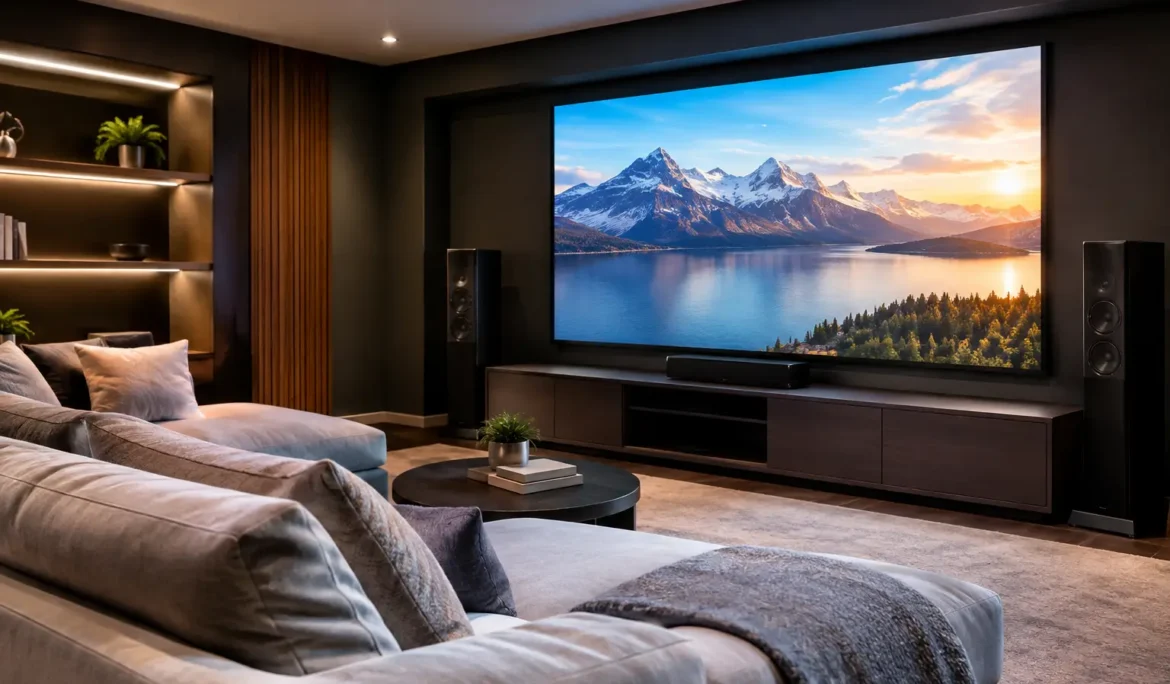
A media room should not require a stack of remotes, a pre-movie troubleshooting routine, or a family member who knows which input to select. The best technology for media rooms brings the picture, sound, lighting, and controls together so the room feels exciting when the movie starts and effortless the rest of the time.
Unlike a dedicated theater, a media room often serves more than one purpose. It may be where the family watches Sunday football, where friends gather for a concert, where kids play games, or where you relax with a favorite series. The right technology supports every use without making the room feel overly technical or visually crowded.
Start With How the Room Will Be Used
Equipment should follow the room’s purpose, not the other way around. A room used mainly for movies benefits from a large projection screen, controlled lighting, and immersive surround sound. A bright, multipurpose family room may be better served by a high-performance television that maintains a strong picture during the day.
Room dimensions, seating distance, window placement, ceiling height, and wall construction all affect the final design. A large screen can be impressive, but it should be comfortable to watch from the primary seats. Powerful speakers can create impact, but only when their placement and calibration suit the room.
This is why a professional plan is more valuable than choosing individual products based on a specification sheet. The goal is a system that performs as one complete experience.
Best Technology for Media Rooms: The Core System
A high-performing media room is built around four connected elements: display, audio, control, and network reliability. Each deserves careful attention because a weak link can affect the entire experience.
Choose the Right Display for the Space
For many media rooms, a premium TV is the practical choice. Modern large-format displays provide excellent brightness, sharp detail, and rich color, even when daylight enters the room. They also work well for sports, gaming, and casual viewing, with no setup required before guests arrive.
A projector and screen can create a more cinematic scale, particularly in rooms with reliable light control. When paired with motorized shades and thoughtful lighting design, a projection system can turn movie night into a true theater-like experience. The trade-off is that projectors are more sensitive to ambient light, so they are usually best for dedicated viewing spaces or rooms designed around that use.
Display size should be based on viewing distance and content habits. Bigger is not automatically better if viewers sit too close, while a screen that is too small can make a spacious media room feel underwhelming.
Build Audio Around the Seating, Not the Walls
Picture gets attention first, but sound is what makes a media room feel dimensional. Clear dialogue, realistic effects, and even bass response allow viewers to feel part of the scene rather than simply watching it.
A Dolby Atmos surround sound system places audio around and above the audience, producing a more convincing sense of movement. A helicopter can seem to pass overhead, rain can fill the room, and a live performance can feel broader and more immediate. Yet the number of speakers should match the room, seating layout, and listening goals. More channels are not always better when the placement is compromised.
In-wall and in-ceiling speakers can preserve a clean design, while architectural speakers with discreet grilles blend into refined interiors. Freestanding speakers can also be the right choice where performance and design preferences call for them. Subwoofers should be selected and positioned carefully, as they have a major effect on the impact and balance of a system.
Professional calibration is the finishing step. It accounts for the room’s acoustics, speaker locations, seating, and equipment so every seat receives a more consistent experience.
Make Content Easy to Access
A media room should make great content simple to find and enjoy. Streaming services are part of most households, but a well-designed system should also accommodate cable or satellite sources, game consoles, music, and personal media without turning the equipment cabinet into a mess of visible wires.
For homeowners who want the highest-quality movie experience, a Kaleidescape movie server can provide reference-grade video and lossless audio from a curated, easy-to-browse library. It is especially valuable in premium theater and media room environments where quality, reliability, and a polished interface matter.
The key is not adding every available source. It is selecting the sources the household will actually use and presenting them through a clear, consistent control interface.
Dependable Wi-Fi Is Part of the Entertainment System
Buffering during a big game or a movie’s final scene is more than a minor inconvenience. Media rooms often rely on streaming devices, control systems, gaming platforms, and wireless mobile devices at the same time. That places meaningful demand on the home network.
A professionally designed Wi-Fi network uses properly located access points, wired connections where they matter most, and equipment selected for the home’s size and construction. Hardwiring key media components can improve stability, while strong Wi-Fi supports mobile control and everyday streaming throughout the house.
Treating networking as an afterthought is one of the most common causes of frustration in otherwise impressive entertainment spaces.
Control, Lighting, and Shades Complete the Experience
The difference between a collection of equipment and a finished media room is often what happens before the content begins. With a control platform such as Control4, Savant, or URC, one touch can turn on the display, select the right source, adjust the surround sound, lower the shades, and set the lights to a comfortable viewing level.
That simplicity is not just convenient for guests. It helps everyone in the household use the room with confidence. Instead of explaining which remote controls which device, the system can offer straightforward options such as Watch TV, Movie Night, Music, or Game Time.
Lighting control is equally important. Layered lighting lets you keep pathways visible while preventing glare on the screen. Dimmable sconces, recessed fixtures, and accent lighting create depth without distracting from the picture. Motorized shades can reduce daylight and reflections while also protecting furnishings from direct sun.
These elements should be planned early, especially during a renovation or new build. Wiring, shade pockets, speaker locations, and equipment storage are easier to coordinate before walls and ceilings are finished.
Design for Reliability and a Clean Finish
A polished media room keeps technology present when you need it and unobtrusive when you do not. Equipment can be organized in a dedicated rack or cabinet, cables can be concealed, and ventilation can be planned to protect components from heat buildup. This creates a cleaner room while making future service and upgrades much easier.
Reliability also comes from choosing compatible equipment and commissioning it as a complete system. A display, receiver, streaming device, network, remote, and lighting platform may each work well independently, but their interaction is what determines the daily experience.
At Cine Acoustic, the process begins with understanding how a household lives in the space. A system for movie enthusiasts may prioritize a projector, acoustic performance, and cinematic playback. A family media room may place equal weight on fast access, sports viewing, gaming, lighting scenes, and everyday convenience. Both can be exceptional when the design reflects the people using the room.
Plan for the Room You Will Use Most
The best media room technology is not necessarily the most complicated or the most visible. It is the technology that delivers a great picture, engaging sound, dependable access to content, and simple control every time you sit down. Start with your room, your routines, and the people who will gather there, then build a system that makes those moments easier to enjoy.