

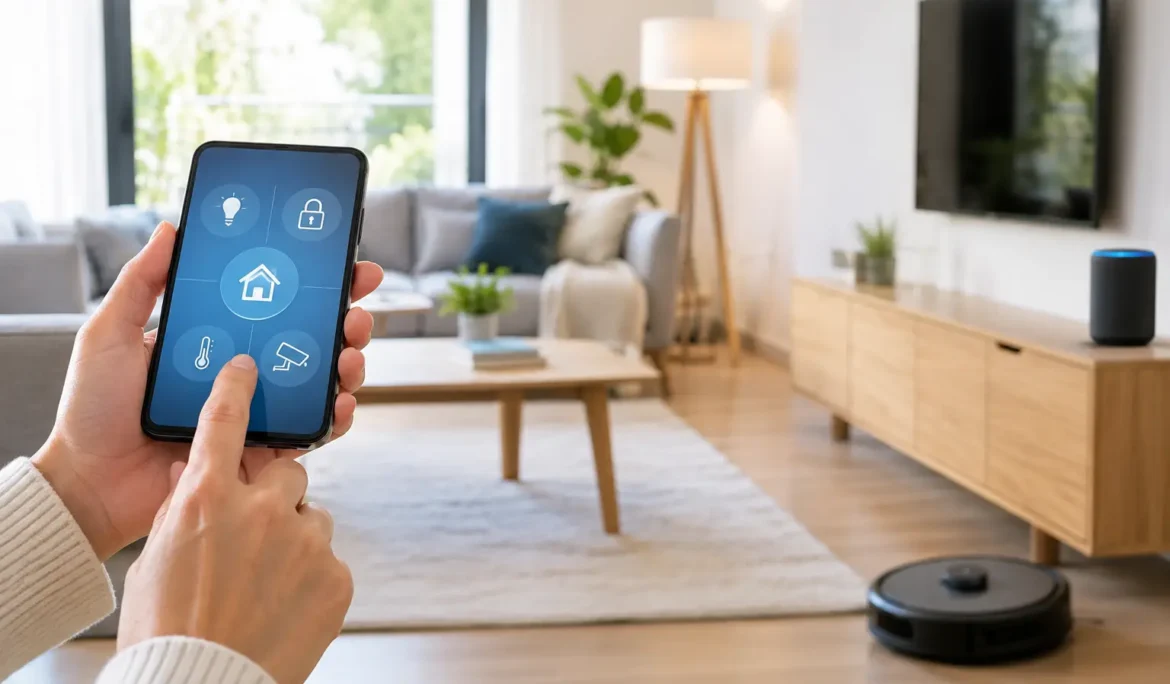
A great home should not require a collection of remotes, apps, and workarounds to feel comfortable. Thoughtful home automation brings the systems you already use together, so lighting, entertainment, motorized shades, and climate respond naturally to the way your household lives.
For homeowners planning a renovation, building a new home, or upgrading an entertainment space, the real value is not having more technology. It is having fewer decisions to make every day. One simple control can set the room for a movie, welcome your family home after dark, or make the house feel settled at bedtime.
What Home Automation Should Actually Do
Home automation is often described as a way to control devices from a phone. That is part of it, but it is not the full picture. A professionally designed system creates useful connections between technologies that otherwise operate separately.
Instead of turning on several lamps, lowering shades, selecting an input, adjusting the audio system, and finding the right remote, a single “Movie” scene can prepare the room. Instead of walking through the house at night to switch off lights, a “Goodnight” command can set the home for the evening in seconds.
The best systems do not ask everyone in the house to become a technology expert. They make common tasks easier through intuitive keypads, handheld remotes, touchscreens, and mobile control. The technology should fit the family, not force the family to change its routine.
The difference between connected devices and an integrated home
A connected device can be useful on its own. A smart speaker, streaming device, wireless shade, or app-controlled light may solve one specific need. The challenge appears when each product has its own app, account, remote, and update schedule.
An integrated home is designed as one experience. The lighting system communicates with the shades. The entertainment system can respond to a room scene. Controls are consistent from space to space. Your home remains easy to operate whether you are using the theater, relaxing in the living room, or hosting friends outdoors.
This approach also gives homeowners a clearer path for future upgrades. Rather than replacing a patchwork of disconnected products, the system can be planned with the home’s long-term needs in mind.
Where Home Automation Has the Greatest Impact
The right priorities depend on how you use your home. A family with young children may value easy lighting scenes and reliable whole-home audio. A frequent entertainer may focus on a polished media room, outdoor entertainment, and controls that guests can understand without instruction. For many homeowners, the best starting point is where small inconveniences happen most often.
Lighting control creates better rooms
Lighting is one of the most noticeable parts of a home, yet it is often overlooked until the end of a project. Proper control lets you set the mood for dinner, reading, entertaining, or watching television without filling walls with banks of switches.
A well-planned lighting system can provide scenes that feel appropriate rather than dramatic for the sake of it. “Morning” may bring selected lights up gradually in key areas. “Entertain” can create a warm, welcoming look across the main living spaces. “Away” can make it easy to turn off chosen lights when leaving the house.
Just as important, professionally installed keypads can reduce wall clutter and complement the home’s interior design. This matters in homes where finishes, furniture, and architectural details have been selected carefully.
Motorized shades improve comfort and ambiance
Motorized window shades are about much more than convenience. They help manage glare on televisions and projection screens, protect furnishings from intense sunlight, and give rooms more privacy at the right moments.
In a media room, shades can lower as part of a viewing scene. In a living area with large windows, they can be adjusted without interrupting a conversation or searching for individual controls. The fabric, hardware, and control strategy should be selected to suit both the room’s design and its practical needs.
There is a trade-off to consider. A shade system is most effective when it is considered early, particularly in a new construction or renovation project. Early coordination allows for cleaner wiring, thoughtful placement, and a finished look that does not feel added on later.
Entertainment should feel effortless
A premium home entertainment system is only enjoyable if it is easy to use. Home automation simplifies the experience by bringing audio, video, lighting, and shading into one familiar interface.
For example, a family room control can turn on the display, select a preferred source, set the room lighting, and adjust the sound without asking anyone to sort through multiple remotes. In a dedicated theater, one command can prepare the room for a film while preserving the performance and impact that make a home theater special.
Whole-house audio adds another layer of convenience. Music can follow the flow of a gathering from the kitchen to the patio, or different areas can enjoy different content without a complicated setup. The goal is not to fill every room with equipment. It is to provide entertainment where it adds value to your lifestyle.
Reliable Wi-Fi supports everything else
Many smart-home frustrations are actually network frustrations. Video buffering, slow response times, dropped connections, and unreliable control often begin with Wi-Fi that was not designed for the size, construction, and device load of the home.
A strong network is the foundation of a dependable automated home. It should account for coverage across living areas, outdoor spaces, and high-use rooms, as well as the many connected devices that may be running at the same time. Planning the network as part of the larger system helps avoid the common problem of adding technology faster than the home can support it.
Design Around Routines, Not Features
The most useful automation begins with a conversation about daily life. What happens when the family gets home? Which rooms are used most? Where does glare interfere with viewing? Is the goal a quiet retreat, a better space for entertaining, or an easier way to manage a busy household?
Those answers shape the system. A homeowner who wants a refined, low-effort media room needs a different solution than someone building a dedicated Dolby Atmos theater. A home with expansive glass may place more emphasis on lighting and shades. An outdoor living area may need easy audio and video control that performs reliably beyond the walls of the house.
This is why a one-size-fits-all package rarely produces the best result. The right system should be scaled to the home, the people using it, and the way each space needs to feel.
Why Professional Planning Matters
Technology brands and individual products matter, but design and installation determine whether the finished experience feels simple or frustrating. Professional integration considers equipment locations, wiring, network performance, control placement, room acoustics, sightlines, and the appearance of the finished space.
It also considers what happens after installation. Homeowners need a system that can be understood quickly, supported locally, and adjusted as their needs change. A beautiful theater or smart home system loses much of its value if a small issue requires hours of troubleshooting or if nobody knows which remote controls what.
Cine Acoustic approaches these projects as a complete experience, from consultation and system design through installation, customization, and ongoing support. That helps ensure the finished system performs as intended while remaining approachable for everyone who uses it.
Start With the Moments You Want to Improve
You do not need to automate every possible function to see meaningful results. Start with the moments that create friction: the living room that needs too many remotes, the windows that create glare every afternoon, the lights that never feel right for entertaining, or the Wi-Fi that struggles when the household is active.
From there, a carefully planned system can grow in a way that feels intentional. The most satisfying home automation is rarely the most complicated. It is the kind that quietly supports your day, makes your rooms more enjoyable, and lets your home respond the way you always wished it would.