

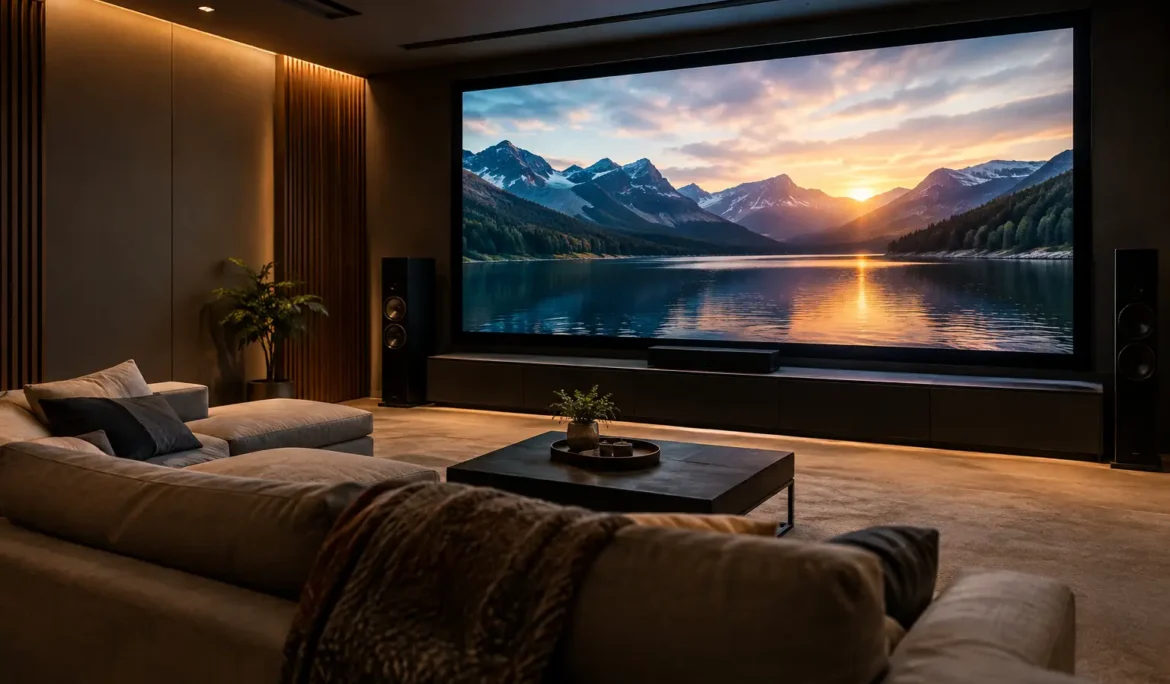
The best home theaters do not announce their complexity. A family should be able to walk in, choose a movie, lower the lights, and settle into an experience that feels far beyond a typical television room. That sense of ease is not accidental. It comes from thoughtful planning that connects picture, sound, seating, lighting, acoustics, and control into one purpose-built environment.
For homeowners planning a new build, renovation, or dedicated entertainment space, the goal is not simply to add more equipment. It is to create a room that works beautifully for the way you watch, host, relax, and live.
What Makes a Home Theater Feel Complete?
A large screen is exciting, but it is only one part of the experience. A true home theater is designed around how every element affects the others. Screen size influences seating distance. Speaker placement affects both sound quality and room layout. Window treatments, wall finishes, and lighting determine whether the picture looks rich or washed out.
This is why a theater designed as a complete system performs differently from a collection of individual components. The room should deliver clear dialogue at normal listening levels, convincing surround effects without distracting hot spots, and a picture that remains immersive from the seats that matter most.
There is no single formula for every home. A lower-level room with limited natural light may be well suited for a projection system and acoustically transparent screen. A multipurpose family room may call for a premium display, discreet speakers, and lighting scenes that support movie night without changing how the room functions during the day. The right approach depends on the space and the homeowner, not a predetermined package.
Start With the Room, Not the Equipment
The room is the foundation of the theater. Before selecting a display, projector, or speakers, consider its dimensions, ceiling height, entry points, windows, and adjacent rooms. These details shape decisions that are difficult to correct later.
For example, a projector can create a dramatic image, but it needs appropriate control of ambient light. In a bright room, a high-performance television may provide more consistent viewing during the day. A dedicated theater may benefit from deeper wall colors and low-reflective finishes, while an open-concept space may require a design that complements existing architecture and furnishings.
Seating deserves the same attention. The best seat is not necessarily as close to the screen as possible. Comfortable viewing distance, clear sightlines, aisle space, and the ability to see the entire image without strain all matter. If the room will regularly host friends or extended family, plan for that from the beginning instead of treating additional seating as an afterthought.
Picture Is More Than Screen Size
A bigger image can make movies more compelling, but image quality is what keeps the experience believable. Contrast, color accuracy, brightness, and motion handling all shape how a film, sporting event, or concert looks on screen.
The display choice should reflect how the room will be used. A dedicated theater used primarily in the evening may be an excellent fit for a projector and projection screen. A media room with daylight, windows, or casual daytime use may be better served by a large-format display that maintains brightness in changing conditions.
Content matters, too. Homeowners who value the highest-quality movie presentation may want a system that preserves exceptional picture and sound quality while making their library simple to access. The best source solution is the one that fits viewing habits and reduces friction, whether that means a favorite movie night setup, live sports, or easy access to entertainment for the entire household.
Sound Should Surround You, Not Overwhelm You
People often focus on the visual side of a theater first, then discover that sound is what makes the room feel truly cinematic. The subtle details matter: a voice that stays anchored to the screen, music that fills the room without becoming harsh, and surround effects that place the audience inside the action.
Dolby Atmos systems add a height dimension to sound, helping rain, aircraft, crowd noise, and musical scores move more naturally through the room. But more speakers do not automatically mean better sound. Speaker locations, room shape, seating positions, and calibration must work together.
Acoustic treatment is another important consideration, especially in rooms with hard surfaces. It is not about making a space look like a recording studio. Well-integrated acoustic materials can reduce echo, improve dialogue clarity, and control bass so the room sounds balanced rather than boomy. Many treatments can be concealed behind fabric, incorporated into wall details, or selected to complement the theater’s interior design.
A well-designed system also respects the rest of the home. Proper planning can help contain sound where it belongs, particularly when a theater sits near bedrooms, offices, or shared living areas.
Lighting and Shades Set the Scene
The difference between watching a movie under overhead lighting and watching it in a properly lit theater is immediate. Lighting should create a comfortable path into the room, provide enough visibility for seating and refreshments, and then fade into the background once the feature begins.
Layered lighting gives the room flexibility. Recessed fixtures can handle general illumination, while sconces, step lights, and subtle accent lighting create atmosphere without reflecting on the screen. Lighting scenes can be tailored for arriving guests, previews, intermission, sports viewing, and cleanup after the credits.
Motorized shades are equally valuable in spaces with windows. They help manage glare and protect image quality while supporting privacy and comfort. In a multipurpose room, shades can respond to the time of day or be included in a single entertainment scene, so there is no need to adjust each part of the room separately.
Make the Technology Easy for Everyone
A theater can have exceptional equipment and still feel disappointing if using it requires multiple remotes, confusing inputs, or a call to someone who remembers the correct sequence. The best technology disappears behind a simple, personalized control experience.
A single interface can bring the system together. With one touch, the display or projector powers on, the preferred source opens, the audio system sets to the right mode, the lights dim, and the shades lower. When the movie is over, another command can return the room to normal.
This level of control is especially useful for households with different comfort levels around technology. Children, guests, and visiting family should be able to enjoy the room without an instruction manual. The experience should feel intuitive, while the system behind it remains sophisticated and dependable.
Reliability also starts with the network and infrastructure that support the room. Streaming, control, and connected devices rely on consistent connectivity. Planning wiring, equipment locations, ventilation, and network coverage early protects the finished space from visible clutter and avoidable performance issues.
Design for Real Life, Not Just Movie Night
Many homeowners want a theater that serves more than one purpose. It may be the place for weekend movies, playoff games, gaming, karaoke, or a quiet evening with a favorite concert. A flexible design can support these moments without compromising the room’s primary function.
That flexibility may mean selecting seating that is refined enough for a finished living space while still comfortable for long films. It can mean integrating speakers and screens discreetly for a cleaner architectural look. It can also mean creating controls that make it easy to shift from an energetic game-day setting to a dark, focused cinema environment.
For New Jersey and New York homeowners building or renovating, early coordination with an interior designer, architect, or builder is especially valuable. Technology decisions affect cabinetry, ceiling plans, electrical placement, ventilation, and finishes. Bringing those conversations forward helps the theater feel intentional rather than added on at the end.
A Theater Should Keep Getting Better After Installation
A home theater is not a room you should have to constantly troubleshoot. It should be a place you look forward to using. That is why system design, professional installation, personalization, and responsive ongoing support all matter as much as the equipment itself.
Cine Acoustic approaches each project as a complete entertainment environment, tailoring the technology to the room and the people who will use it. The result is not simply a larger picture or louder sound. It is a space that brings people together and makes an ordinary evening feel worth staying in for.
When you begin planning, picture the first moment the lights dim and the room responds exactly as it should. That is the standard a home theater should meet every time.