

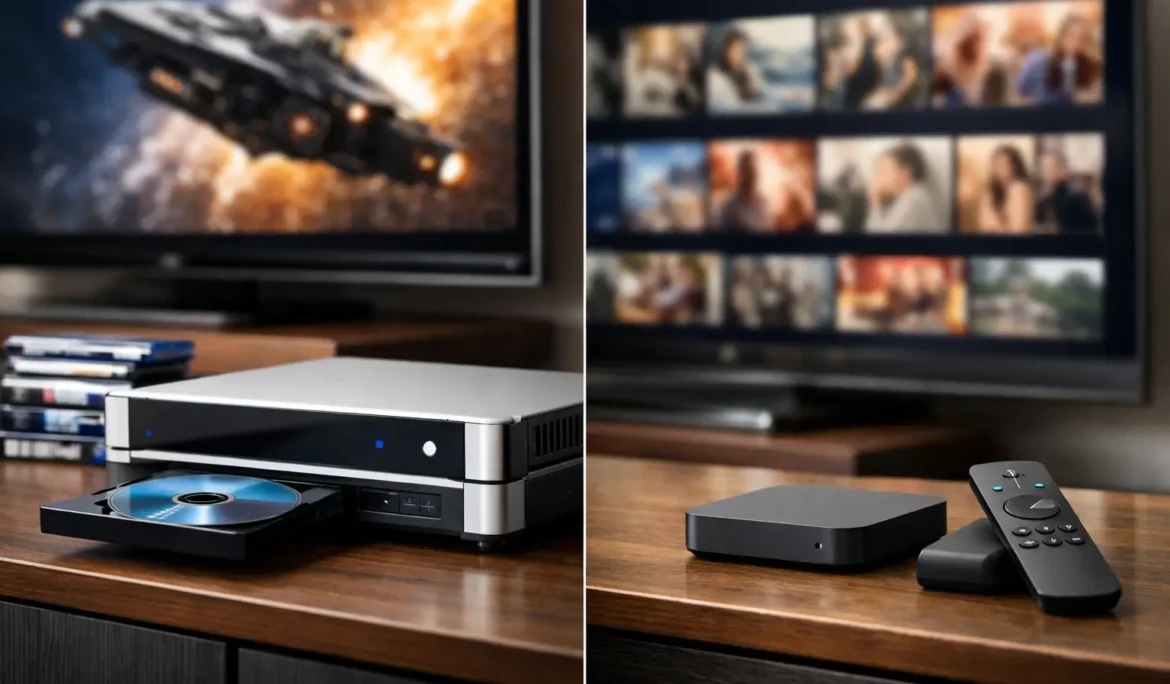
A large projector screen can make a movie night unforgettable, but it can also reveal every limitation in the source. That is where the Kaleidescape vs streaming quality conversation becomes meaningful. The difference is not simply about whether a movie is available in 4K. It is about how much of the original picture detail and immersive sound reaches your screen and speakers.
For a casual weeknight viewing experience, streaming is remarkably convenient. For a dedicated home theater designed around a premium display, projector, surround sound system, and carefully controlled lighting, the source matters much more. Kaleidescape is designed for homeowners who want a more consistent, cinema-quality experience without managing discs, inputs, or technical settings each time they watch.
Kaleidescape vs Streaming Quality in a Real Theater
Most streaming services use compression to deliver movies efficiently over the internet. Compression is necessary because a high-quality movie contains a tremendous amount of visual and audio data. The result can still look very good, especially on a smaller television, but some fine detail is reduced so the content can play reliably over a broad range of internet connections and devices.
Kaleidescape movies are downloaded to a local movie server before viewing. Rather than relying on a live stream during the film, the system plays back a much larger, higher-quality file stored in the home. This allows Kaleidescape to preserve more picture information and higher-quality audio than typical streaming platforms.
On the right system, the difference can be apparent from the opening scene. Fine textures in clothing, brick, foliage, and facial detail tend to look more natural. Dark scenes can hold more subtle shadow detail, while bright highlights are less likely to appear flattened or smeared. Fast motion may look cleaner as well, particularly in action films, sports, and animation with detailed visual effects.
That does not mean every movie will look dramatically different in every room. A quality streaming presentation on a well-configured TV can be satisfying. The advantage of Kaleidescape becomes more visible as the screen gets larger, the projector improves, and the room is designed to reduce distractions such as ambient light and reflections.
Picture quality is more than resolution
It is easy to assume that two versions labeled 4K will look the same. Resolution is only one part of the picture. The way a movie is encoded affects color gradations, texture, contrast, and how cleanly the image handles difficult scenes.
Streaming compression is often most noticeable in challenging material: a dark room with soft lighting, smoke drifting across a night scene, a wide landscape filled with fine detail, or a quick camera move through a crowded action sequence. In these moments, a heavily compressed image can show banding, noise, softened detail, or motion artifacts.
Kaleidescape is not a replacement for a properly calibrated display or projector. If a screen is poorly placed, a projector is not set up correctly, or the room has excessive light, even excellent source material cannot show its full potential. But when the theater has been thoughtfully designed, Kaleidescape gives that equipment a stronger signal to work with.
Audio is often the bigger surprise
Picture quality usually starts the conversation, but sound is where many homeowners notice the most immediate upgrade. Streaming services commonly use compressed audio formats to keep bandwidth demands manageable. These tracks can deliver surround sound and can be enjoyable, but they do not always carry the same depth, dynamics, and detail as higher-quality movie audio.
Kaleidescape supports lossless audio for many titles, including Dolby Atmos soundtracks where available. In a properly designed surround sound room, that can mean clearer dialogue, more convincing placement of effects, greater separation between instruments, and more impact when the soundtrack calls for it.
The difference is not only about louder explosions. A better soundtrack creates contrast. A quiet conversation can remain intelligible without turning the volume up, then a musical score or action sequence can expand with more authority and control. This is particularly valuable for homeowners who want the excitement of a commercial cinema without sacrificing comfort or clarity.
Reliability Changes the Experience
Streaming quality depends on more than the streaming service itself. Internet speed, wireless coverage, network traffic, software updates, and device performance can all affect playback. A movie may start at lower quality and improve after a minute. In some homes, the image can change quality during playback, or the program may pause when the connection is under strain.
Because Kaleidescape content is downloaded and stored locally, playback does not depend on the internet maintaining a certain speed throughout the movie. Once the title is ready on the system, it plays consistently. That is a practical advantage for a theater experience, especially when guests are over and nobody wants to troubleshoot buffering just as the film reaches a pivotal scene.
This does not eliminate the need for a strong home network. A reliable network remains essential for downloading content, controlling the theater, and supporting the rest of a connected home. However, local playback removes the variable that can be most frustrating during movie night: the changing performance of a live internet stream.
Convenience Without the Disc Collection
Some enthusiasts have historically chosen Blu-ray or 4K UHD Blu-ray discs to access higher-quality movie presentations. Disc formats can offer excellent picture and audio, but they require physical storage, disc changes, and an organized collection. They also introduce another device and another remote-control step into the experience.
Kaleidescape provides a different approach. Homeowners can browse a curated movie library with artwork, cast information, trailers, and collections, then select a title from a clean interface. The movie is delivered at a premium quality level without requiring a disc player or shelves full of cases.
For a custom theater, that simplicity has real value. A control system can bring down the shades, set the lighting scene, start the projector, select the correct audio mode, and launch a movie from one familiar interface. The technology stays in the background, where it belongs.
When Streaming Is Still the Right Choice
Kaleidescape is not meant to make streaming irrelevant. Streaming is excellent for discovering new shows, watching a series casually, catching live programming, or choosing something quickly from a broad subscription library. Its convenience is difficult to beat, and it remains an important part of most home entertainment systems.
The better question is how you use each option. Streaming may be ideal for everyday viewing in a family room. Kaleidescape becomes compelling when the goal is to make a feature film feel like an event in a dedicated theater or premium media room.
It also depends on the equipment. On a modest TV with a basic soundbar, the quality gap may be less noticeable. On a large OLED display, a projection system, or a room with Dolby Atmos speakers, the difference can be substantial because the system is capable of revealing it.
Build the System Around How You Watch
The best home theater is not defined by one product. It is the result of matching the source, display, audio system, room environment, control experience, and network to the homeowner’s habits. A household that watches films every weekend may place a high value on Kaleidescape’s consistent presentation and polished movie library. Another household may prefer to prioritize flexible streaming access while ensuring the system is ready to expand later.
A professional design process helps avoid a common disappointment: investing in a beautiful screen and powerful speakers, then feeding them content that cannot show what they can do. Cine Acoustic helps homeowners make those decisions in a way that feels straightforward, practical, and tailored to the room.
Before choosing between systems, watch familiar scenes on the equipment you plan to use. Pay attention to dark detail, dialogue clarity, motion, and whether the experience stays consistent from the first frame to the credits. The best choice is the one that makes you want to dim the lights, settle in, and press play more often.