

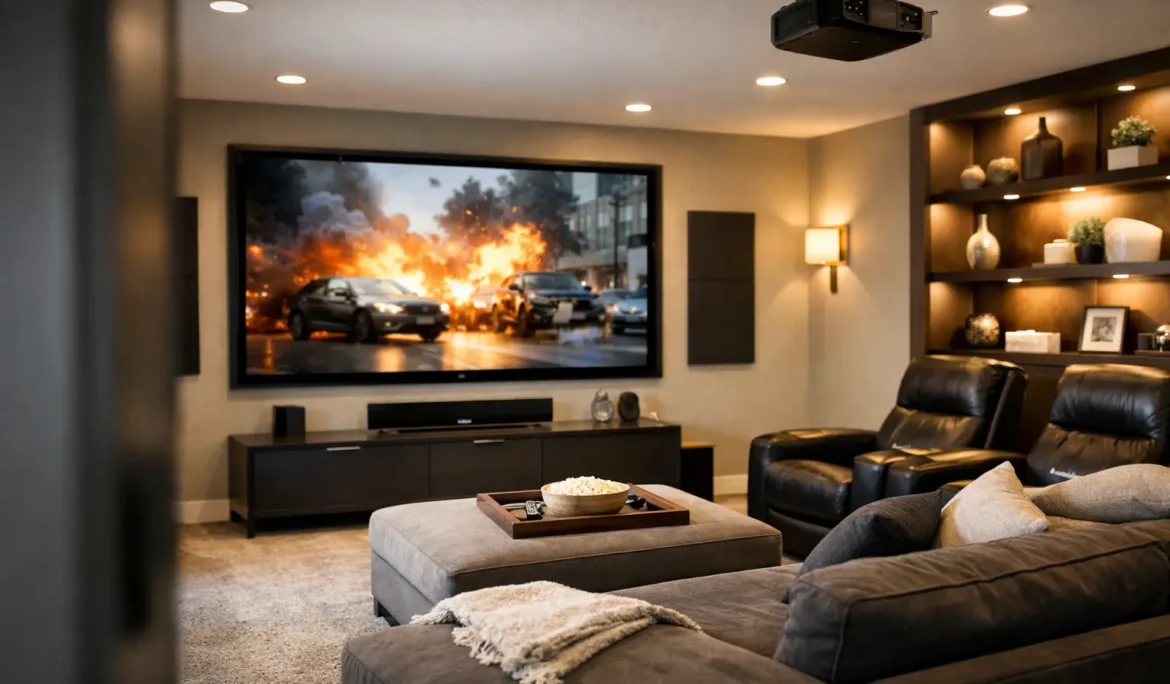
A true media room renovation success story rarely begins with a new screen. It begins with a room that is not doing enough for the people who live there: a finished basement with awkward lighting, a den with a television that feels too small, or a multipurpose space where movie night competes with glare, clutter, and confusing remotes.
For one family, the goal was simple but meaningful. They wanted a room that could handle a Saturday night movie, a big game with friends, and everyday streaming without turning the house into a technology project. The room needed to look refined, work reliably, and be easy enough for every member of the household to use.
The result was not defined by one impressive component. It came from a thoughtful plan that brought together picture, sound, lighting, network performance, and control into one experience.
The Room Had Potential, But Not Performance
The space had the right footprint for entertaining, but its existing setup felt pieced together. The television was mounted in a practical location, though it competed with windows and overhead lighting. Sound came from a basic soundbar that made dialogue difficult to hear during action scenes. Streaming devices, a cable box, and game console each had their own remote, and the Wi-Fi connection became unreliable when several people were online.
These are common issues in a media room renovation. A collection of individual products may technically work, but that does not mean the room works well as a whole. When equipment, room conditions, and daily habits are not considered together, homeowners often end up adjusting settings instead of enjoying the program.
The first step was a consultation centered on how the family intended to use the space. Would they prefer the cinematic scale of a projector or the brightness and everyday convenience of a large display? Did the room need to remain flexible for casual gatherings? How much control should be available from a handheld remote, a wall keypad, or a mobile device? The answers shaped every decision that followed.
A Media Room Renovation Success Story Starts With Design
A media room should be designed around the viewing experience, not around a single product specification. In this case, the room received a large, high-performance display selected for its ability to deliver a clear picture in a space with some ambient light. A projector can be an outstanding choice in a dedicated theater with strong light control and a preference for an extra-large image. For this family, however, the display provided the right balance of image quality, practicality, and daily use.
The audio plan was equally important. Rather than relying on sound from the display or a single soundbar, the system was built around properly placed speakers and a subwoofer. This gave voices more clarity, added impact to music and movie soundtracks, and created a more enveloping experience without making the room feel like a commercial cinema.
Speaker placement is one area where professional planning matters. A speaker that is technically high quality can still disappoint if it is blocked by furniture, installed at the wrong height, or positioned without regard for the main seating area. The goal is not simply more volume. It is balanced, intelligible sound at comfortable listening levels.
The equipment was organized in a clean, accessible location rather than scattered around the room. That approach reduced visible clutter and made future service simpler. It also allowed the room to maintain the polished appearance the homeowners wanted.
Light Control Changes the Picture
Even an excellent display cannot overcome every lighting challenge. Daylight and reflected light can wash out the picture, while bright overhead fixtures can pull attention away from the screen. The renovation included lighting control designed around the room’s different uses.
With one command, the family could set a movie scene that lowered the lights to a comfortable level while preserving safe pathways through the room. For sports and casual entertaining, lighting could remain brighter without overwhelming the image. Motorized shades were considered where window light had the greatest impact, providing privacy and better viewing conditions without requiring anyone to walk around the room making manual adjustments.
This is a practical example of technology supporting comfort rather than calling attention to itself. The best media rooms do not force homeowners to learn a complicated routine. They make the preferred routine happen naturally.
One Control Experience Replaced Remote Clutter
The most noticeable improvement for the family came after the system was programmed. Instead of sorting through remotes and remembering the correct input sequence, they could choose an activity from one intuitive interface.
Selecting Watch TV turned on the display, brought the audio system to the appropriate source, and set the room for casual viewing. Choosing Movie Night adjusted the room differently, including the lighting scene and the entertainment source. The controls were customized around the activities the family actually used, rather than presenting a long menu of technical options.
That distinction matters. Advanced home technology should give homeowners fewer decisions, not more. A well-designed control system can bring together streaming, cable or satellite programming, music, gaming, lighting, and shades in a way that feels straightforward from the first day.
There is always a trade-off between flexibility and simplicity. A client who wants deep access to every audio setting may prefer more detailed controls. A busy family may value a short list of familiar buttons and automated scenes. Neither preference is wrong. The right design reflects the people using the room.
Reliable Networking Made the Upgrade Complete
No media room can perform at its best on an inconsistent network. High-resolution streaming, gaming, video calls, and connected control systems all depend on stable coverage and strong connections.
As part of the renovation, the network was evaluated alongside the entertainment equipment. Where possible, key components were connected by wire for dependable performance. Wi-Fi coverage was improved so portable devices could stay connected throughout the room without interrupting the viewing experience.
This detail is easy to overlook when planning a renovation, especially when the focus is on the screen and speakers. Yet a buffering stream or dropped connection can quickly undermine an otherwise exceptional room. Building network performance into the plan helps protect the experience long after installation day.
The Finished Room Fits More Than Movie Night
Once complete, the room became a genuine gathering place. The family could start a movie without a lengthy setup, enjoy sports with clear, full sound, and play music during casual get-togethers. The room still felt comfortable and welcoming when the system was off, which was essential to the home’s overall design.
That last point is often what separates a successful renovation from an equipment upgrade. A media room should support the lifestyle of the household. Some homeowners want a dedicated, immersive theater environment. Others need a refined multipurpose room that performs beautifully for entertainment while remaining appropriate for conversation, reading, or family time.
For New Jersey homeowners renovating a basement, bonus room, or main living area, early technology planning can prevent frustrating compromises later. Speaker locations, wiring paths, lighting zones, shade options, and equipment placement are far easier to coordinate before finishes are complete. Even when a room is already furnished, an experienced integrator can identify practical ways to improve performance while respecting the existing space.
Plan the Experience, Not Just the Equipment
The lesson from this media room renovation success story is clear: the most satisfying result is built around the homeowner’s routine. The display, speakers, automation, lighting, and network each have a role, but their value comes from how naturally they work together.
A qualified team such as Cine Acoustic can help translate a homeowner’s vision into a system that is polished, dependable, and comfortable to use every day. Start by thinking about the moments you want the room to create – a family film, an unforgettable game day, or a quiet evening with music – then let the design serve those moments.