

A bright breakfast nook can feel inviting at 8 a.m. and uncomfortably exposed by 10. A family room may need daylight for everyday use, then complete glare control when the game or movie starts. That is why the decision between motorized shades vs manual blinds is about more than how a window treatment opens and closes. It affects privacy, comfort, safety, interior design, and how easily your home responds to the way you live.
For some homes, a well-selected manual blind is the practical choice. For others, motorized shades become one of the most-used features in a connected home. The right answer depends on the windows, the room, and the experience you want every day.
Motorized Shades vs Manual Blinds at a Glance
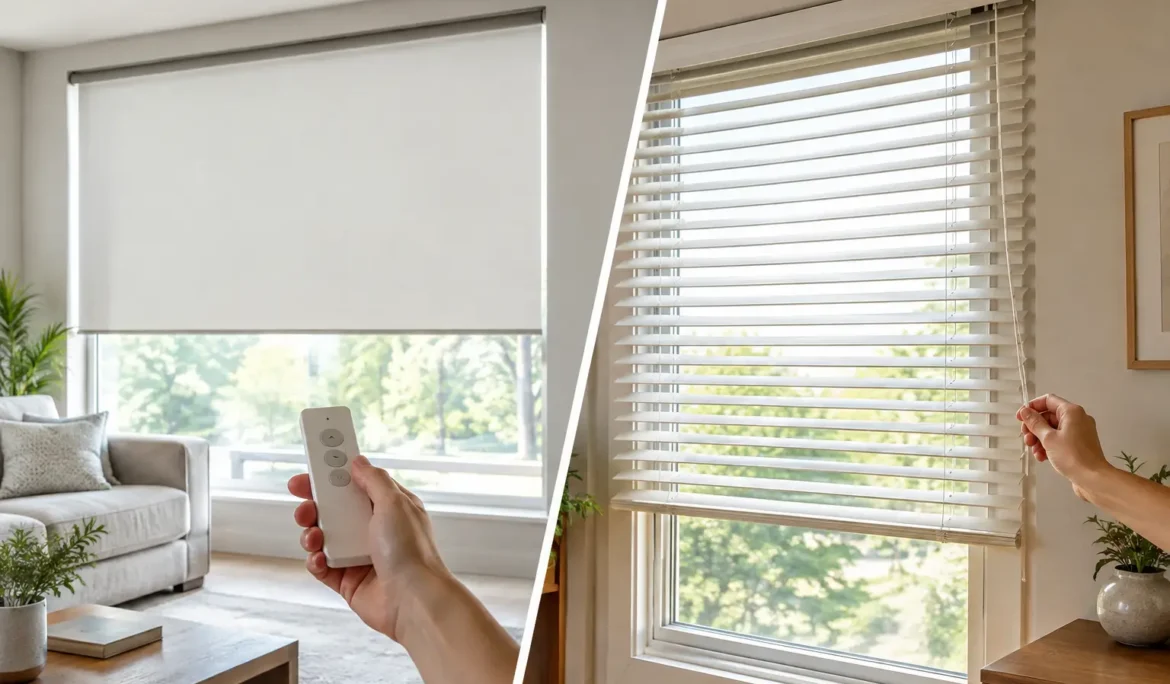
Manual blinds are operated by hand, typically with a wand, cord, or cordless lift mechanism. Their adjustable slats make them especially useful when you want to direct sunlight without fully covering the window. They are familiar, straightforward, and available in a wide range of materials and styles.
Motorized shades move with a wall keypad, handheld remote, mobile app, voice command, or home automation system. Rather than tilted slats, shades generally use a single fabric or woven panel that raises and lowers. Depending on the fabric, they can soften harsh sunlight, preserve a view, provide privacy, or darken a room for sleep and entertainment.
The distinction matters because blinds and shades solve light differently. Blinds offer more incremental adjustment. Motorized shades offer more consistent control, especially across multiple windows and throughout the day.
When Manual Blinds Make Sense
Manual blinds remain a sound option in rooms with a small number of easy-to-reach windows. A bathroom, guest room, home office, or secondary space may not require scheduled control or smart-home integration. If the goal is simply to add privacy and adjust daylight occasionally, the direct operation of blinds can be entirely appropriate.
Their slats also give homeowners a useful degree of flexibility. You can angle them upward to bring in softer light while limiting direct views from outside, or close them more fully when the afternoon sun becomes distracting. Wood and faux-wood options can add visual structure to traditional and transitional interiors, while aluminum designs can suit more contemporary spaces.
There are trade-offs. Manual operation asks someone to walk to each window and adjust it. Across a room with several windows, that routine can become repetitive. Cords and wands may also interrupt a clean design, while cordless options reduce visual clutter but still require hands-on use.
Manual blinds can be less ideal for tall windows, large banks of glass, or windows located behind furniture. If reaching the treatment is inconvenient, it is more likely to stay in one position, even when the light and privacy needs change.
Where Motorized Shades Deliver More Value
Motorized shades are most compelling when convenience solves a real daily problem. Consider a primary bedroom with morning sun, a two-story great room with hard-to-reach windows, or a media room where reflections can interfere with a television or projection system. In these settings, automated control removes the friction from managing natural light.
With one command, every shade in a room can lower to create privacy, protect furnishings, or prepare the space for a movie. A scene can coordinate shades with lighting and entertainment controls, so the room feels ready without requiring a series of separate adjustments. That is the difference between adding a motor to a window treatment and designing a more comfortable environment.
Scheduled operation is another meaningful benefit. Shades can open in the morning, lower during the strongest afternoon sun, and close as evening privacy becomes important. The schedule can match your family’s routine rather than forcing your routine to match the windows.
This is particularly useful in New Jersey and New York homes where changing seasons bring different sun angles and daylight patterns. A bright south- or west-facing room that feels pleasant in winter can become difficult to use on summer afternoons. Automated shades allow the home to respond consistently, even when no one is available to adjust every window.
Light Control, Privacy, and Room Purpose
The best choice often starts with one question: what does this room need to do?
In a living room, solar shades can reduce glare and filter UV exposure while preserving much of the outdoor view. In a bedroom, room-darkening or blackout fabrics can support sleep and privacy. In a home theater or media space, precise shade control helps protect picture quality by reducing ambient light and reflections.
Manual blinds can work well where directional light control is the priority. Tilting slats gives you a level of adjustment that standard roller-style shades do not always provide. Yet for rooms with expansive glass, many individual blinds can create visual busyness and inconsistent light patterns. A coordinated shade system often produces a cleaner appearance and a more uniform result.
Privacy deserves equal consideration. At night, interior lights can make a home highly visible from the street or neighboring properties. Motorized shades make it easy to close an entire first floor or bedroom level at once. For families, that ability tends to become a simple but valuable evening habit.
Safety and Everyday Ease
Window treatments should support the way a household functions, especially in homes with children and pets. Cordless manual blinds can reduce concerns associated with exposed cords, but motorized shades eliminate the need for manual cords in the first place. The result is a cleaner window area and fewer elements within reach.
Ease of use is not just a luxury feature. It determines whether the system will actually be used. A homeowner may enjoy manually adjusting one window. Adjusting eight windows before leaving for work, entertaining guests, or starting a movie is a different experience. Motorized shades reduce that effort to a single command.
They can also help when mobility, accessibility, or furniture placement makes manual operation difficult. A beautiful window treatment should not require a ladder, stretching across a sofa, or moving furniture to operate it properly.
Design Considerations That Should Not Be Overlooked
Window treatments are a significant visual element. The choice should complement the architecture, furnishings, and amount of visible glass in the room.
Manual blinds tend to create more texture and definition at the window. They can feel warm and substantial, especially in wood-like finishes. Motorized shades often support a more minimal presentation, with fabrics available in subtle textures, neutral tones, and degrees of openness. When raised, many shade systems can also disappear more discreetly into a fascia, pocket, or carefully planned window detail.
For renovation and new-construction projects, planning early makes a difference. Motorized shade wiring, power options, mounting details, and control locations are easiest to coordinate before finishes are complete. That said, many homes can accommodate professionally designed solutions after construction as well.
The key is to avoid selecting treatments window by window without considering the full room. Fabric openness, color, mounting height, window orientation, and control preferences should work together. A treatment that looks right in a showroom can behave very differently in a sun-filled great room.
Smart-Home Integration Changes the Experience
A motorized shade is useful on its own. Integrated with a professionally designed control system, it becomes part of how the home operates.
For example, a “Goodnight” command can lower shades, turn off selected lights, and secure the atmosphere of the home for the evening. An “Entertain” setting can reduce glare in the main living area while setting appropriate lighting. In a dedicated theater, shades can lower as the display and surround sound system power on.
This level of control should remain simple for the homeowner. The technology behind it can be sophisticated, but the daily experience should feel intuitive: one button, one voice command, or an automatic schedule that simply works. Reliable systems are designed around routines, not around showing off features.
Cine Acoustic approaches motorized shading as part of the complete environment, considering how daylight, lighting control, entertainment, and automation should work together. That consultative approach helps ensure the finished system feels purposeful rather than pieced together.
How to Choose for Your Home
Start by looking at the windows that create the most friction. Are they difficult to reach? Do they cause glare on a television? Do you routinely leave them uncovered because adjusting them is inconvenient? Those are strong signs that motorized shades may improve daily comfort.
Then consider the room’s light-control needs. If you want to fine-tune the angle of daylight at a single, accessible window, manual blinds may be a good match. If you want several windows to respond together, need reliable privacy at specific times, or want shades to support media viewing and smart-home scenes, motorization is often the better fit.
There is no need to apply one answer to every window in the house. Many homeowners choose motorized shades for primary living areas, bedrooms, media spaces, and hard-to-reach windows, while using manual treatments in simpler secondary rooms. A thoughtful design can combine function and aesthetics without making the home feel overcomplicated.
The most satisfying window-treatment choice is the one you stop thinking about because it works exactly when you need it. Whether that means the tactile control of a manual blind or shades that quietly adjust with your day, the goal is the same: a home that is more comfortable, private, and enjoyable to live in.