

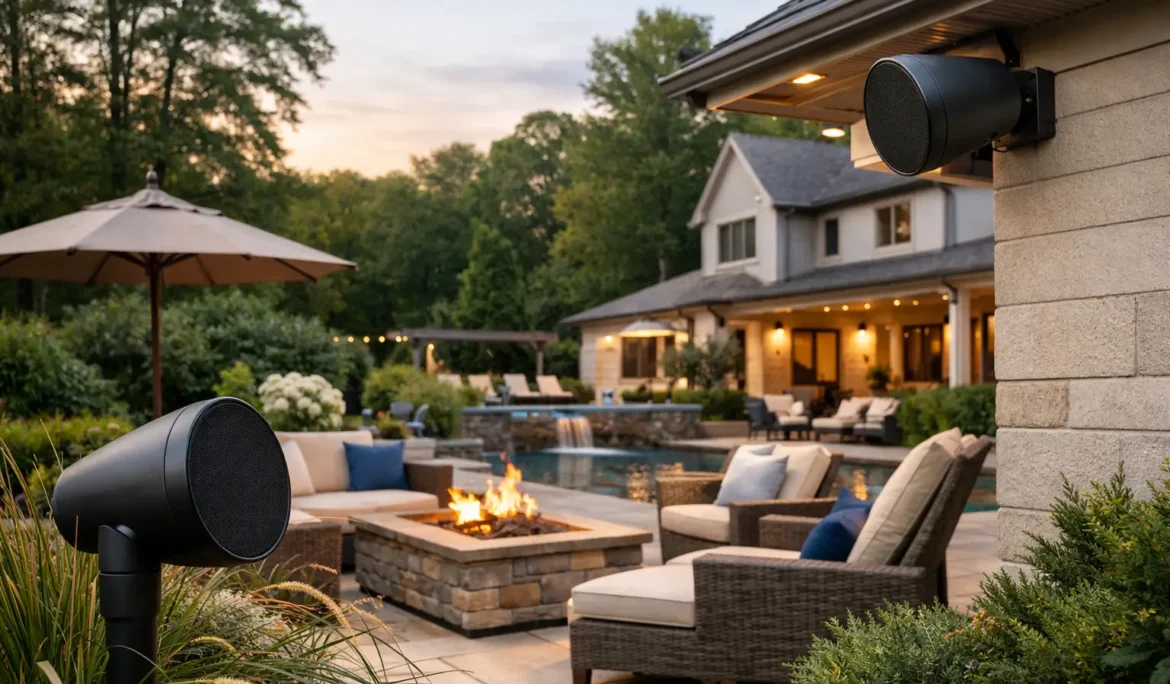
A patio can have beautiful furniture, a built-in grill, and a fire feature, yet still feel unfinished when music comes from a small portable speaker on the table. A professionally planned outdoor audio installation New Jersey homeowners can rely on changes the experience completely. Music reaches the seating area, the pool, and the dining space with clarity, while the equipment remains discreet, weather-ready, and simple to control.
The goal is not to make the backyard louder. It is to make it more inviting. The right system creates even, comfortable sound at a level that lets guests talk, relax, and enjoy the space without fighting for the playlist or carrying equipment in and out of the house.
Why Outdoor Audio Needs Its Own Design
Outdoor spaces do not behave like living rooms. There are no walls to reflect sound evenly, and open air allows music to fade quickly. A speaker that seems powerful enough indoors may sound thin or strained outside, especially across a large lawn, near a pool, or around several separate entertaining areas.
Weather creates another challenge. New Jersey properties experience heat, humidity, rain, snow, freezing temperatures, and seasonal debris. Equipment must be selected and installed for long-term outdoor exposure, with proper mounting, protected connections, and wiring methods that support dependable performance year after year.
A thoughtful design also considers where sound should not go. The best system directs music toward your family and guests rather than sending it toward a neighboring property. Speaker placement, coverage patterns, volume control, and the number of speakers all affect that outcome.
Start With How You Use the Backyard
The right outdoor audio system begins with lifestyle, not a catalog of equipment. A family that hosts weekend cookouts has different needs than a homeowner who wants soft jazz around a garden or energetic music for a pool area. A larger property may need independent zones so one group can listen on the patio while another enjoys different audio near an outdoor kitchen or lounge.
Consider the spaces that matter most. The main patio may be the priority, but walkways, a pergola, a pool deck, a covered porch, or a sports court may also benefit from sound. Planning those areas early prevents a common compromise: installing a pair of speakers near the back door and hoping they can cover the entire yard.
It also helps to think about daily use. If you want music while cooking outside, controlling the system should not require returning indoors, opening multiple apps, or reconnecting devices. An integrated control system can place source selection and volume adjustment in one familiar interface, whether that is a wall keypad, touchscreen, remote, or smartphone.
Coverage Matters More Than Raw Volume
Many people assume a bigger speaker is the answer to an expansive yard. In practice, distributed audio is usually the better approach. Several properly positioned speakers can provide consistent sound at a comfortable volume. One or two overly powerful speakers often create a loud spot near the house and weak sound everywhere else.
For open landscapes, landscape speakers and buried subwoofers can blend into planting beds and deliver broad, balanced coverage. Around a covered patio or porch, weather-rated architectural speakers may be a better fit. The best choice depends on the layout, desired appearance, and the way each area is used.
Choosing the Right Speaker Style
Outdoor speakers should complement the property rather than compete with its design. That does not mean hiding every component at the expense of performance. It means selecting an approach that delivers the desired sound while respecting the architecture and landscaping.
Surface-mounted speakers work well beneath eaves, on pergolas, or near outdoor kitchens when a direct, focused listening area is the priority. They are especially effective for covered entertaining spaces, where placement can be planned around seating and dining zones.
Landscape speaker systems are often ideal for larger yards and design-conscious properties. Compact satellite speakers can be placed among shrubs or along garden borders, while in-ground subwoofers add the low-frequency depth that gives music warmth and impact. The result can feel surprisingly natural because sound is distributed from the landscape instead of coming from one visible location.
Rock-style speakers may suit certain informal garden settings, but they should be chosen carefully. Their appearance and performance vary widely, and a more discreet landscape system may better suit a refined outdoor environment.
Do Not Forget Bass
Outdoor sound without dedicated bass can feel flat. Low frequencies dissipate differently outdoors, so asking small satellite speakers to do everything often leads to thin music or excessive volume. A properly integrated outdoor subwoofer lets the main speakers work more efficiently and adds fullness without making the system feel aggressive.
This is one area where system balance matters. More bass is not always better, particularly near property lines. The objective is a complete listening experience at a reasonable level, not a backyard that announces every beat to the neighborhood.
Reliable Wiring Makes the Difference
Wireless audio is convenient for a portable speaker, but permanent outdoor systems benefit from professional wiring and centralized equipment. Hardwired connections provide stable performance, cleaner sound, and less dependence on changing wireless conditions. They also make it easier to expand the system later if the backyard evolves.
Cabling should be rated for its environment and routed with care. Outdoor runs may need to travel through walls, underground pathways, or protected conduit. Connections require weather protection, and equipment locations need ventilation and sensible access for future service. These details are not visible once the project is complete, but they strongly influence reliability.
The network deserves attention, too. If music streaming, smart control, outdoor TVs, or connected lighting share the property network, coverage must be designed for the spaces where people actually use their devices. A strong indoor signal does not automatically provide dependable Wi-Fi at the far end of a patio or pool area.
Make Control Easy for Everyone
A premium outdoor system should feel easier to use than a portable Bluetooth speaker, not harder. The best control approach depends on the rest of the home. Some households prefer a simple dedicated keypad with volume and source buttons. Others want outdoor audio integrated with whole-home entertainment, lighting control, and automation scenes.
For example, a single command could turn on patio music, set the appropriate volume, activate landscape lighting, and prepare the space for dinner. For a game-day gathering, the system can support audio from an outdoor television while keeping dialogue clear across the seating area.
The key is avoiding unnecessary complexity. Guests and family members should be able to start music without a tutorial. At Cine Acoustic, that ease of use is part of the design process, along with sound quality, aesthetics, and system dependability.
Plan for Noise, Seasons, and Future Changes
An outdoor audio installation is most successful when it accounts for real-world habits. Sound levels that feel perfect during an afternoon gathering may be different later in the evening. Independent zones and clear volume limits give homeowners more control, especially when different areas of the property are in use.
Seasonal planning is equally practical. Outdoor-rated equipment is built for changing conditions, but routine care still matters. Keep speaker grilles clear of mulch and debris, inspect exposed components when opening the yard for the season, and protect any portable source devices that are not intended to remain outside.
If a renovation, pool project, landscape redesign, or outdoor kitchen is planned, discuss audio early. Running wire and preparing locations before hardscape and planting are complete can preserve the finished look of the property and avoid unnecessary disruption later.
A Backyard That Sounds as Good as It Looks
The strongest outdoor systems do not call attention to the equipment. They make a summer dinner feel warmer, keep a pool day energized, and add a polished finishing touch to the spaces where people naturally gather. With the right design, sound can follow the activity instead of being confined to one corner of the yard.
Before choosing speakers, look at the whole experience: where people sit, how they move through the space, what they want to hear, and how simply they expect everything to work. That is how an outdoor audio system becomes a lasting part of the home rather than another device to manage.