

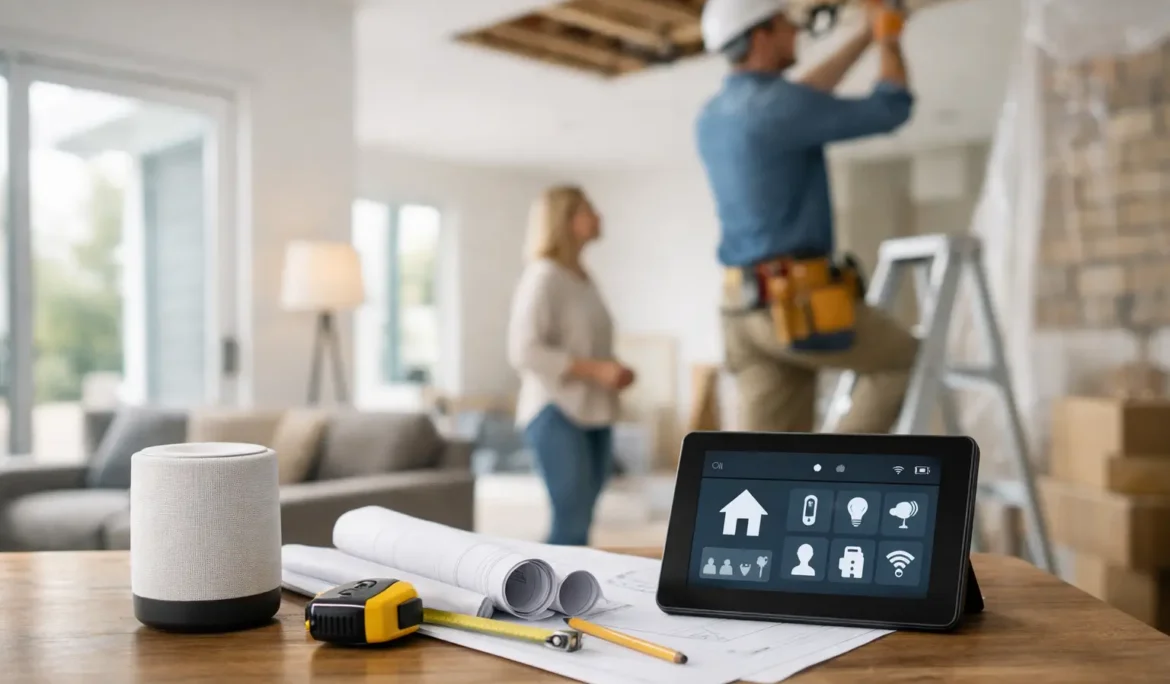
Renovation is the one moment when smart technology is easiest to do well. Walls are open, trades are on site, and decisions about lighting, wiring, millwork, and layouts are already happening. A smart home for renovations is not about stuffing a house with gadgets. It is about using the construction window to build systems that are reliable, easy to use, and designed to fit how you actually live.
That distinction matters. Many homeowners start with a few devices and end up with five apps, weak Wi-Fi in the rooms that matter most, and controls that make sense only to the person who installed them. A renovation gives you the chance to avoid that patchwork. If the technology plan is considered early, the result feels built in, not added on later.
Why smart home for renovations works better than retrofits
When technology is added after the fact, the design usually has to work around finished walls, existing switch locations, and limited wiring paths. That often means compromise. You may get the feature you want, but not the cleanest installation, the best performance, or the simplest user experience.
During a renovation, those limitations change. Keypads can be placed where they make sense. Shades can be planned with power in mind. Speakers can disappear into ceilings and walls. Networking equipment can be centralized in a dedicated location instead of tucked into a random closet. Even small details, like where to place a TV so it avoids glare or how to hide equipment from view, are easier to solve before finishes go in.
There is also a bigger benefit that homeowners often miss at first: coordination. Lighting, shades, audio, video, climate control, and Wi-Fi do not live in separate worlds inside a well-designed home. They work best when they are planned as one ecosystem. Renovation is when that coordination can happen without forcing trades to redo work later.
Start with lifestyle, not devices
The most successful projects do not begin with brand names or product lists. They begin with questions about how the home should feel and function.
Do you want one-button control for entertaining? Are you trying to make a media room more immersive without filling it with visible gear? Would you like your kitchen, family room, patio, and primary suite to share music effortlessly? Do you want lighting scenes that improve ambiance at night without walking around the house adjusting dimmers one by one?
Those goals shape the system far better than chasing the latest gadget. A family with young children may prioritize simple lighting scenes, dependable whole-home Wi-Fi, and easy control from a phone or keypad. A homeowner renovating a lower level may care more about a dedicated theater, distributed audio, and acoustic performance. A design-forward client may put hidden technology and wall clutter reduction at the top of the list.
There is no single right package. The right answer depends on the rooms being renovated, how long you plan to stay in the home, and how much simplicity matters compared to sheer feature count.
The systems worth planning early
Some smart home features can wait until late in the project. Others should be addressed before framing closes. If you are building a smart home for renovations, these are the categories that deserve early attention.
Lighting control sets the tone
Lighting is often the system people appreciate most once they live with it. Good lighting control goes beyond dimming a few fixtures. It helps create scenes for cooking, entertaining, movie watching, bedtime, and mornings. It can also reduce wall clutter by replacing banks of switches with elegant, simplified controls.
For renovation projects, lighting should be planned alongside the electrical layout and interior design. Fixture selection, load types, keypad placement, and scene design all affect the final experience. This is also where trade-offs come in. A basic smart switch approach may cover a few rooms, while a centralized or whole-home lighting system offers a cleaner look and more flexibility. The best choice depends on the size of the project and how unified you want the experience to be.
Motorized shades work best when they are planned, not squeezed in
Shades are a perfect example of a feature that looks simple from the outside but benefits from early coordination. Window dimensions, pocket details, fabric choices, daylight goals, and power requirements all matter. If they are considered too late, the result may still function, but it may not look as integrated as it should.
Well-planned shades improve comfort and privacy while helping manage glare in living spaces, home theaters, and media rooms. They also become much more useful when tied to lighting scenes and whole-home control.
Wi-Fi and networking are the real foundation
A beautiful control system cannot overcome weak network design. If you are renovating multiple rooms or adding connected devices throughout the home, networking should be treated like infrastructure, not an afterthought.
That means planning access point locations, equipment storage, structured wiring, and coverage for spaces where people actually use devices, including outdoor areas if they are part of the renovation. A strong network also supports streaming, control platforms, security-related devices, and remote support. Homeowners usually notice bad Wi-Fi immediately. They tend to forget the network entirely when it is designed correctly, which is exactly the point.
Audio and video should match the room
Not every space needs the same approach. A family room may call for a clean TV installation with upgraded sound and hidden components. A dedicated theater deserves more attention to speaker placement, acoustics, screen size, and lighting control. A kitchen or patio may benefit more from distributed audio than a display.
This is where expert planning prevents expensive mistakes. Display size should suit viewing distance. Speakers should work with the room, not fight it. Equipment locations should allow service access while staying out of sight. During renovation, these decisions can be integrated into millwork, ceiling plans, and furniture layouts instead of being forced into place later.
Design matters as much as technology
One of the most common concerns during renovation is that smart home features will make a carefully designed space feel technical or cluttered. In reality, the opposite can be true when the system is planned well.
Technology can reduce visible hardware. It can replace crowded switch walls with refined keypads, conceal speakers in architectural surfaces, hide displays when not in use, and keep equipment organized in a dedicated rack rather than scattered across rooms. The result is a cleaner environment with better performance.
This only happens when technology planning is coordinated with architects, designers, and builders. Ceiling details, cabinetry, finish selections, and furnishing plans all influence what is possible. The best projects treat smart home design as part of the renovation design, not as a separate layer added at the end.
Avoid the common renovation mistakes
The biggest mistake is waiting too long. Once framing, electrical, and finish decisions are locked in, your options narrow quickly. Homeowners then end up choosing between change orders, visible compromises, or giving up features they wanted from the start.
Another mistake is buying products room by room without a larger plan. That may feel efficient in the moment, but it often creates fragmented control and compatibility issues later. The living room uses one app, the shades use another, the audio works differently than the lighting, and no one in the house is quite sure what to press.
There is also the issue of overbuilding. More technology is not automatically better. If a feature adds complexity without adding meaningful convenience, it usually becomes frustrating over time. Good system design is selective. It focuses on the rooms and experiences that matter most and keeps control simple enough for everyone in the household.
What to expect from a well-planned smart renovation
A strong result feels intuitive on day one. You walk into the kitchen and the lighting scene makes sense. Movie night starts without a chain of remotes and menus. Music is easy to access in the rooms where you spend time. Shades move when they should. Wi-Fi works where you need it. The system supports your routine instead of asking you to manage it.
That is why many homeowners work with a technology partner early in the renovation process. A consultative approach helps align the system with the architecture, interior design, and daily use of the home. It also creates accountability from design through installation and support, which is especially valuable on projects with multiple moving parts. For homeowners in New Jersey and New York, Cine Acoustic often sees the difference this makes once construction is underway: early planning leads to cleaner results and fewer compromises.
A smart renovation should leave you with more than impressive features. It should give you a home that feels easier to live in, more comfortable to enjoy, and more polished in the details that matter every day.