

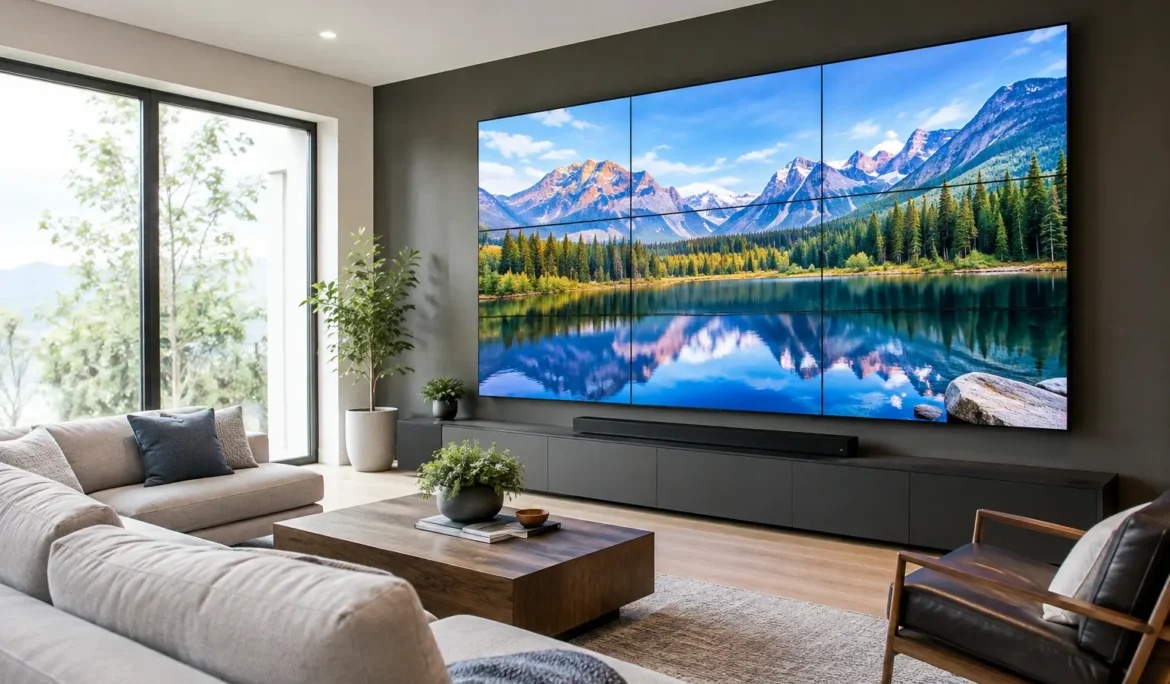
A single large TV can make a media room feel impressive. A well-designed video wall can make the room feel like it was built around the experience. Whether it becomes the centerpiece of a dedicated theater, a sports-focused lounge, a basement entertaining area, or a refined living space, the result should feel intentional, not overwhelming.
For homeowners, video walls are about more than adding screen size. The right system creates a commanding image, accommodates the way your family actually watches, and stays simple to operate from one familiar control. That takes careful planning well before the first display is mounted.
What Makes Video Walls Different?
A video wall uses multiple displays or LED panels to form one large visual canvas. It can show a single movie, game, or presentation across the full surface. It can also divide the screen into separate sources, such as several live games, security camera views, or streaming content.
That flexibility is the appeal. In a sports room, one wall can show the main game in a large central window while keeping scores or additional games visible beside it. In a home theater or media room, it can deliver a larger-than-life image without relying on a projector. For commercial spaces, it can create an immediate visual statement while giving staff a clear way to manage content.
Still, bigger is not automatically better. A screen that dominates the room at the wrong viewing distance can feel tiring. A wall made from mismatched components can look disjointed. And a sophisticated system with too many remotes quickly becomes a source of frustration. The best result comes from designing the display, room, controls, sound, lighting, and network as one connected experience.
Choosing the Right Video Wall Technology
The first major decision is usually whether a project calls for commercial-grade display panels or direct-view LED. Both can be excellent choices, but they serve different rooms and expectations.
Display-panel video walls use multiple ultra-thin-bezel screens arranged in a grid. They produce sharp detail and strong brightness, making them a practical option for rooms where viewers sit relatively close. The narrow lines between panels remain visible, although modern configurations can minimize their impact. For certain layouts and content types, those lines are a reasonable trade-off for precise image quality and flexibility.
Direct-view LED walls are built from modular LED panels that create a continuous image surface without traditional screen bezels. They can be especially striking at large sizes and are often ideal when the visual impact of a single uninterrupted image is the priority. Pixel pitch matters here. A finer pixel pitch supports closer viewing, while a larger pitch may work well when the audience sits farther back. Selecting the wrong specification for the room can make even an impressive wall look less refined up close.
A consultation should also consider brightness, reflections, wall dimensions, seating distance, content habits, and the room’s ambient light. A bright multipurpose space has different requirements from a dark, dedicated cinema. There is no universal best option, only the option that best suits how the space will be used.
Size Should Follow the Room, Not the Other Way Around
Homeowners are often drawn to the largest possible display surface. That instinct makes sense, but viewing comfort should lead the decision. Seating distance, the resolution of the content, and the primary use of the room all affect the appropriate size.
A wall intended mainly for films may benefit from a cinematic, immersive field of view. A wall used for everyday television, casual entertaining, and multitasking may need a more balanced scale. The physical room matters, too. Ceiling height, furniture placement, architectural features, and sightlines from adjoining areas can determine whether the installation feels integrated or simply oversized.
Professional design accounts for these details early. It can also identify what needs to happen behind the wall, including equipment locations, ventilation, power, cable pathways, and service access. A clean finished installation depends on this infrastructure, even though homeowners should never have to see it.
The Experience Depends on More Than the Screen
A video wall is only as enjoyable as the system around it. The image may capture attention, but control, audio, lighting, and network performance determine whether the space gets used every day.
One Control Should Run the Room
No one wants to turn on several devices in the correct order before watching a game. A properly integrated system can combine the video wall, sources, audio, lighting, and shades into a straightforward interface. Pressing a single button can prepare the room for movie night, activate a sports layout, or return the space to normal lighting after guests leave.
The goal is not to make the homeowner learn a complicated system. It is to make complex technology feel natural. A handheld remote, wall keypad, or app can provide simple control when the programming is tailored to the household’s routines.
Audio Deserves Equal Attention
Large visuals without capable sound can feel strangely incomplete. Depending on the room, the right solution may include immersive surround sound, discreet architectural speakers, or a carefully designed audio system that fills a larger entertainment area without cluttering the décor.
Speaker placement is particularly important when a video wall occupies a substantial portion of the front wall. The audio plan needs to preserve clear dialogue and convincing impact while respecting the visual design. This is another reason a complete room plan is more effective than adding components one at a time.
Light Control Protects the Image
Windows, glossy finishes, and overhead fixtures can all introduce glare. Lighting control and motorized shades help preserve contrast when the screen is in use, while still keeping the room comfortable for conversation, meals, or everyday living.
This does not mean every video wall belongs in a windowless room. It means the system should respond to the room’s natural conditions. A bright family room may need a higher-brightness display and adjustable shades. A dedicated theater may prioritize deeper blacks and a darker environment. Both can be excellent when designed for their purpose.
Planning for Content, Connectivity, and Reliability
Before selecting hardware, it helps to define what the wall will show most often. Movies, streaming, sports, gaming, digital art, camera feeds, and business content each place different demands on the system. A homeowner who wants four games visible at once needs reliable video distribution and intuitive source management. Someone focused on premium movie playback may place more emphasis on image processing, sound, and a theater-style control experience.
Reliable Wi-Fi and wired networking also matter. Modern entertainment spaces often depend on streaming services, control platforms, updates, and connected sources. A weak or inconsistent network can interrupt an otherwise exceptional room. Where possible, thoughtful wiring and a professionally designed network create a more dependable foundation than relying on a single wireless connection.
Serviceability should be part of the conversation as well. Displays, processors, and connections need to remain accessible for support and future changes. A polished installation is not just one that looks clean on day one. It is one that can be maintained without disrupting the room or creating unnecessary inconvenience.
Where Video Walls Work Best at Home
The most successful installations begin with a clear use case. A dedicated entertainment room can support a dramatic full-wall installation for films, concerts, and game days. A finished basement can become a flexible gathering space with multiple content zones. A luxury living room may call for a more architectural approach, where the display wall complements the surrounding finishes and can display art or ambient content when not in use.
Outdoor applications require a different level of consideration. Weather exposure, daylight, viewing angles, and proper equipment selection all affect long-term performance. In these spaces, the screen should enhance time spent with family and guests, not become another device that requires constant attention.
For New Jersey and New York homeowners renovating or building a home, the ideal time to discuss a video wall is before walls are closed and finishes are finalized. Early coordination gives the design team more freedom to conceal equipment, plan ventilation, position power correctly, and ensure the finished room reflects the original vision.
A Video Wall Should Feel Effortless
A great video wall creates a memorable first impression, but its real value appears afterward. It becomes the place where family movie nights feel more immersive, friends gather for major games, and everyday entertainment is easier to enjoy. The technology should feel impressive when it is on and practically invisible when it is not demanding attention.
Cine Acoustic approaches these projects as complete environments rather than oversized screens. With the right design, installation, programming, and support, a video wall can deliver professional-grade impact while remaining remarkably easy to live with. Start with how you want the room to feel, and let the technology serve that vision.