

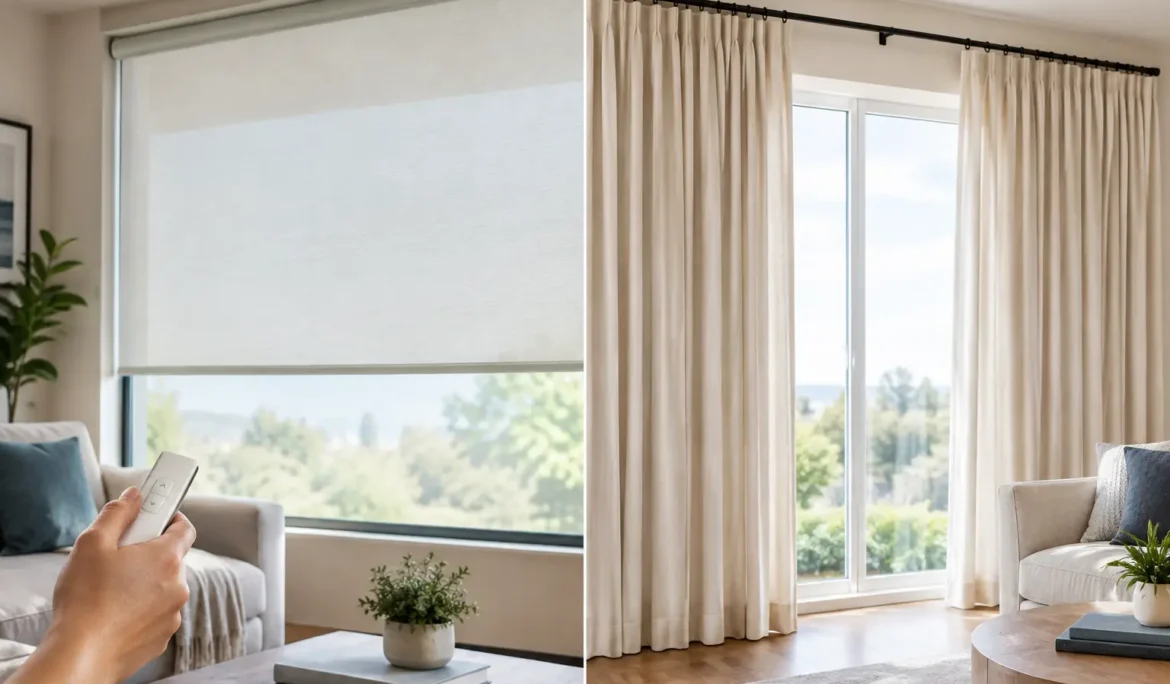
A bright family room can look perfectly finished at noon and become difficult to use by 4 p.m. when low-angle sun hits the television, fades the flooring, and turns the sofa into the warmest seat in the house. That is where the choice between motorized shades versus curtains becomes more than a decorating decision. It affects comfort, privacy, media enjoyment, energy performance, and how naturally your home responds to daily routines.
For many New Jersey and New York homeowners, the best answer is not one treatment replacing the other. Motorized shades and curtains solve different problems. The right design starts with how a room is used, the direction its windows face, and whether the window treatment should become part of a larger lighting and smart home system.
Motorized Shades Versus Curtains: The Core Difference
Motorized shades are functional window coverings designed for precise, repeatable control. With a wall keypad, handheld remote, smartphone, or automation system, they can raise, lower, or adjust on a schedule. Depending on the fabric and shade style, they can soften glare, preserve a view, create daytime privacy, or darken a room for a movie.
Curtains, also called drapery panels, bring softness, visual scale, and texture to a space. They can frame a window beautifully and make a formal living room, bedroom, or theater feel more complete. When lined, layered, or made with heavier fabrics, curtains can also improve darkness and provide a degree of sound absorption.
The distinction is straightforward: shades tend to deliver more controlled daily performance, while curtains make a stronger decorative statement. A well-planned room often uses both, with shades doing the everyday work and drapery adding finish, warmth, and an extra layer of light control.
Where Motorized Shades Perform Best
Motorized shades are especially valuable when windows are difficult to reach or when they need to move frequently. Tall foyer windows, large banks of glass, skylights, and windows behind furniture are obvious examples. But convenience is only part of the appeal.
Better glare control for TVs and home theaters
A television near a wall of windows is a common source of frustration. Closing curtains can reduce glare, but it usually means losing every bit of daylight and view. Solar shades can filter harsh sun while preserving outward visibility during the day. In media rooms, blackout roller shades or room-darkening fabrics can create the controlled environment needed for a projector or a premium television.
The value increases when shades are tied to a single command. A “Movie” scene can lower the shades, set lighting to the right level, and prepare the room without a series of separate steps. That kind of coordination makes the system feel useful every day, not merely impressive when guests visit.
Consistent privacy without daily effort
Privacy is often needed at predictable times: after sunset, when bedrooms are occupied, or when a ground-floor room faces a neighboring property. Automated schedules remove the need to remember every window. Shades can lower at dusk and open in the morning, creating a more comfortable routine while keeping the home from feeling closed off all day.
This is particularly helpful in homes with many windows. A manual treatment may look good, but it is less likely to be adjusted consistently across an entire floor. Automation turns privacy into a dependable setting rather than another household task.
A cleaner architectural look
For contemporary interiors, shades can disappear into the architecture more easily than fabric panels. They fit neatly inside or above a window opening and are available in materials that range from nearly transparent to fully opaque. When designed early in a renovation or new build, recessed pockets and concealed wiring can make the finished installation feel intentional and uncluttered.
Battery-powered options can be an excellent fit for completed homes where running wire is impractical. For larger projects or shades that will operate often, wired power is generally the more permanent, lower-maintenance approach. The right choice depends on access, window count, and the larger scope of the project.
Where Curtains Still Have the Advantage
Curtains should not be treated as an outdated alternative. They offer benefits that shades alone cannot fully duplicate, especially in rooms where texture and atmosphere matter as much as automation.
Softer design and stronger visual impact
A wide window wall can feel sparse with a shade alone, even when the shade is highly functional. Full-height drapery adds proportion and visual warmth. It can introduce color, complement upholstery, and make ceilings appear taller when mounted correctly.
This matters in formal spaces, bedrooms, and dedicated entertainment rooms. A home theater with acoustic panels, dark finishes, and blackout shades may still benefit from drapery to reduce the visual hardness of the room and create a more inviting arrival experience.
Additional darkness and acoustic comfort
Heavier, lined curtains can help block light leaking around the sides of a shade. In a bedroom, that extra layer can make an early sunrise less disruptive. In a theater, it can support the darker environment needed for focused viewing.
Fabric also absorbs some reflected sound. Curtains will not replace purpose-built acoustic treatment, but they can reduce the harshness created by large expanses of glass and hard flooring. That can make conversation more comfortable and improve the perceived warmth of a room.
A more tactile, traditional experience
Some homeowners simply prefer the look and ritual of opening drapery each morning. That preference is valid. Technology should support the way a household lives rather than force every room into the same solution.
If convenience is still desired, drapery can be motorized as well. Motorized tracks allow panels to open and close with a button press, schedule, or scene. They require thoughtful planning because fabric weight, stack-back space, track placement, and nearby trim all affect the final result.
The Case for Using Both
The most effective window treatments frequently combine a motorized shade with stationary or motorized curtains. The shade handles glare, UV protection, privacy, and daily adjustment. The curtains add the finishing layer and can be closed when maximum darkness or a more intimate mood is wanted.
Consider a primary bedroom with solar shades that reduce afternoon heat and glare without blocking the view. At night, blackout drapery closes for sleep. Or consider a great room where shades lower automatically during the strongest sun, while decorative panels remain open to frame the windows. Each layer has a clear purpose.
This approach also gives designers more creative freedom without requiring homeowners to sacrifice performance. Rather than asking a single window treatment to do everything, the room can use the right tool for each condition.
Questions That Lead to the Right Choice
Before selecting fabric or hardware, focus on the experience you want in the room. Is the main concern television glare, privacy, heat, sleeping comfort, or visual design? Does the room need a clear view during the day and darkness at night? Are the windows reached easily? Will the treatments be part of lighting control and home automation?
Window orientation matters too. East- and west-facing rooms often need frequent glare management. South-facing glass may call for solar fabrics that help manage bright daylight. Bedrooms and theaters typically need room-darkening or blackout performance, but the required level depends on light gaps, fabric selection, and the window’s surrounding architecture.
It is also wise to coordinate window treatments with the interior designer, architect, and technology team early. The dimensions of the window are only one part of the design. Mounting depth, trim, pockets, electrical access, fabric openness, and control placement all influence whether the final result looks polished and works reliably.
Make the Treatment Fit the Way You Live
Motorized shades are ideal when dependable light control, privacy, and smart home convenience are priorities. Curtains are ideal when a room needs softness, style, or another layer of darkness and acoustic comfort. Neither is universally better.
The strongest choice is the one that makes your home easier to enjoy at every hour: bright when you want daylight, private when you need privacy, and ready for a movie or a quiet evening without turning window coverings into another thing to manage. A professionally planned system from a team like Cine Acoustic can make that everyday comfort feel simple from the first button press.